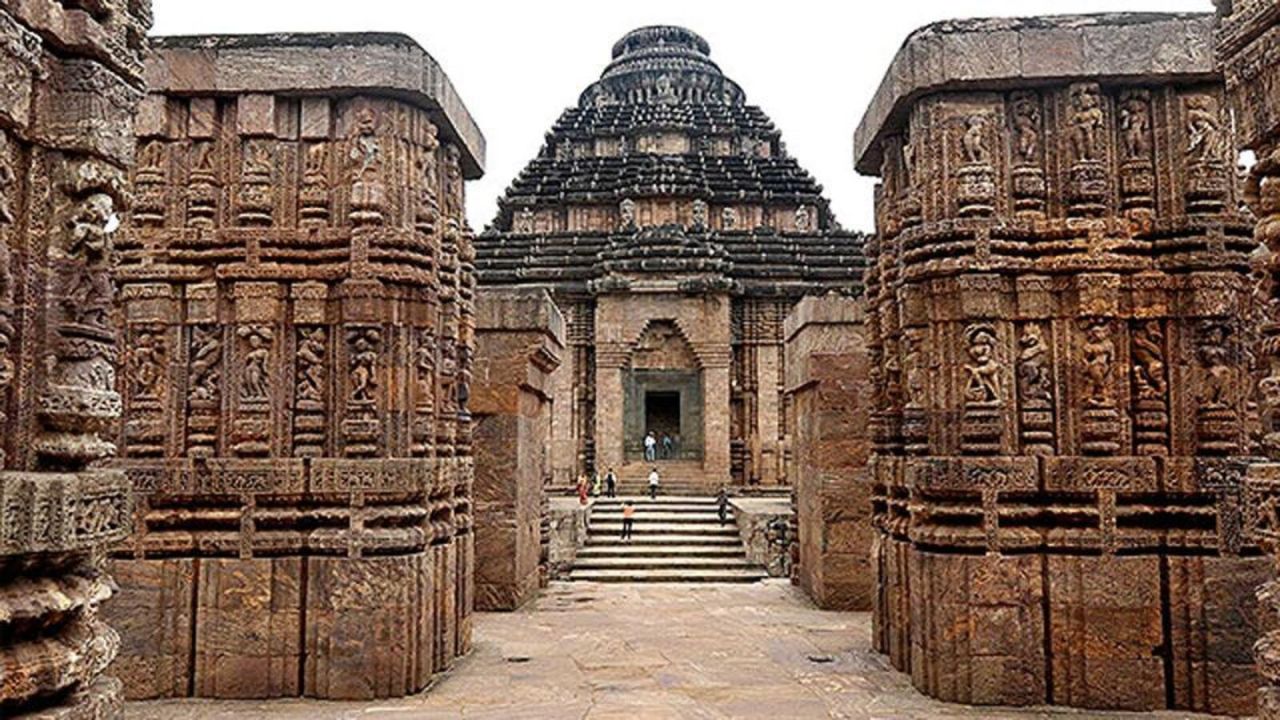
Konark Sun Temple to reopen for devotees
Bhubaneswar: Devotees may soon be able to step inside the sanctum sanctorum of Odisha’s iconic Konark Sun Temple for the first time in over a century. The Archaeological Survey of India (ASI) has launched a massive, carefully planned operation to remove sand that has filled the temple’s inner chamber since 1903-04.
The 13th-century temple’s sanctum (Jagmohan Hall) was packed with thousands of tons of sand by the British administration to prevent structural collapse. A 15-foot-high protective wall was also constructed behind the temple for support. Since then, no one has been able to enter the inner chamber.
Now, a 30-member expert team from the Archaeological Survey of India and IIT Madras is overseeing what is being described as the ASI’s largest conservation operation to date.
According to DB Gadhnayak, Superintendent of ASI’s Puri Circle, the complete removal of the sand is expected to take about three months. If the process proceeds smoothly, devotees may soon gain access to the sanctum once again.
Scientific and Phased Removal Process
Given the temple’s fragile condition, experts are proceeding with extreme caution. A zero-vibration diamond drill is being used at a height of 80 feet in the 127-foot-high structure to assess internal conditions. An 8.5-meter-long stone sample and sand samples have already been extracted and sent to IIT Madras for detailed analysis.
Preliminary 3D laser scanning and safety studies revealed cracks, slopes, imbalances, and even micro-cracks within the sanctum structure. Experts warned that removing the sand all at once could cause the stones to shift, worsening the damage.
IIT expert Arun Menon has therefore divided the project into multiple phases. Structural support will be provided to stones at every stage of sand removal. Additionally, 40 high-precision sensors have been installed to monitor even the slightest structural changes in real time.
Why the Sand Was Filled
The temple’s interior stones are made of laterite, while the exterior is clad in heavier Khondalite stone. Over time, parts of the sanctum collapsed. When the Jagmohan Hall also began to weaken, British officer J.A. Bordian ordered it to be filled with sand and sealed to stabilize the structure.
Over the decades, the sand inside settled by nearly 4–5 feet, leaving empty pockets in the upper sections — further increasing structural risk.
A Temple of Global Significance
Built in the 13th century by King Narasimha Deva I over 12 years, the Konark Sun Temple stands as a symbol of sun worship and Odisha’s maritime legacy. Today, it attracts over 3.5 million visitors annually and ranks second among ASI-protected monuments in tourist footfall after the Taj Mahal.
ASI Conservation Assistant Trilokyanath Behere stated that this ambitious operation aims to preserve the temple for the next thousand years. Once the sanctum is fully cleared and structural assessments are complete, restoration work will attempt to bring the temple closer to its original architectural form.
With science, precision monitoring, and phased execution guiding the process, the reopening of the sanctum marks a historic chapter in the conservation of one of India’s greatest architectural marvels.


