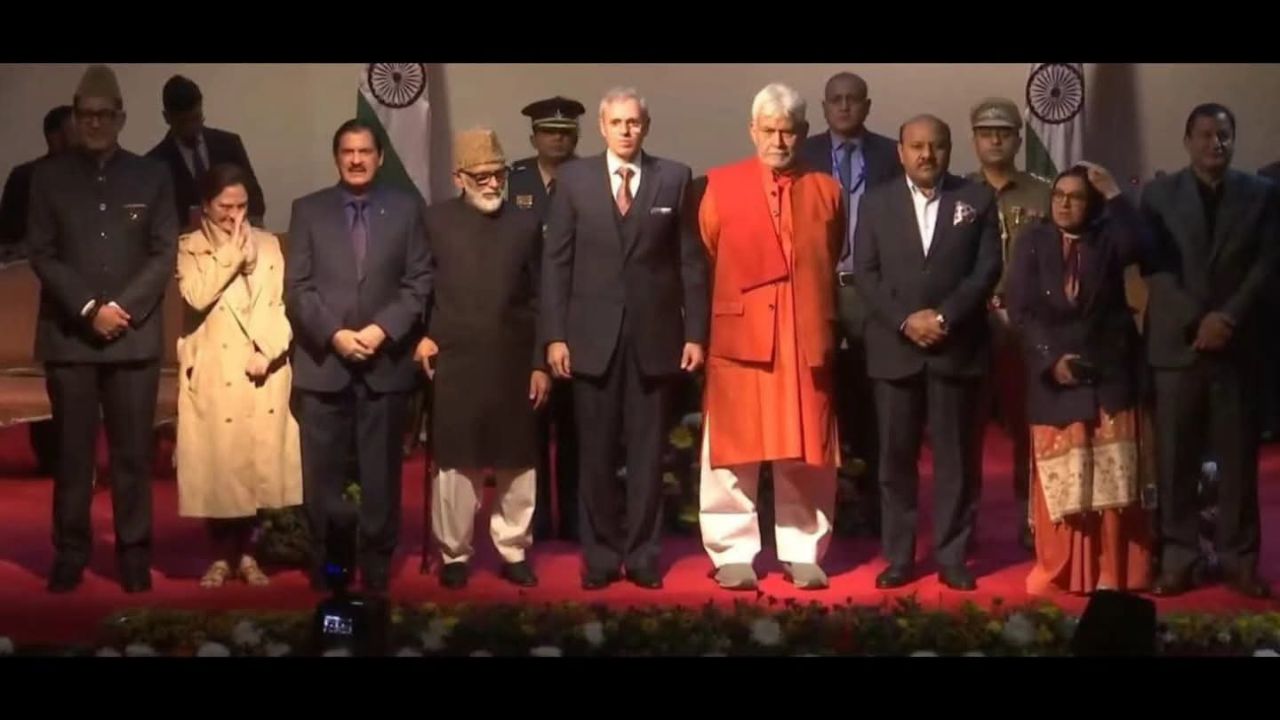
Omar Abdullah’s Cabinet has been expanded with four National Conference leaders taking oath at Lok Bhavan in Srinagar. (Img: X)
Srinagar: Jammu and Kashmir Chief Minister Omar Abdullah inducted four National Conference leaders into his Council of Ministers on Tuesday, strengthening his government as it faces expectations over development, employment and the restoration of full statehood. The Cabinet expansion took place at Lok Bhavan in Srinagar, with Lieutenant Governor Manoj Sinha administering the oath of office and secrecy to the new ministers.
The political development comes with a significant caveat: the Congress has chosen to stay out of the expanded Cabinet, reiterating its demand for the restoration of Jammu and Kashmir’s full statehood. The move gives Omar Abdullah an opportunity to reinforce his government’s administrative team while keeping the unresolved statehood question at the centre of the region’s political debate.
The four leaders inducted into the Cabinet are Ali Mohammad Sagar, Mir Saifullah, Shameema Firdous and Altaf Ahmad Kalloo, all associated with the National Conference. Their induction marks an important organisational and political development for the Omar Abdullah-led government as it seeks to strengthen its administrative capacity and address the expectations of people across Jammu and Kashmir.
Chief Minister Omar Abdullah arrived at Lok Bhavan earlier on Tuesday morning, where legislators, political leaders and other invitees gathered for the oath-taking ceremony. Lieutenant Governor Manoj Sinha administered the oath of office and secrecy to the newly inducted ministers.
The expansion is expected to be followed by decisions on ministerial portfolios and departmental responsibilities. These allocations will determine the areas in which the new ministers will exercise executive authority and the policy priorities they will be expected to advance.
The induction of experienced political leaders could strengthen the government’s administrative and legislative coordination. However, the impact of the reshuffle will ultimately depend on how effectively the ministers translate policy commitments into public services, development initiatives and measurable outcomes.Governance, Jobs and Development Remain Key Challenges
The Cabinet expansion comes at a time when public expectations from the Jammu and Kashmir government remain high. Employment generation, infrastructure development, delivery of public services and economic opportunities are among the major concerns confronting the administration.
The new ministers will be expected to improve departmental functioning, strengthen coordination between government agencies and ensure that public grievances receive timely attention. Their performance will also be assessed against the government’s broader commitments on development and administrative responsiveness.
For residents, the significance of the expansion will extend beyond the number of ministers in the Council of Ministers. The key questions will concern whether government departments become more accessible, development projects move forward efficiently and welfare programmes deliver tangible benefits.
A larger ministerial team can distribute administrative responsibilities more effectively, but it also brings greater scrutiny of accountability and performance. The allocation of portfolios, the pace of decision-making and coordination between departments will therefore be important indicators of the expansion’s practical value.
The government’s challenge will be to demonstrate that the changes strengthen governance rather than simply accommodate additional political leadership. Public confidence is likely to depend on visible progress in areas that directly affect daily life.
The Congress has decided not to join the expanded government, maintaining its position that the restoration of Jammu and Kashmir’s full statehood remains a central political demand. Although the party has supported the Omar Abdullah-led government from outside, it has made clear that this arrangement will not translate into participation in the Council of Ministers.
The decision underscores the continuing political differences surrounding Jammu and Kashmir’s administrative and constitutional status. For Congress, staying outside the government preserves its ability to maintain pressure on the statehood question without assuming ministerial responsibility.
The party’s position also highlights a broader issue in the region’s political landscape: the relationship between an elected government’s mandate and the powers available under the existing administrative framework. The restoration of full statehood remains an important demand for political parties and sections of the public, with implications for governance, accountability and the relationship between elected representatives and the Union government.
Congress’s decision means the Cabinet expansion will not bring the party into the government, despite its support from outside. The development may also influence the political coordination between the ruling National Conference and Congress as both continue to navigate their respective positions on statehood and governance.
For Omar Abdullah, the induction of four ministers provides an opportunity to reinforce his government’s political and administrative team. The expanded Cabinet will now be expected to establish clear priorities, coordinate across departments and respond to public concerns with greater effectiveness.
The next significant development will be the allocation of portfolios and the identification of the responsibilities assigned to each minister. These decisions will help clarify the government’s administrative structure and the areas in which the new ministers will be expected to deliver results.
The expansion also comes with the responsibility of maintaining focus on long-term issues, particularly employment, development, public service delivery and the demand for full statehood. The government will need to balance immediate administrative priorities with wider political expectations.
For the people of Jammu and Kashmir, the real measure of the Cabinet expansion will be its impact on governance. Improved service delivery, faster implementation of development projects and a more responsive administration will matter far more than the ceremony itself.
As the new ministers begin their tenure, attention will turn to their portfolios, policy priorities and performance. The Cabinet expansion offers the Omar Abdullah government an opportunity to strengthen its functioning, but its success will ultimately be judged by whether it delivers meaningful improvements in the lives of residents and advances the region’s key political and developmental concerns.

