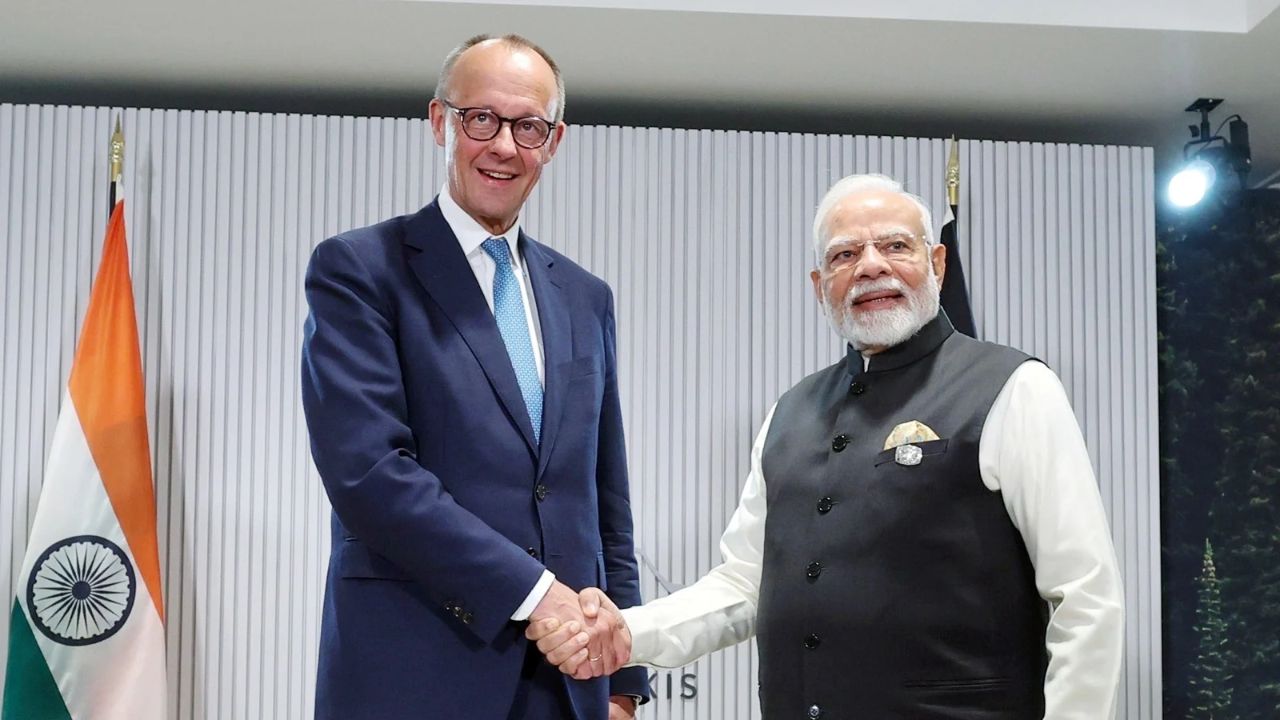
India-Germany strategic partnership in focus as PM Narendra Modi speaks with Chancellor Friedrich Merz. (Img: X)
New Delhi: Prime Minister Narendra Modi and German Chancellor Friedrich Merz held a telephone conversation on Tuesday, reviewing the growing momentum in India-Germany strategic relations and exploring opportunities to expand cooperation in trade, investment, defence and advanced technologies.
The high-level interaction assumes significance as India and Germany mark 75 years of diplomatic relations, with both countries seeking to deepen economic engagement, strengthen defence collaboration and leverage the proposed India-European Union Free Trade Agreement (FTA) to unlock fresh opportunities for bilateral commerce.
During the telephone conversation, Modi and Merz reviewed the progress achieved in the India-Germany Strategic Partnership and expressed satisfaction over the sustained momentum in bilateral engagements.
The discussions focused on expanding cooperation across several priority areas, particularly trade and investment, defence manufacturing, advanced technologies and emerging strategic sectors. According to the Prime Minister's Office (PMO), both leaders reaffirmed their commitment to further strengthening bilateral relations and expanding collaboration in areas that hold significant potential for economic growth, technological innovation and strategic cooperation.
The conversation also reflected the growing importance of India-Germany relations at a time when global economic and geopolitical uncertainties are reshaping international partnerships and supply-chain networks.
A key focus of the conversation was the potential of the proposed India-European Union Free Trade Agreement to transform economic engagement between India and Germany. Both leaders recognised that the trade agreement could create substantial opportunities for expanding bilateral commerce, attracting investments and strengthening industrial cooperation.
The proposed FTA is expected to improve market access, reduce tariff barriers across several product categories and encourage deeper integration of supply chains between Indian and European businesses.
Germany, as one of Europe's largest industrial and manufacturing economies, remains an important economic partner for India. Enhanced market access could create opportunities for Indian exporters while encouraging German companies to expand their manufacturing, technology and investment footprint in India.
The discussions also underline the importance of strengthening economic resilience through diversified supply chains and greater industrial collaboration.
Defence cooperation and advanced technologies featured prominently in the discussions, reflecting the expanding strategic dimension of India-Germany relations. Both countries have considerable scope to deepen engagement in defence manufacturing, research and development, industrial technology, innovation and high-end engineering.
India's emphasis on strengthening domestic manufacturing capabilities and attracting global technology partnerships also creates opportunities for German companies with expertise in precision engineering, industrial automation, automotive technology and advanced manufacturing.
Cooperation in emerging technologies could further strengthen bilateral economic ties while supporting India's ambitions to become a major global manufacturing and innovation hub.
Apart from bilateral cooperation, the two leaders exchanged perspectives on regional and international developments of mutual interest. They emphasised the importance of sustained coordination through multilateral institutions and international platforms to address contemporary global challenges.
The discussions also highlighted their shared commitment to promoting international peace, stability and a rules-based global order. India and Germany have increasingly sought to coordinate their positions on major international issues, recognising the importance of constructive engagement and multilateral cooperation in addressing geopolitical tensions, economic uncertainty and emerging security challenges.
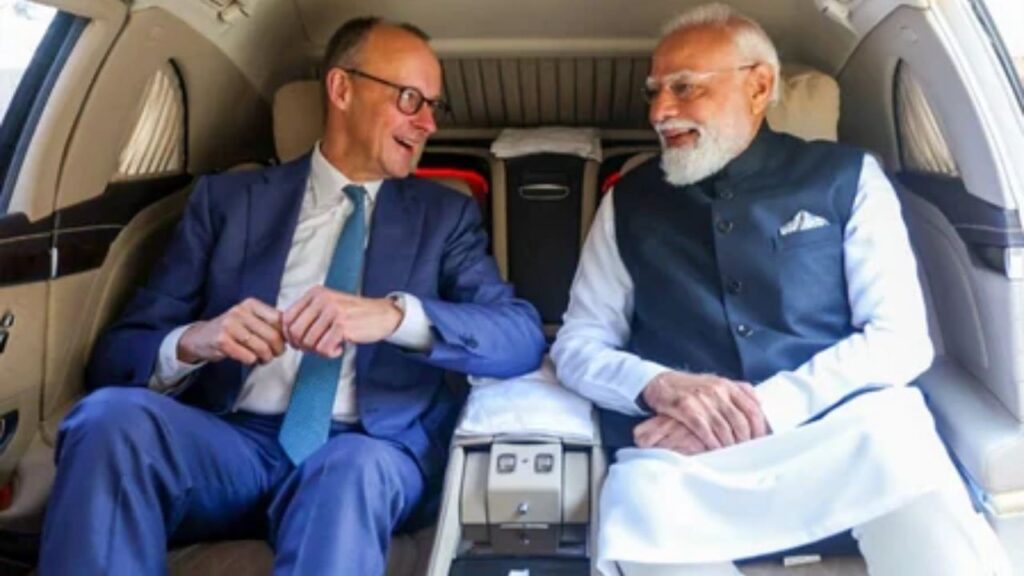
75 years of diplomatic relations: India and Germany look forward to a stronger strategic future. (Img: X)
The telephone conversation comes during a landmark year for India and Germany, as the two countries commemorate 75 years of diplomatic relations. India established diplomatic relations with the Federal Republic of Germany in 1951. Since then, bilateral engagement has evolved considerably, encompassing economic cooperation, industrial development, scientific research, education, renewable energy and strategic dialogue.
Germany has emerged as one of India's important European partners, particularly in manufacturing, engineering, technology, vocational education and clean energy. Modi has previously described Germany as an important pillar of India's engagement with Europe and a significant partner in advancing international peace, stability and prosperity.
The 75th anniversary provides an opportunity for both governments to reassess existing cooperation mechanisms and identify new areas for long-term strategic engagement.
Earlier, on November 4, German Ambassador to India Jasper Wieck had indicated that bilateral relations were entering a new phase of deeper engagement. He highlighted expanding cooperation across trade, investment, energy and strategic sectors, while identifying the proposed India-EU Free Trade Agreement as a potential catalyst for strengthening economic relations.
Wieck had underlined that the proposed agreement could significantly improve market access by reducing tariffs on several industrial products and certain agricultural categories. He also pointed to the considerable potential for integrating Indian and European supply chains, which could strengthen industrial competitiveness and facilitate greater cross-border investment.
The ambassador's assessment reflected Germany's interest in expanding economic engagement with India amid changing global manufacturing patterns and the growing importance of diversified international supply networks.
The latest conversation follows another telephone interaction between Modi and Merz in September, during which both leaders reiterated their commitment to deepening the India-Germany Strategic Partnership. The repeated high-level engagements indicate sustained political momentum behind bilateral cooperation and reflect the importance both governments attach to expanding their strategic relationship.
With the proposed India-EU trade agreement, expanding defence cooperation, advanced technology partnerships and industrial investment emerging as key priorities, India-Germany relations are expected to remain an important component of India's broader European engagement.


