 English
 English

Protests In Sindh Intensify Over Pakistan's Proposed Provincial Restructuring (Img: X)
New Delhi: The proposal to create new provinces in Pakistan has reignited political tensions in Sindh. Leaders, activists and nationalist groups fear the move could lead to the division of the Sindh province. The issue has also revived the decades-old demand for an independent Sindhudesh, a separate homeland for Sindhis.
A rally organised by the Jeay Sindh Rahbar Committee in Karachi on November 22 brought together activists, lawyers and political leaders opposing any change to Sindh's territorial boundaries. They rejected the idea of creating new provinces and warned of wider agitations if the government pursued the proposal.
The debate gained momentum in July after Pakistan's Interior Minister Mohsin Naqvi called for the creation of new administrative units to improve governance. Several leaders have argued that Pakistan's four provinces are too large to manage a population of around 250 million.
Planning Minister Ahsan Iqbal subsequently floated proposals for 12 to 15 provinces. On November 18, he said a 14-province framework was under discussion, involving four provinces each in Punjab and Sindh, and three each in Khyber Pakhtunkhwa and Balochistan. He clarified, however, that no progress had been made.
Defence Minister Khawaja Asif also suggested that a new administrative arrangement could be introduced in the coming months, although he said his remarks reflected his personal views. The proposals have fuelled opposition in Sindh, where the debate is closely linked to concerns over Karachi, land and water resources.
Pakistan's largest city and economic hub, Karachi remains central to the controversy. The Muttahida Qaumi Movement-Pakistan (MQM-P) has repeatedly demanded a separate provincial government for the city.
Sindhi nationalist groups fear that dividing the province could weaken their political influence and control over its resources. The opposition has also been fuelled by disputes over water allocation and plans to develop canals in Punjab.
In April 2025, the federal government put a proposal to construct six canals to irrigate Punjab's Cholistan region on hold following protests in Sindh. The Council of Common Interests subsequently rejected the plan, saying no new canals would be built without mutual understanding among provinces. The estimated cost of the project was PKR 211.4 billion.
Pakistan's Constitution makes changing provincial boundaries a difficult process. Article 239 requires a constitutional amendment to secure a two-thirds majority in both houses of Parliament.
Under Article 239(4), any amendment altering a province's boundaries must also receive the support of at least two-thirds of the provincial assembly's total membership. In Sindh, that would require 112 votes in the 168-member assembly.
The Sindh Assembly unanimously passed a resolution on September 3 rejecting any attempt to divide the province or alter its boundaries. The resolution declared that Sindh is one and shall remain one.
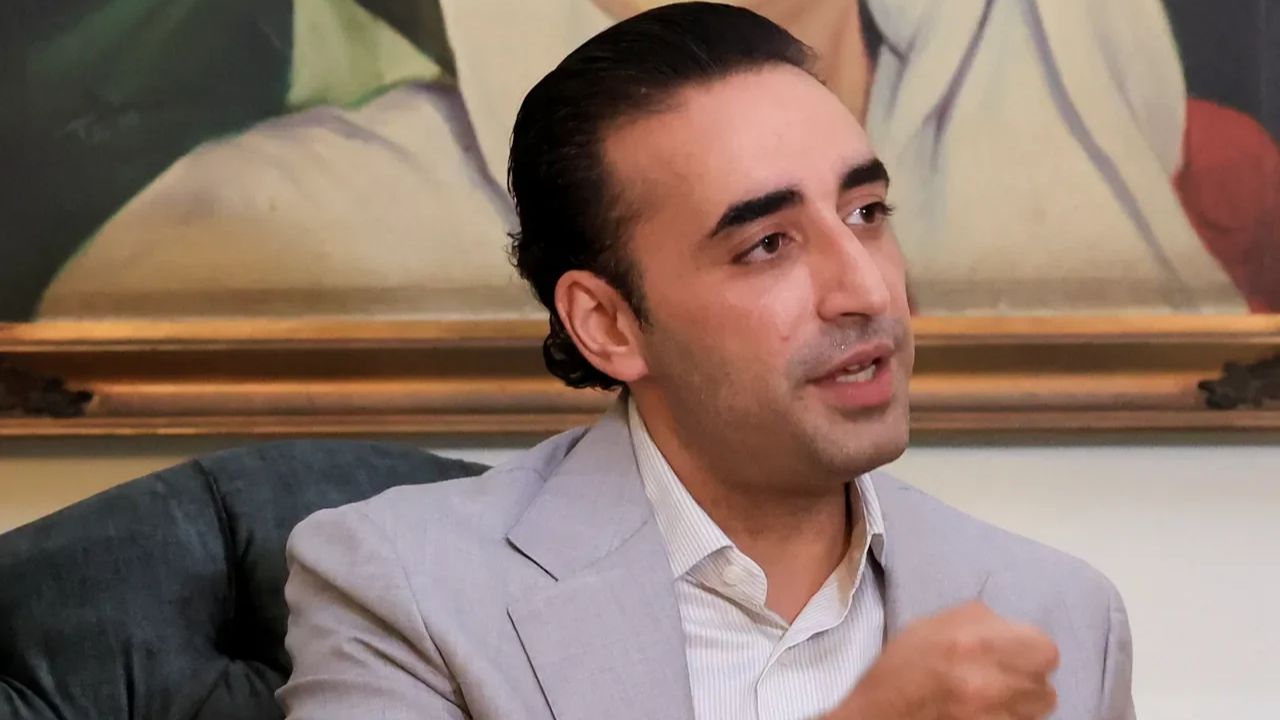
The federal government has also floated the idea of a referendum. The Pakistan Peoples Party (PPP), which governs Sindh, has opposed the proposal. Party chairman Bilawal Bhutto-Zardari argued that referendums in Pakistan's history have been used for undemocratic purposes.
Bilawal Bhutto warned on November 17 that any attempt to divide Sindh against the wishes of its people could lead to bloodshed in Karachi and other cities. He said the PPP would support new provinces only through constitutional procedures and with public consent.
The controversy has also revived the Sindhudesh movement, which advocates a separate homeland for Sindhis. Sindhi nationalist leader G M Syed established the Jeay Sindh Mahaz in 1972 and outlined his vision of an independent Sindhudesh in his 1974 book "A Nation in Chains: Sindhudesh".
The movement draws on Sindhi nationalist politics, including opposition to the One Unit scheme of the 1950s and the creation of Bangladesh in 1971. The Jeay Sindh Muttahida Mahaz (JSMM) continues to advocate independence, recently calling for international recognition of Sindhudesh.
The debate is expected to intensify ahead of the Senate elections in March 2027. Political parties have floated different timelines for the proposed restructuring, while protests against the division of Sindh continue.
The PPP's opposition and the constitutional requirement for approval by the Sindh Assembly make any attempt to divide the province politically and legally challenging. Disputes over water, land and Karachi's governance are likely to remain at the heart of the debate.