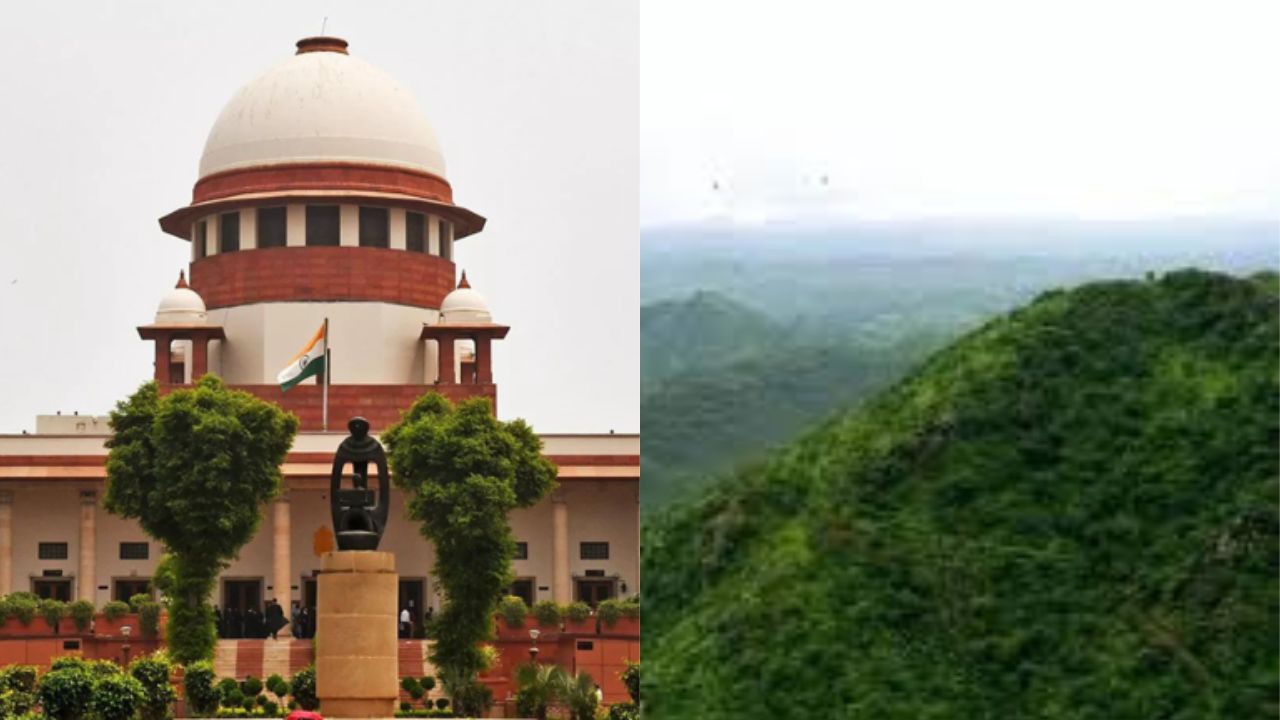
Aravalli mining faces SC test today
New Delhi: The Supreme Court will hear a case related to the protection of the Aravalli hills today. Recently, the court took suo motu cognizance of the controversy surrounding the changes in the definition of the Aravalli hills and mountain range.
The case will be heard by the CJI's vacation bench in the Supreme Court on Monday. The court took cognizance of the matter after widespread concern among environmentalists and local communities.
Chief Justice of India (CJI) Justice Surya Kant will preside over the vacation bench hearing the Aravalli case. A three-judge bench will hear the matter on Monday.
Besides the CJI, the bench may include Justices J.K. Maheshwari and Augustine George. Environmentalists have expressed concern that uncontrolled mining and urbanization are damaging the hills.
Will the SC's decision protect the Aravalli hills?
Environmentalists hope that the SC will deliver a judgment that prioritizes the conservation of the Aravalli hills and puts an end to destructive mining practices. It is worth noting that on November 20, 2025, a Supreme Court bench delivered a significant judgment on the definition of the Aravalli hills, one of India's oldest mountain ranges, accepting the recommendations of a committee headed by the Ministry of Environment, Forest and Climate Change (MoEFCC).
This new definition has increased concerns
The court's decision has limited the new definition of the Aravalli hills to a height limit of 100 meters, excluding hilly areas below 100 meters from the definition of mountains, thereby allowing large-scale mining.
The root of the controversy is this new definition of the Aravalli range by the central government, which is based on the 100-meter height criterion.
This is the history of the Aravalli range
The Aravalli mountain range is one of the oldest mountain systems in the world, estimated to be approximately two billion years old. Extending over 650 km from Delhi to Gujarat, this mountain range traverses Haryana, Rajasthan, and Gujarat, forming a crucial ecological backbone in northwestern India.
The Aravalli range acts as a natural barrier against desertification, preventing the Thar Desert from spreading eastward into the fertile Indo-Gangetic plains. Several important rivers, such as the Chambal, Sabarmati, and Luni, originate in or are fed by the Aravalli system.

