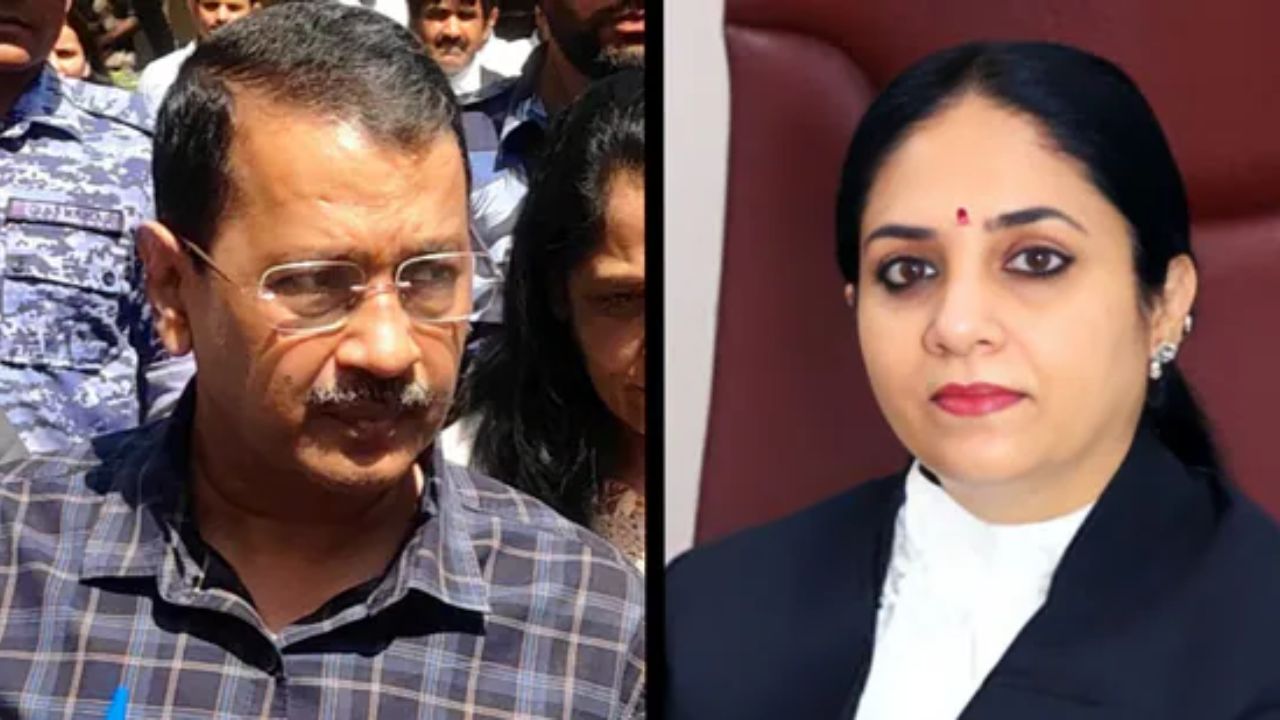
Justice Swarnakanta Sharma Refuses to Recuse Herself (Image Source: Internet)
New Delhi: The decision has come on the petition of Aam Aadmi Party convenor Arvind Kejriwal in the Delhi Excise Policy case, in which he had demanded Justice Swarnkanta Sharma recuse herself from the case. The court rejected this demand.
Justice Sharma said in her order that when she started writing the judgment, there was silence in the court and she felt deeply aware of her constitutional responsibility. She said that this matter is not just personal, but related to the impartiality of the judiciary and the dignity of the institution.
The judge clarified that if she wanted, she could have recused herself without a hearing, but she did not do so. She said that the decision in such cases should be based on facts and law only and not on allegations or assumptions.
Justice Sharma said that during the hearing, contradictory things came to the fore—on one hand, confidence was expressed in her honesty, while on the other hand, fear of bias was expressed and a demand for transfer of the case was made. She described it as raising questions on the judicial process.
The judge said that in many cases, involving leaders like Raghav Chadha and Sanjay Singh, this court gave orders, but then no charges were framed. She said that it is not appropriate to accept the process when the decision is in one's favor and challenge it if it is the opposite.
She clarified that the orders given by the Supreme Court do not mean that the decisions of the lower court were wrong. In many cases, the Supreme Court granted relief only in exceptional circumstances and did not completely reject the lower court's order.
Justice Sharma said that participation in any political statement or public program cannot be made the basis of bias. She said that the relationship between the bar and the bench is not limited to the court only and such interactions are part of the judicial system.
She said that questions cannot be raised on the impartiality of a judge on the basis of her family members' profession unless it is proved that they have any influence on the case.
Justice Sharma said that no judge should recuse from the case merely on the basis of apprehensions or without concrete evidence. Doing so would weaken the independence of the judiciary and set a wrong precedent.
She said that the petitioner has created such a situation where, whether the judge stays in the case or recuses herself, both situations can be presented in his favor. The court cannot be a part of such a "game."
The court made it clear that the decisions will be based on law and facts and not on the perceptions of any person or allegations on social media. The demand for recusal was rejected as baseless.

