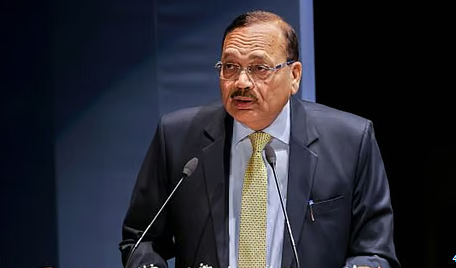
Gangtok: In a landmark step toward modernizing India’s legal system, Sikkim has been as the country’s first state to adopt a fully paperless judiciary. Chief Justice of India Surya Kant made the announcement during a conference in Gangtok, emphasizing how technology is reshaping access to justice.
Addressing the gathering, the CJI reflected on how legal access has evolved. “Earlier, distance for litigants was not measured in kilometers, but in days of travel, difficult terrain, and uncertainty. Today, technology is changing that reality,” he said, adding that digital systems are now connecting citizens directly with courts. “We have moved beyond paper-based proceedings.”
The conference, centered on “Technology and Judicial Education,” has been organized by the High Court of Sikkim along with the Sikkim Judicial Academy. Judges, legal professionals, and policymakers are participating in discussions on how digital tools can improve the justice delivery system.
Supreme Court Justice J.K. Maheshwari described the development as a “remarkable moment,” clarifying that technology is not meant to replace human judgment but to remove barriers such as paperwork, delays, and lost files.
Chief Justice of the Sikkim High Court, A. Muhamed Mustaque, called the initiative a historic milestone. He stressed that the goal is not just to create high-tech courtrooms, but to bring meaningful change to people’s lives by making justice more accessible and efficient.
Justice Bhaskar Raj Pradhan highlighted the need to ensure that digital transformation does not exclude marginalized communities. He noted that technology must be used to make courts faster, fairer, and more affordable, while safeguarding inclusivity.
Sikkim’s Advocate General, Baswa Prabhu S. Patil, explained that the shift to a paperless system aims to eliminate delays caused by missing files, slow document movement, and administrative inefficiencies. He emphasized that the move is not about replacing traditional records, but about ensuring that justice is not delayed due to logistical hurdles.
The event was also attended by Attorney General R. Venkataramani, several High Court judges, and Chief Minister P.S. Tamang. Marking Sikkim’s 50 years of statehood, the Chief Minister expressed pride in hosting the conference and leading a reform that could set a model for the rest of the country.
The initiative positions Sikkim at the forefront of judicial innovation in India, signaling a broader shift toward a faster, more transparent, and technology-driven legal system.

