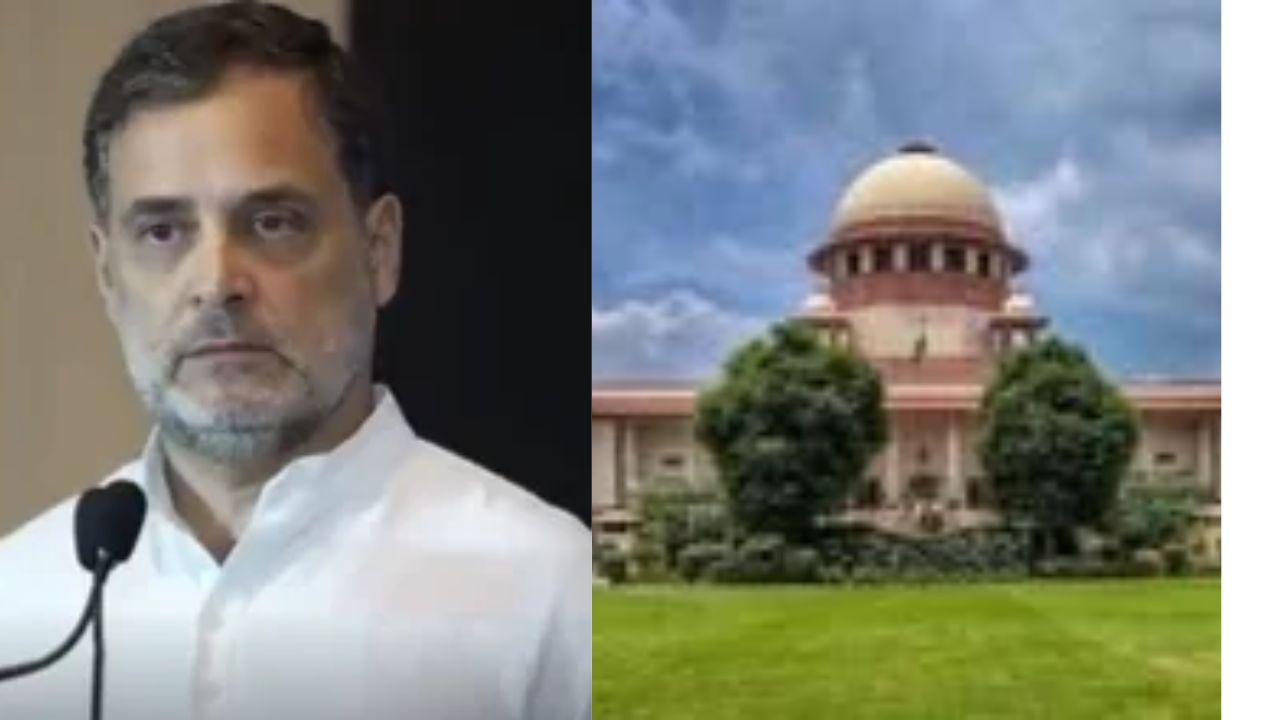
Rahul Gandhi's 48 questions put Election Commission under scrutiny. (Img: X)
New Delhi: The Supreme Court on Tuesday asked the Election Commission of India (ECI) to respond to Congress leader Rahul Gandhi's latest application seeking permission to put 48 formal questions to the poll panel over alleged irregularities in the Special Intensive Revision (SIR) of electoral rolls.
The Bench of Chief Justice of India (CJI) Surya Kant, Justice Joymalya Bagchi and Justice V Mohana passed the order on a petition filed by Gandhi and 10 others and listed the matter for further hearing on December 9.
The petitioners questioned the Election Commission's explanation of the SIR exercise, alleging that its affidavits failed to disclose crucial records relating to the authorisation of the revision, alleged voter deletions and changes to the online electoral registration system.
Senior Advocate Kapil Sibal, appearing for Gandhi, urged the Court to issue notice to the ECI on the plea challenging the poll body's counter-affidavit dated October 26 and seeking permission to serve 48 formal written questions. The questions sought answers on who authorised the SIR, how key decisions were taken and whether all three Election Commissioners were involved in the process.
Senior advocate Harish Salve, representing the Election Commission, told the court that the poll body had serious reservations about the application. The CJI asked the Commission to file its response and raise any objections it wished to place before the court. The Court indicated that it would first hear arguments on whether the proposed questions should be allowed before passing an order.
The questions covered 10 broad areas, with particular attention to the Election Commission's internal decision-making and the management of electoral data. The petitioners sought to know whether Election Commissioners Sukhbir Singh Sandhu and Vivek Joshi recorded any objections, disagreements or reservations about the SIR, ECINET, Form 6 or related court proceedings between February 2025 and October 2026.
They further sought clarification from the ECI's Director General of IT on whether private vendors or contractors had access to modify electoral roll databases. The plea also asked whether bulk voter deletions took place without orders from Electoral Registration Officers and what action was taken on a proposal by Election Commissioner Vivek Joshi for an access audit.
The petitioners further asked about the introduction of a new declaration in online Form 6, the form used for voter registration. It sought details about who approved the change and the state-wise number of voters removed from draft and final electoral rolls. The petitioners sought to know whether urgent approvals from the Election Commission were obtained through WhatsApp messages or personal email accounts.
If the ECI refused to disclose any official document on grounds of privilege, Gandhi requested that the Commission specify the reasons for withholding each record so that the court could examine the claim.
In its counter-affidavit filed on October 26 and supplementary affidavit dated November 14, the Election Commission maintained that the orders for the exercise followed unanimous decisions by its three-member body. Both affidavits were affirmed by Deputy Election Commissioner Bhanu Prakash Yeturu.
The petitioners, however, argued that the Commission did not provide file numbers, meeting dates or minutes to substantiate its claim of unanimous approval. They also cited an August 2025 Right to Information (RTI) response which, according to their application, indicated that no decision had been taken to initiate a nationwide SIR. They further asked Chief Election Commissioner Gyanesh Kumar, along with Election Commissioners Sandhu and Joshi, to provide sworn explanations on these issues.

