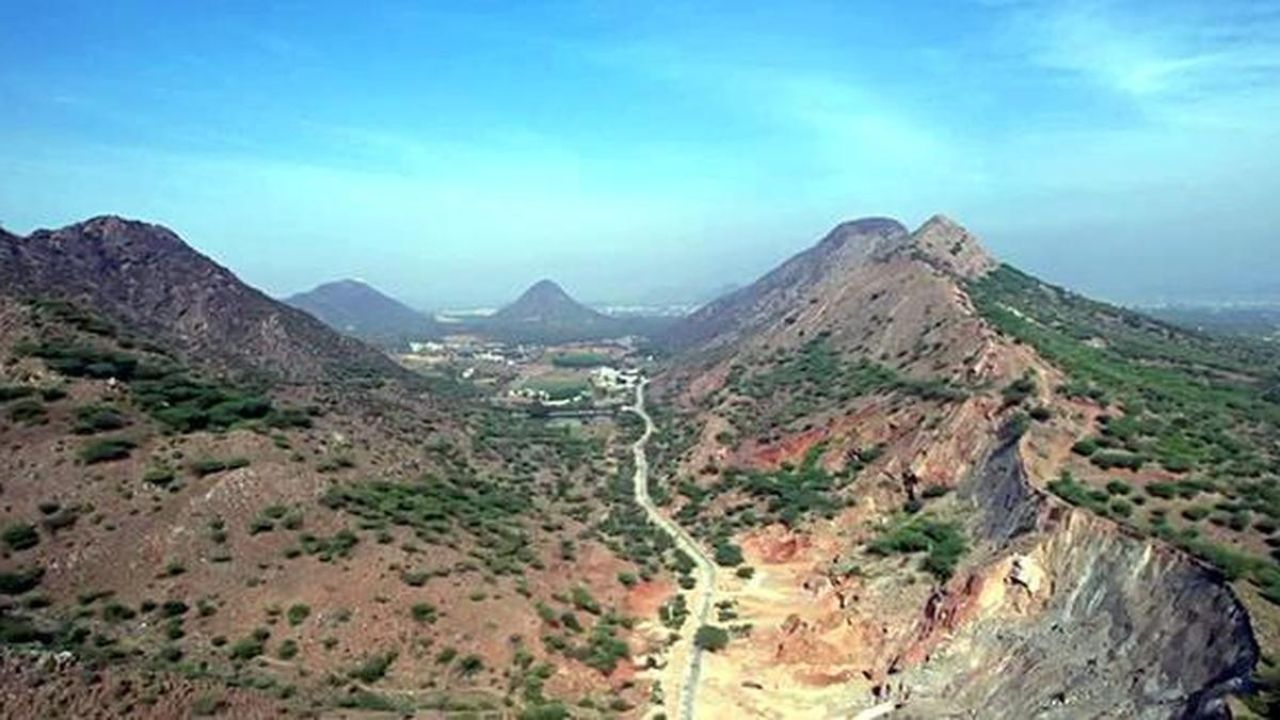
SC stays its 20 Nov Aravalli Range verdict
New Delhi: The Supreme Court on Monday “put in abeyance” its earlier order of 20 November to accept the Union Environment Ministry’s definition of Aravalli hills and Aravalli range.
A bench led by the Chief Justice of India (CJI) Surya Kant also ordered the formation of a new expert committee to examine issues that required to be reviewed in terms of the definition of Aravalli Hills and Ranges.
The definition by the Apex Court in November had exposed most of the Aravalli region to the possibility of being used for mining activities.
The Supreme Court will hear the case on January 21st... #AravalliCase #SupremeCourt #aravallihills #Delhi pic.twitter.com/EVySpksG7L
— Dynamite News (@DynamiteNews_) December 29, 2025
The Top Court also issued notice to the Centre and the four Aravalli states - Rajasthan, Gujarat, Delhi and Haryana, seeking their response to its suo motu case on the issue.
The matter will be taken up for further hearing on 21 January.
Earlier, in its November 20 order, the court had endorsed the recommendations of a committee constituted by the Ministry of Environment, Forest and Climate Change (MoEFCC).
The committee had proposed that an “Aravalli Hill” be defined as any landform located in notified districts with an elevation of 100 metres or more above the surrounding terrain, while an “Aravalli Range” would consist of two or more such hills situated within 500 metres of each other.
The order had also placed a restriction on the grant of new mining leases in these areas until the submission of final expert reports.
The committee further clarified that an Aravalli Hill is not limited to its peak alone but also includes supporting slopes and related landforms.
It explained that the land lying between adjoining hills, along with smaller hillocks and slopes, forms an integral part of the Aravalli Range. These specifications were aimed at ensuring accurate identification of core, buffer, and protected zones.
The November ruling, detailed across 29 pages, stemmed from the long-running environmental proceedings in the T.N. Godavarman Thirumulpad case.
The court had also accepted proposals focused on sustainable mining, a ban on extraction in protected regions, and strengthened safeguards to curb illegal mining activities throughout the Aravalli region.
By temporarily halting the implementation of its earlier directions, the Supreme Court has indicated a cautious and balanced approach, seeking to weigh environmental conservation against developmental interests, while awaiting a comprehensive assessment from the expert committee.

