

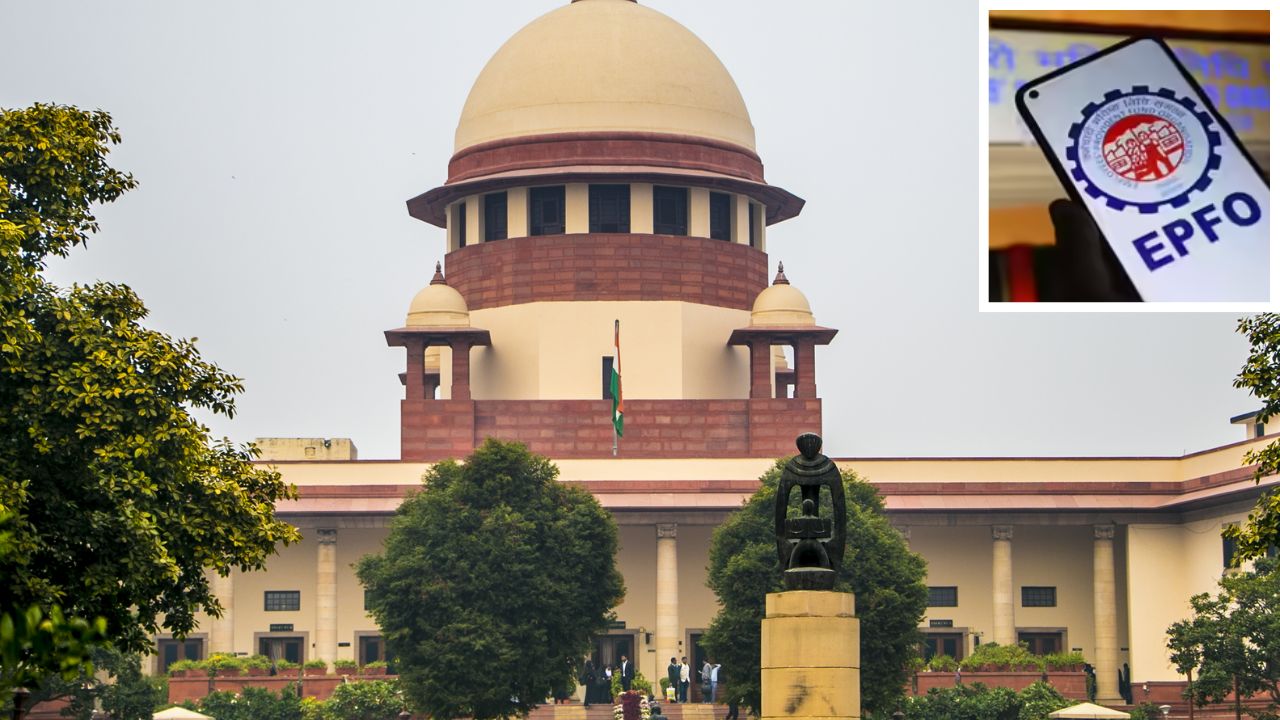
New Delhi: The Supreme Court of India has asked the central government to respond to a petition challenging the rule that requires foreign workers employed in India to contribute their entire basic salary to the Employees' Provident Fund Organisation (EPFO).
A bench headed by Justice P. S. Narasimha issued notice to the government while agreeing to examine whether the rule violates the principle of equality.
‘Railway Travel Insurance Cannot Be Limited To Online Tickets’: Supreme Court gives landmark verdict
Challenge to Existing EPF Rules
Under current provisions, foreign nationals working in multinational companies in India are required to contribute their entire basic salary to the provident fund.
In contrast, Indian employees are subject to a wage ceiling, under which mandatory provident fund contributions apply only to salaries up to ₹15,000 per month. The petition argues that this difference in treatment between Indian and foreign workers may amount to discrimination.
Case Originates From Corporate Challenge
The legal challenge was initially filed in the Delhi High Court by companies including LG Electronics and SpiceJet. The firms argued that the rule placed an excessive financial burden on multinational companies employing foreign professionals in India.
However, in November last year, the High Court dismissed the petitions. It ruled that the Constitution allows the central government to frame and amend provident fund regulations, and that the differentiation between Indian and foreign employees was not unconstitutional.
Amit Shah to head 3-minister committee on oil, gas crisis; Jaishankar and Hardeep Puri members
Supreme Court to Examine Equality Concerns
Following the High Court’s ruling, LG approached the Supreme Court seeking a review of the decision. During the latest hearing, the apex court agreed to consider whether deducting provident fund contributions from the entire salary of foreign workers amounts to discriminatory treatment.
The court has now directed the central government to submit a detailed response on the issue. The matter will be taken up for further hearing after the government files its reply.