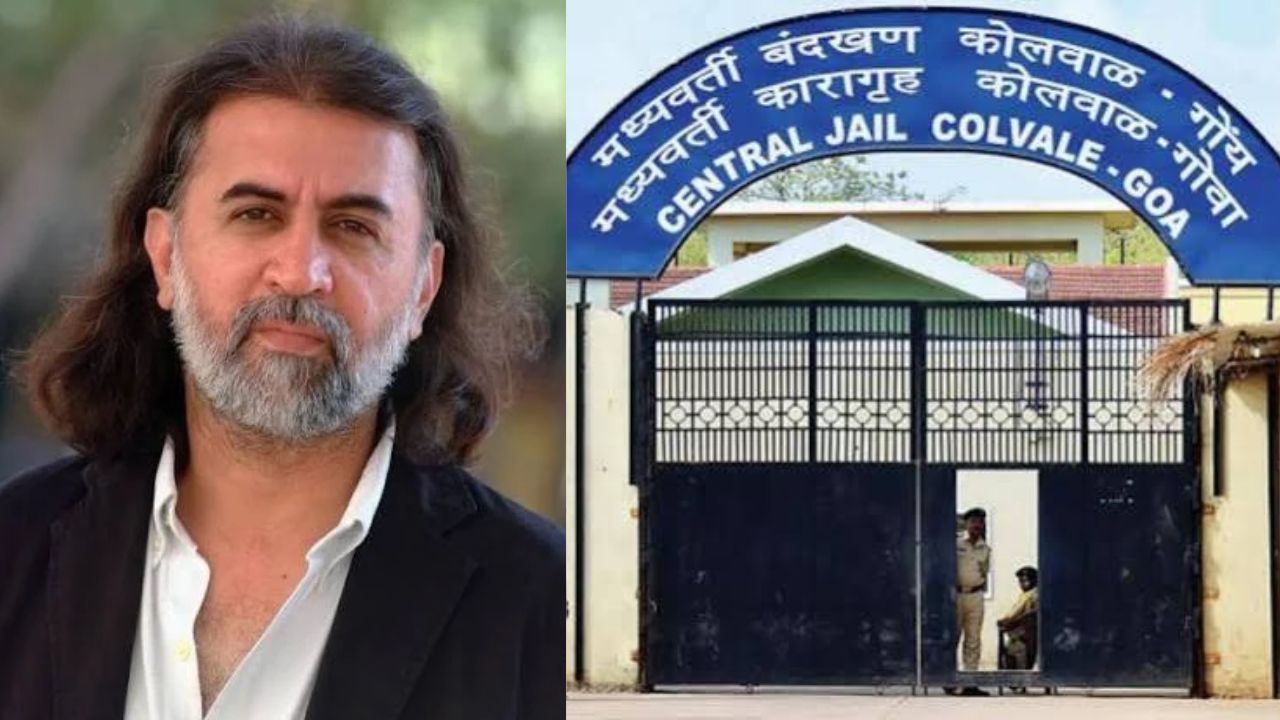
Former Tehelka editor Tarun Tejpal’s decade-old case enters another legal phase. (Img: Pinterest)
Mapusa: Former Tehlka editor-in-chief Tarun Tejpal has surrendered before a Goa court following the Supreme Court's refusal to exempt him from surrender in the 2013 sexual assault case involving a former colleague. He was subsequently sent to the Central Jail at Colvale in North Goa.
The surrender comes against the backdrop of a significant reversal in the decade-old litigation, in which an acquittal recorded by the trial court was subsequently overturned by the Bombay High Court, resulting in Tejpal's conviction and a 10-year sentence.
The prosecution relates to allegations made in November 2013 by a former junior colleague of Tejpal, who accused him of sexually assaulting her inside a hotel lift in Goa during an event organised by Tehelka
The allegations triggered extensive criminal proceedings and attracted considerable public attention because of Tejpal's position as the head of a prominent investigative journalism organisation. Following investigation, the matter proceeded to trial before the Additional Sessions Court at Mapusa.
In May 2021, the trial court acquitted Tejpal of the charges. The court undertook a detailed examination of the prosecution evidence, including the complainant's testimony, contemporaneous communications and her conduct following the alleged incidents.
On an overall appreciation of the evidence, the court concluded that the prosecution had not established Tejpal's guilt beyond reasonable doubt. The acquittal subsequently became the subject of an appeal by the State of Goa.
The litigation took a dramatic turn when the Bombay High Court's Goa Bench overturned the trial court's acquittal and convicted Tejpal. The High Court substantially disagreed with the approach adopted by the trial court in evaluating the complainant's conduct and testimony.
It emphasised that judicial assessment of allegations of sexual violence cannot rest upon predetermined notions regarding how a survivor is expected to behave after an alleged assault.
Upon its independent appraisal of the evidentiary record, the High Court found Tejpal criminally liable and sentenced him to ten years' rigorous imprisonment.
The appellate court's intervention transformed the procedural posture of the case from one involving an acquitted accused to one involving a convicted person facing a substantial custodial sentence.
Tejpal thereafter approached the Supreme Court challenging the High Court's judgment and sentence. An important procedural question arose concerning his obligation to surrender following conviction. Tejpal sought exemption from surrender, while the State maintained that he was required to submit himself to the jurisdiction of the court before pursuing his challenge in accordance with the applicable procedural framework.
The Supreme Court ultimately declined to grant the requested exemption and directed Tejpal to surrender. The direction meant that Tejpal could not avoid custody merely by virtue of having approached the Supreme Court against the High Court's conviction.
In compliance with the Supreme Court's direction, Tejpal appeared before the competent court in Goa and surrendered. His surrender follows the High Court's imposition of the ten-year sentence and enables the proceedings challenging his conviction to move forward within the framework prescribed by law.
The surrender, however, does not constitute the culmination of the appellate process. The conviction and sentence remain subject to the further proceedings arising from Tejpal's challenge before the Supreme Court.
The case has travelled through multiple stages of the criminal justice system over more than a decade, producing markedly different judicial findings at successive levels.
The trial court's acquittal, the High Court's reversal and conviction, followed by the Supreme Court proceedings concerning surrender, have placed questions of evidentiary appreciation, appellate interference with acquittals and procedural compliance at the centre of the litigation.
The proceedings have also generated broader legal discussion concerning the evaluation of testimony in sexual-offence prosecutions and the extent to which a complainant's subsequent conduct can legitimately influence judicial assessment of the prosecution case.
Tejpal's surrender before the Goa court therefore represents the latest procedural development in a case that has remained under judicial scrutiny since 2013, with the ultimate determination of his challenge to the conviction now resting with the Supreme Court.

