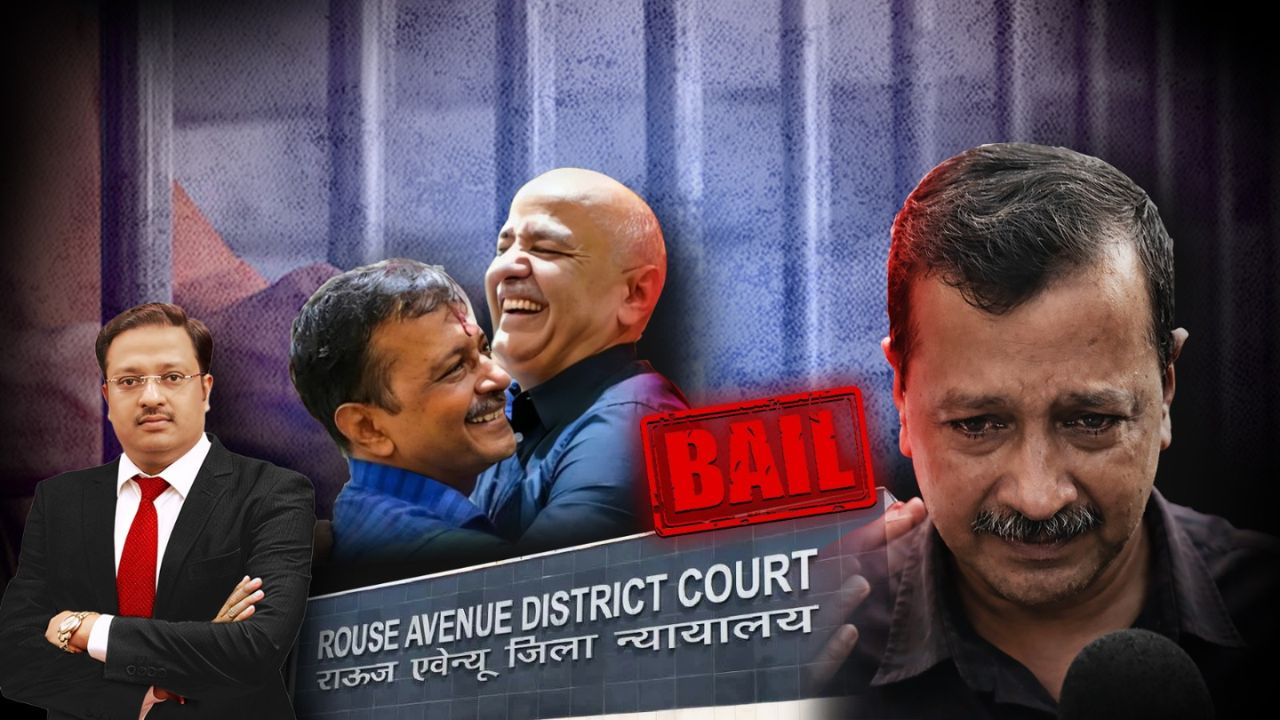
Rouse Avenue Court Acquitts Kejriwal and Others (Image Source: Dynamite News)
New Delhi: The Rouse Avenue Court in Delhi has acquitted former Chief Minister Arvind Kejriwal and 23 others in the long-running liquor policy case. The court ruled that the prosecution failed to provide conclusive evidence beyond reasonable doubt. This landmark decision marks a turning point in a case that dominated headlines for over two years, involving political clashes, administrative scrutiny, and legal debates.
Senior journalist Manoj Tibrewal Aakash analyzed in his special show'The MTA Speaks' that the verdict underscores key issues around the functioning of investigative agencies, political timing of arrests, and the interpretation of evidence in complex economic cases.
The controversy began with Delhi’s 2021-22 liquor policy, which the Aam Aadmi Party (AAP) government argued would increase revenue, introduce transparency, and curb illegal practices by dividing the city into zones and granting licenses to private players. The opposition, particularly the Bharatiya Janata Party (BJP), alleged policy manipulation favoring private interests, along with claims of bribery and misuse of funds for electoral purposes.
Following allegations, Delhi’s Lieutenant Governor recommended a CBI probe. FIRs were filed, and the Enforcement Directorate initiated an investigation under the Anti-Money Laundering Act. High-profile arrests included Kejriwal, who spent 154 days in jail, and Deputy Chief Minister Manish Sisodia, jailed for approximately 530 days. AAP termed these actions political retaliation, while BJP argued they were necessary to uphold accountability.
The case saw intense political rhetoric, with AAP framing it as “democracy versus oppression” and BJP calling it “corruption versus accountability.” Investigative agencies conducted multiple raids and gathered evidence, but ultimately the court found the evidence insufficient to sustain criminal charges.
The court emphasized that criminal convictions require direct, credible, and concrete evidence. Circumstantial claims, alleged statements, or unverified financial transactions alone cannot establish guilt. The judgment reiterated the fundamental principle of giving the benefit of doubt to the accused, which led to Kejriwal and others being acquitted.
The verdict raises questions about the effectiveness of CBI investigations. Opposition leaders argue that despite extensive investigations, raids, and arrests, the failure to secure convictions indicates potential shortcomings in the agency’s case preparation. Some analysts suggest procedural gaps in the charge sheets contributed to the outcome.
Supporters of the government argue that this is not the final word, as the CBI is reportedly preparing an appeal in the High Court. Complex financial cases often involve varying interpretations of evidence across judicial levels. If appealed, the High Court could re-examine the evidence and verdict, potentially altering the political narrative once again.
The timing of Kejriwal’s arrest was widely debated, with critics claiming it was politically motivated to influence elections, while supporters argue the acquittal proves the charges were unsubstantiated. The former CM’s emotional reaction after the verdict drew public attention, interpreted by some as relief after a long struggle, and by others as political theatrics.
Ultimately, this case underscores the complex intersection of law, politics, agency accountability, and public perception in India. While the lower court verdict favors Kejriwal and AAP politically, the legal battle may continue in higher courts, leaving the final outcome uncertain.

