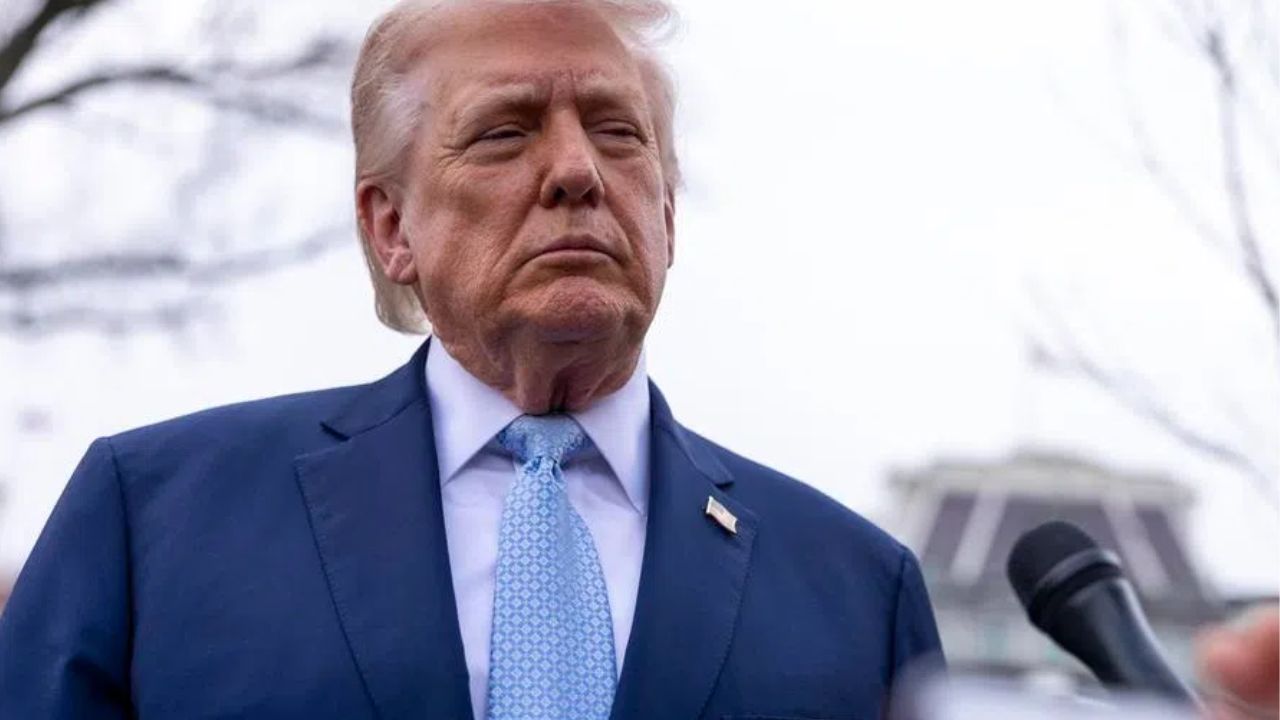
President Donald Trump (Img: Google )
New Delhi: Nearly a month after the launch of Operation Epic Fury on February 28, President Donald Trump faces a deepening crisis that critics say is spiraling beyond his control. What was initially framed as a "short excursion" to eliminate imminent threats has evolved into a grinding regional war, leaving the administration caught between further military escalation and a risky withdrawal.
In a dramatic escalation on Saturday, President Trump issued a stark 48-hour ultimatum to Tehran. Taking to social media, the President threatened to "obliterate" Iranian power plants, starting with the largest facilities, unless the Strait of Hormuz is fully reopened to international shipping.
The waterway-a vital artery for 20% of the world’s oil-remains effectively closed following Iranian retaliatory strikes and mine-laying operations. This bottleneck has sent global energy prices soaring, with Brent crude surpassing $120 per barrel, fueling domestic economic anxiety ahead of the November midterms.
Despite the President’s recent claims that the war has been "won militarily," the reality on the ground suggests otherwise:
While the White House suggests a "winding down" of operations, the Pentagon is simultaneously deploying thousands of additional Marines to the region.
The conflict has also exposed rare daylight between Washington and its closest ally, Israel. While the White House denied prior knowledge of the recent strike on Iran’s South Pars gas field, Israeli officials maintained the operation was coordinated.
Domestically, the MAGA movement shows signs of a rare fracture. While core supporters remain loyal, influential populist voices are beginning to question the cost of a new "forever war." Analysts warn that if gas prices continue to rise and American casualties mount, the Republican party's slim majority in Congress could be the next casualty of the conflict.
As the 48-hour clock ticks down, the world remains on edge. Trump now stands at a definitive crossroads: intensify the offensive by seizing Iranian oil hubs like Kharg Island, or declare a hollow victory and retreat, leaving behind a wounded but defiant regional adversary.
Shining Big! India’s Gold investments jump 60% in a year; Check report here
On Saturday, Iranian missiles struck the southern Israeli towns of Dimona and Arad, injuring over 100 people. The failure of air defense systems to intercept these strikes has raised alarms about Iran's remaining offensive capabilities.
Uttarakhand Cabinet Reshuffle: CM Dhami Keeps Key Portfolios, Five New Faces Added
Friction with traditional allies has reached a breaking point. Trump recently slammed NATO partners as "cowards" for their reluctance to provide naval support in the Gulf, leaving the U.S. increasingly isolated in its "America First" military approach.

