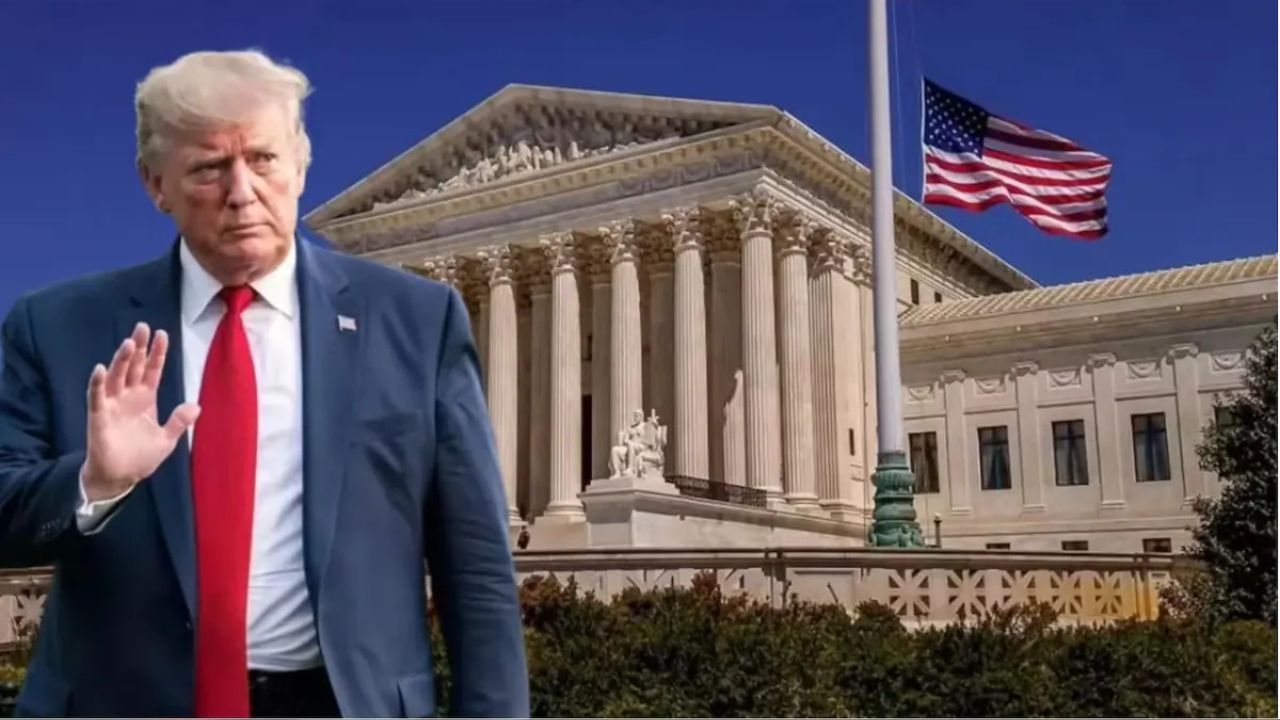
The Supreme Court of the United States on Friday struck down former President Donald Trump’s broad tariff measures
New Delhi: The Supreme Court of the United States on Friday struck down President Donald Trump’s broad tariff measures, ruling that he exceeded his legal authority by imposing import taxes under a 1977 emergency powers statute.
In a 6-3 decision authored by Chief Justice John Roberts, the court upheld a lower court’s finding that Trump’s use of the International Emergency Economic Powers Act (IEEPA) did not grant him unilateral power to impose sweeping tariffs.
Roberts wrote that a president must point to “clear congressional authorisation” to justify such an extraordinary economic action something the administration failed to demonstrate.
Donald Trump Faces Major Setback as US Supreme Court Strikes Down Tariff Policy
The majority included conservative justices Neil Gorsuch and Amy Coney Barrett both Trump appointees along with the court’s three liberal justices.
Dissenting were conservatives Clarence Thomas, Samuel Alito and Brett Kavanaugh.
The ruling underscores divisions within the conservative bloc over the limits of executive authority.
At the heart of the case was Trump’s reliance on the International Emergency Economic Powers Act, a law that allows a president to regulate commerce during a declared national emergency. Trump became the first US president to use the law to impose tariffs on nearly all major trading partners without Congress’s approval.
The Constitution grants Congress the authority to levy taxes and tariffs. The court said accepting the administration’s interpretation of IEEPA would intrude on congressional powers and violate the “major questions” doctrine a principle requiring clear legislative approval for actions of vast economic and political significance.
WB Voter List Row: Supreme Court ropes in judges to fix Bengal voter list after ‘trust deficit’
The case was brought by businesses affected by the tariffs and 12 states. While some tariffs imposed under other statutes remain intact, the ruling blocks a significant portion of Trump’s emergency-based trade measures.
The decision is expected to reshape the balance of power between the White House and Congress on trade policy, with ripple effects across global markets and US economic strategy.

