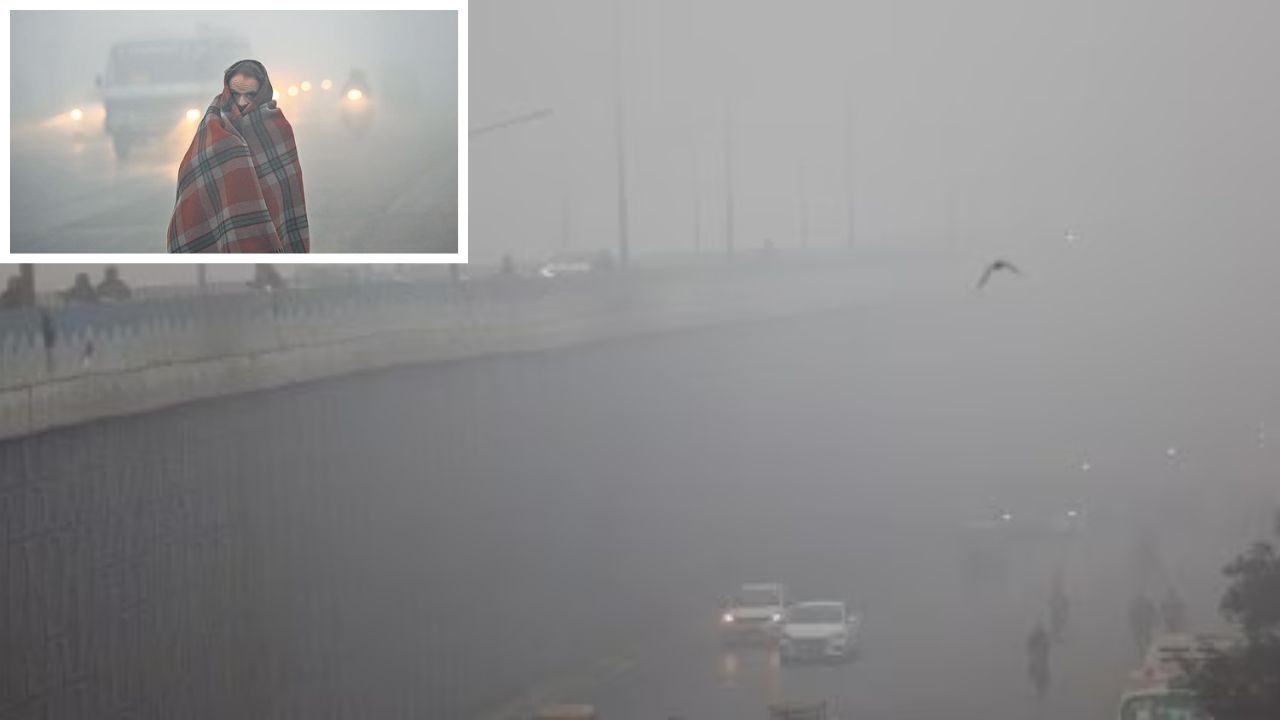
Dense fog and hazardous air grip Delhi
New Delhi: The National Capital and adjoining regions woke up to dense morning fog with significantly reduced visibility, prompting a Yellow Alert from the India Meteorological Department (IMD). The fog is expected to persist through the morning and could last for the next few days, increasing travel disruption on roads and at airports.
IMD has warned that dense to very dense fog will continue in northern India including Delhi, Punjab, Haryana and Uttar Pradesh into the
The minimum temperature early Saturday was around 7-10°C, with highs expected near 22- 23°C under mostly cloudy skies. Light winds and calm conditions are forecast, which will allow pollutants and fog to linger close to the ground.
mint
The Air Quality Index (AQI) in Delhi-NCR continued to show dangerous levels of pollution on Saturday. Several monitoring stations recorded AQI figures in the “very poor” (301–400) category, with pockets creeping toward “severe” (401–500+) levels.
The prolonged smog-fog mix often referred to as “smog” is trapping pollutants near the surface, aggravating health risks for residents, particularly the young, elderly and those with respiratory conditions. Experts say stagnant winds and calm conditions are major contributors to the pollution buildup.
In response to the hazardous air quality, authorities have implemented measures under the Graded Response Action Plan (GRAP) to curb emissions and protect public health. Last week, parts of the region saw indicators reach levels that triggered stricter controls, including restrictions on construction activity and heavy vehicle movement.
Experts and officials continue to urge residents to limit outdoor exposure, use masks, and check air quality updates frequently as the cold, foggy conditions suppress pollutant dispersion.
Dense fog combined with heavy pollution has reduced visibility on major roads across the capital and its suburbs, causing slower commutes and increased travel times. At Indira Gandhi International (IGI) Airport, flights are operating under low‑visibility procedures, leading to delays and advisories for travellers to confirm schedules before departure.
Delhi’s pollution woes are expected to persist in the coming days unless wind patterns change or rainfall arrives to clear the air. Local authorities are monitoring conditions closely as residents brace for another day under the thick grey winter haze.

