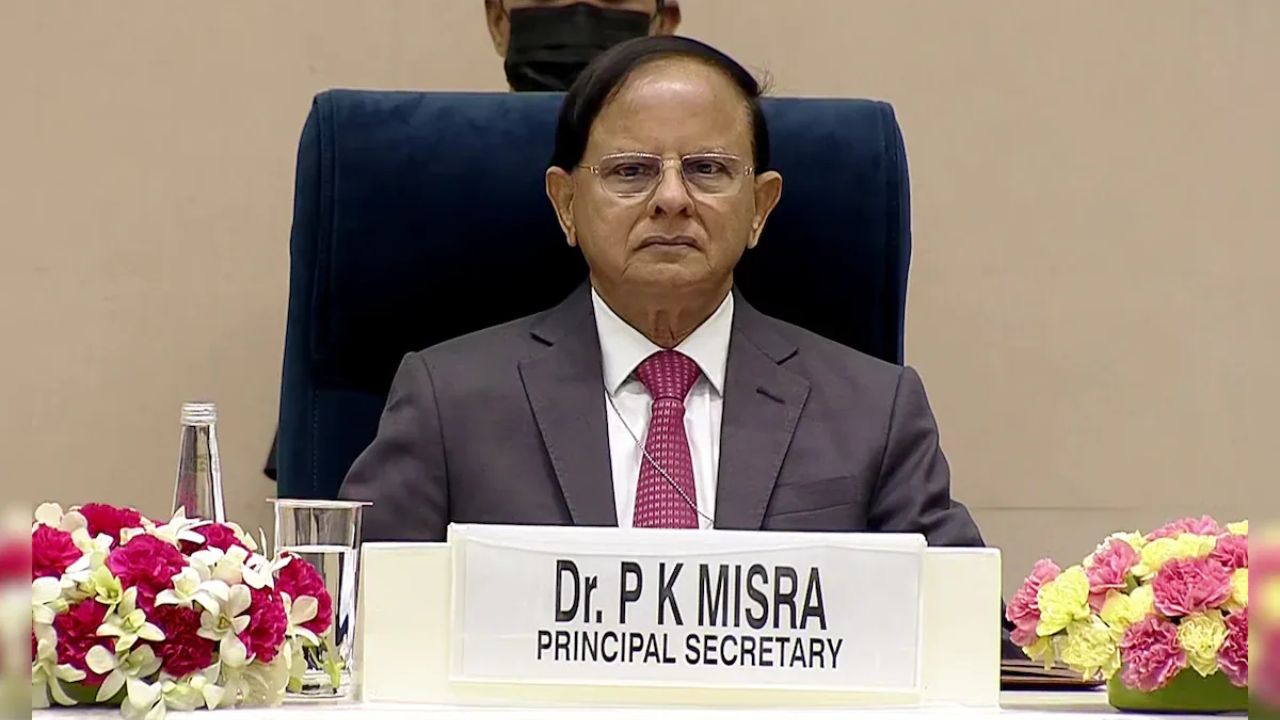
P K Mishra stresses reliable data for Viksit Bharat (Img: X)
New Delhi: Principal Secretary to the Prime Minister Dr P K Mishra on Tuesday stressed the need for a strong and reliable statistical system to support evidence-based policymaking and help India achieve its Viksit Bharat-2047 vision.
He was delivering a keynote address at the inaugural session of the Conference of State Planning, Finance and IT Secretaries, organised by the Ministry of Statistics and Programme Implementation (MoSPI) in New Delhi.
Mishra said statistics, technology, planning and governance were increasingly interconnected elements of India's development journey.
“What cannot be measured cannot be managed effectively. And what cannot be managed effectively cannot be transformed sustainably,” he observed, highlighting the role of credible data in tracking development and assessing the impact of government policies.
He said that India's statistical systems must keep pace with an economy that is becoming increasingly digital, formalised and interconnected. He pointed to the introduction of the new National Accounts Series, with 2022-23 as the base year, alongside updated Consumer Price Index (CPI) and Index of Industrial Production (IIP) series, as steps towards aligning statistical methods with changing economic realities.
Also Read: ‘Power Should Empower Humanity’: PM Modi Reacts to IMF’s 7% India Growth Forecast
He also called for stronger State Statistical Systems, noting that development outcomes are shaped by policies implemented at the state level. He said that better institutional capacity and closer coordination between the Centre and states would improve the quality of official statistics.
He also highlighted the potential of artificial intelligence, machine learning, geospatial systems, satellite imagery and advanced analytics. He said these technologies could make official statistics more timely, accurate and useful.
However, he cautioned against allowing technological progress to undermine data quality and public trust.
Also Read: UPI MDR Rollout Deferred: 0.4% Fee On Transactions Above Rs 2,000 To Start After Diwali
“Speed cannot come at the cost of accuracy. Greater use of data cannot come at the cost of confidentiality,” he said, stressing the importance of transparency, privacy, security and accountability.
Principal Secretary to PM described statistics as an important instrument of cooperative federalism, helping the Centre and states compare outcomes, identify successful practices and learn from regional differences.
As India moves towards 2047, national averages alone would not be sufficient, he said. He pointed out that more detailed data at the state, district and local levels would be needed to identify development gaps and guide targeted interventions.
He called for a collective effort involving MoSPI, State Statistical Offices, finance, planning and IT departments, NITI Aayog, academic institutions and other stakeholders to build a statistical system that is trusted, transparent, technology-enabled and relevant to policymaking.
Such a system, Mishra said, would not only measure India's transformation but also help guide and accelerate progress towards Viksit Bharat-2047.

