Kalanemi is a mythological demon mentioned in the Ramayana, known for his deceit and trickery. Sent by Ravana, he disguised himself as a holy monk to delay Hanuman from bringing the life-saving Sanjeevani herb for Lakshmana.
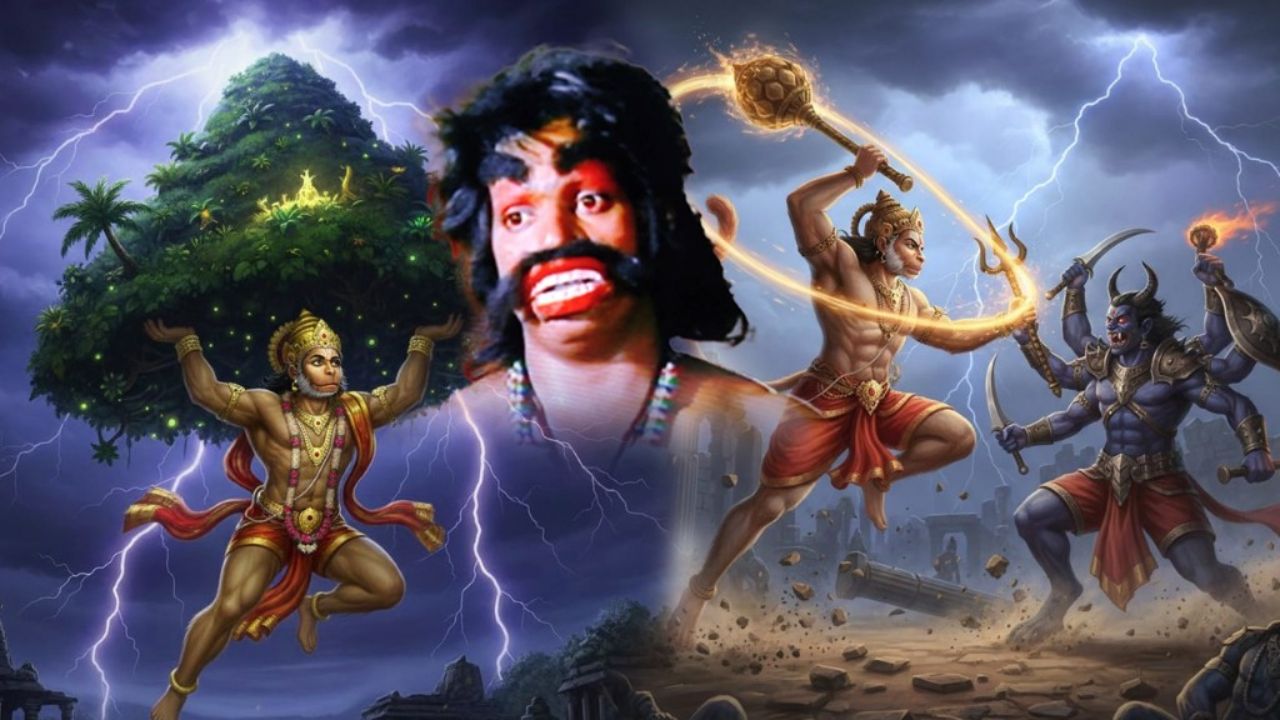
Kalanemi: The Demon Who Tried to Stop Hanuman
New Delhi: The word "Kalanemi" has suddenly come into the spotlight in recent days. Amid the controversy surrounding the Magh Mela in Prayagraj and Shankaracharya Avimukteshwarananda, Uttar Pradesh Chief Minister Yogi Adityanath mentioned the word from a public platform. Without naming anyone, he said that some people are trying to weaken Sanatan Dharma under the guise of religion and that society needs to be vigilant against such individuals. Following this, people on social media became curious to know who "Kalanemi" is and what its symbolic meaning is.
Kalanemi is not just a mythological character, but a profound symbol. In religious and cultural contexts, it represents a person or tendency who appears saintly, religious, or moral on the outside, but whose inner motives are deceitful and fraudulent. In today's context, the word "Kalanemi" is being used to describe those who mislead society under the guise of religion.
'Kalanemi' is a Sanskrit word. 'Kaal' means time or darkness, and 'nemi' means the edge of a wheel. Literally, it refers to the cycle of time and its dark side. In Hindu mythology, Kalanemi has become a symbol of deceit, illusion, and fraud. The character of Kalanemi in the Ramayana, in particular, reflects this tendency.
In different versions of the Ramayana, Kalanemi is described as a powerful and clever demon. He was the son of Maricha, who was the maternal uncle of Ravana. Because of this, Kalanemi was Ravana’s cousin or close relative. He was an important warrior in the army of Lanka and was known not only for his strength but also for his tricks and deception. Some ancient texts say he belonged to the demon lineage and had strong connections to it. In certain stories, he is also linked to other births, showing his role as a recurring evil force.
Kalanemi’s most important role in the Ramayana is connected to saving Lakshmana’s life. During the war between Lord Rama and Ravana, Meghnad attacked Lakshmana with a powerful weapon, leaving him unconscious. The royal doctor Sushena said that Lakshmana could be saved only if the Sanjeevani herb was brought from the Dronagiri mountain before sunrise. On Lord Rama’s command, Hanuman flew towards the mountain to bring the life-saving herb.
When Ravana learned about Hanuman’s mission, he sent Kalanemi to stop him. Using his magical powers, Kalanemi created a beautiful ashram and a calm lake on the way. He took the disguise of a holy monk and waited. Feeling tired and thirsty, Hanuman stopped at the ashram. The fake monk invited him to rest and take a bath, promising special knowledge afterward.
As Hanuman entered the lake, a crocodile caught his foot. Hanuman killed it, and the crocodile turned into a heavenly nymph (apsara). She explained that she had been cursed and was freed by Hanuman. She also warned him that the monk was actually Kalanemi, a demon sent by Ravana to delay the mission.
After the truth was revealed, Kalanemi showed his real form and fought Hanuman. However, Hanuman defeated and killed him with a single blow. It is believed that this event took place at Vijayethua Teerth in present-day Uttar Pradesh, where a sacred pond still exists today.
Kalanemi has been mentioned before in modern politics and administration. In 2025, Uttarakhand Chief Minister Pushkar Singh Dhami launched "Operation Kalanemi," aimed at taking action against those who committed fraud and crimes under the guise of religious faith during the Kanwar Yatra.

