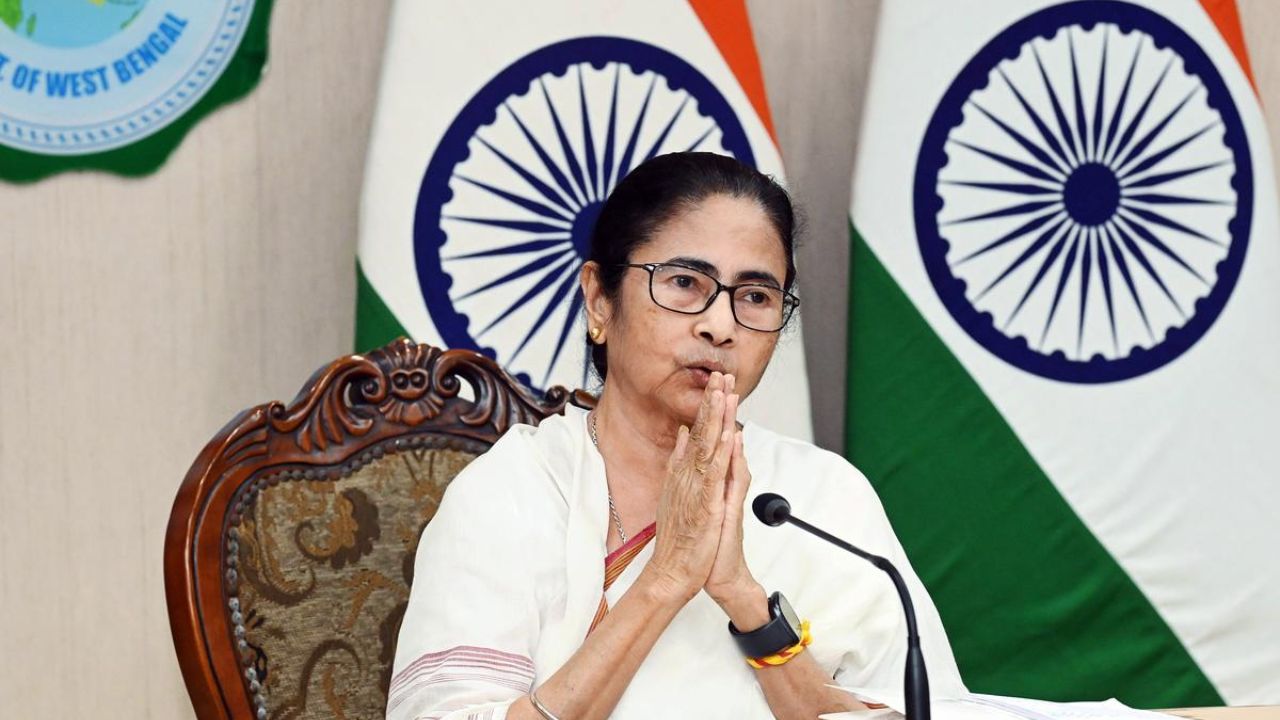
Mamata Banerjee refuses to resign as CM
New Delhi: The West Bengal Assembly election results saw a resounding victory for the BJP, securing 207 seats. On the other hand, the TMC's defeat comes as a double blow to Mamata Banerjee, as she also lost her own Bhawanipur Assembly seat.
Typically, a Chief Minister resigns after losing an election; subsequently, they are appointed as a 'Caretaker Chief Minister' to serve until the winning party forms a new government and appoints its own Chief Minister. However, Mamata Banerjee has categorically announced that she will not resign from the post of Chief Minister.
In fact, amidst the defeat suffered after ruling Bengal for 15 years, Mamata Banerjee held a press conference. She leveled serious allegations against the BJP and the Election Commission. With palpable aggression, she made it abundantly clear that she has no intention of resigning from the office of Chief Minister. Given this situation, the crucial question arises: if 'Didi' does not resign, how will a new government be formed in Bengal? Let us examine the process.
What Happens If Mamata Does Not Resign?
Mamata Banerjee's refusal to resign from the post of Chief Minister is an issue that can only be understood through the lens of constitutional rules and procedures. The rules stipulate that if a Chief Minister refuses to resign, the Governor is vested with special powers to address the situation.
Specifically, the Governor can demand the resignation of the defeated Chief Minister. Furthermore, if the Chief Minister still refuses to step down, the Governor possesses the authority to directly dissolve the Legislative Assembly.
The Governor Holds All Authority
In such a scenario, the Governor can directly dismiss the Chief Minister from their post. Should the Chief Minister take any obstructive action, or if a major constitutional crisis ensues, the Governor may recommend the imposition of President's Rule in the state under Article 356 of the Constitution.
Such a situation typically arises in the event of a failure of the constitutional machinery within a state. However, in the case of West Bengal, the election results have already been declared-thereby making it clear which party will form the government in the state-and consequently, no situation amounting to a constitutional crisis appears to be emerging.
How will the new government be formed in Bengal?
Under Article 164 of the Constitution, the Governor possesses the authority to appoint a new Chief Minister in the state and administer the oath of office. Following the dismissal of the incumbent government and Chief Minister-who suffered defeat in the elections-the Governor may designate the leader of the legislative party (elected by the victorious legislators) as the Chief Minister, thereby paving the way for the formation of a new government.
In this context, even if Mamata Banerjee were not to tender her resignation from the post of Chief Minister, the Governor-exercising his constitutional prerogatives-could instantly terminate her powers and initiate the process for the formation of a new government led by a new Chief Minister in the state.

