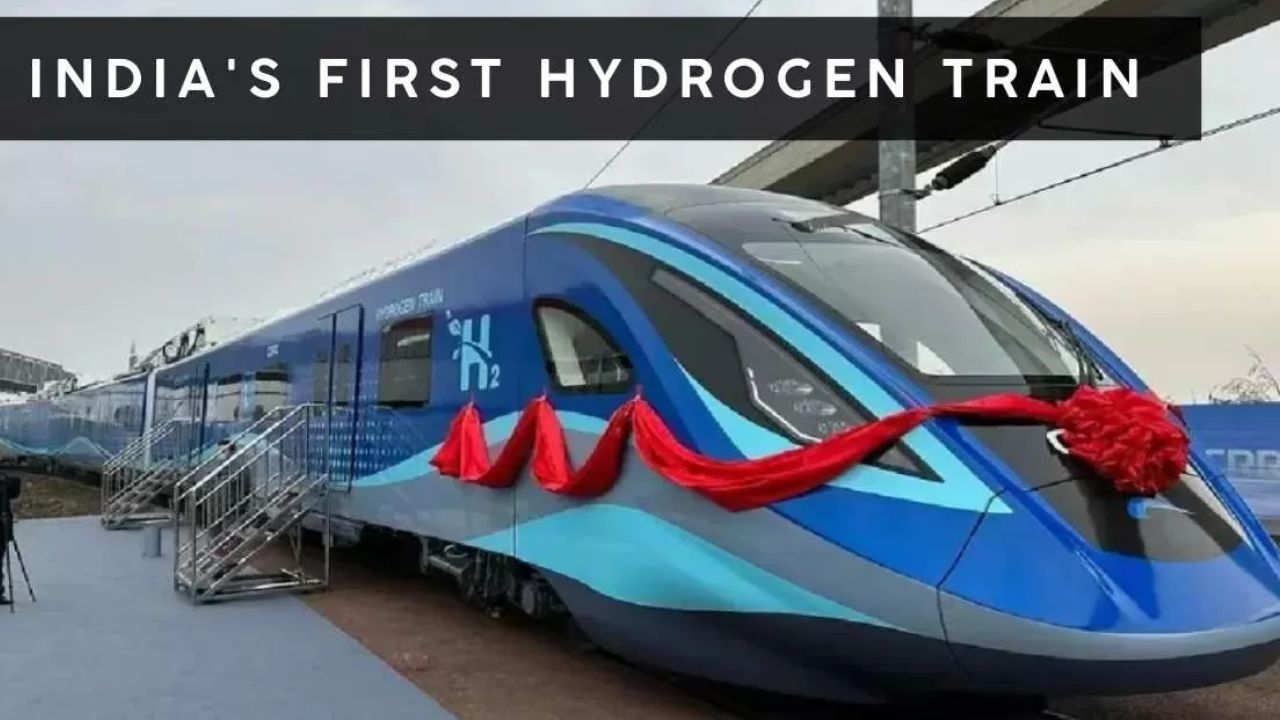
A hydrogen train is a passenger train powered by hydrogen fuel cells (Img: X)
New Delhi: A hydrogen train is a passenger train powered by hydrogen fuel cells instead of a conventional diesel engine. Hydrogen stored in onboard tanks reacts with oxygen inside fuel cells to generate electricity, which powers the train's electric motors. The only direct by-product of this process is water vapour, making hydrogen trains a cleaner alternative to diesel-powered locomotives.
India's first hydrogen-powered train operates on the Jind–Sonipat railway section in Haryana via Gohana. The route covers a distance of approximately 89 kilometres and has been selected as the country's pilot hydrogen rail corridor.
Also Read: PM Modi Flags Off India’s First Hydrogen Train: Route, Features, Fares and Key Details
The train has a design speed of 110 kmph, while its maximum operational speed is 75 kmph. It consists of 10 passenger coaches with a carrying capacity of around 2,600 passengers, making it suitable for regional passenger services.
The train is equipped with a 1,200 kW hydrogen fuel cell propulsion system. Instead of burning diesel, the fuel cell converts hydrogen into electricity through an electrochemical process. The generated electricity powers traction motors that drive the train, resulting in quieter operation and zero tailpipe emissions.
Passengers are expected to pay fares similar to existing passenger train services on the route. According to reports, ticket prices are likely to range between ₹5 and ₹25, depending on the travel distance, making the service affordable for regular commuters.
A hydrogen train uses compressed hydrogen gas stored in onboard tanks. The hydrogen reacts with oxygen in a fuel cell to generate electricity, which powers the train's electric motors. The only direct emission is water vapour.
India's first hydrogen train has a design speed of 110 kmph, while its maximum operational speed is 75 kmph.
India's first hydrogen-powered passenger train was launched on the Jind–Sonipat route in Haryana. It is equipped with a 1,200 kW hydrogen fuel cell propulsion system and is being operated by Indian Railways as a pilot green mobility project.
Yes. Hydrogen trains are considered eco-friendly because they produce zero tailpipe carbon emissions. The fuel cell emits only water vapour, making them cleaner and quieter than diesel-powered trains.
Both hydrogen and electric trains use electric motors, but the source of electricity is different. An electric train draws power from overhead wires or a third rail, whereas a hydrogen train generates electricity onboard using hydrogen fuel cells. This allows hydrogen trains to operate on non-electrified railway lines without relying on external power infrastructure.

