Akhilesh Yadav raises JPNIC lease issue during Raksha Bandhan programme in Lucknow
Lucknow: A new political battle erupted in Uttar Pradesh on Thursday after Samajwadi Party chief Akhilesh Yadav questioned the state government’s decision to lease Lucknow’s Jayaprakash Narayan International Centre (JPNIC) to a private company.
The controversy gained attention as JPNIC, a major infrastructure project built during the previous Samajwadi Party government, remained incomplete for years despite significant public investment. The latest lease decision has now turned the unfinished Gomti Nagar landmark into a fresh BJP-SP political flashpoint.
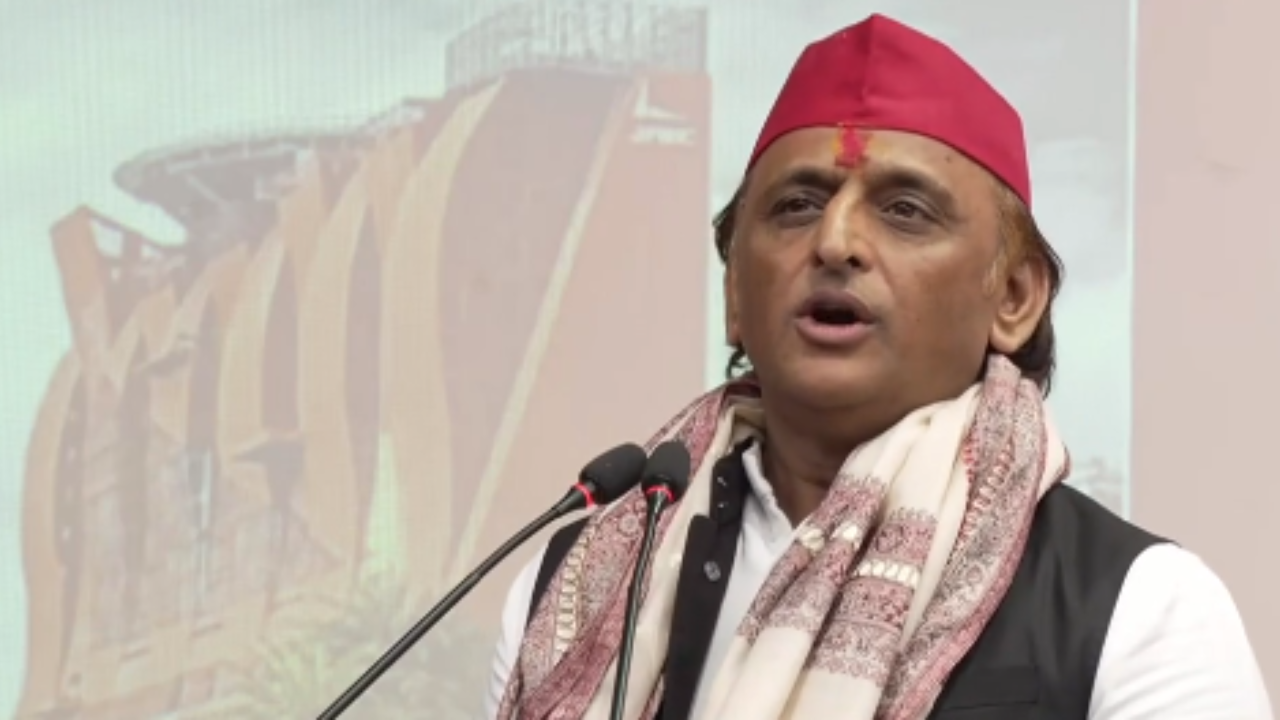
Akhilesh raised the issue during a Raksha Bandhan programme organised at the Samajwadi Party headquarters in the state capital. The event at the Lohia Auditorium witnessed participation from a large number of women supporters who tied rakhi to the SP chief and extended festive greetings.
After the celebration, the SP chief addressed the media and criticised the BJP-led Uttar Pradesh government over the JPNIC lease agreement, management of public properties, unfinished infrastructure projects and education policies.
The controversy has triggered a wider debate over whether government-built assets created through taxpayers’ money should be managed by private companies or remain under direct public control.
The latest controversy began after the Uttar Pradesh cabinet approved the proposal to lease the operations of Jayaprakash Narayan International Centre in Gomti Nagar, Lucknow, to a private company.
The decision immediately became a political issue, with the Samajwadi Party opposing the move and questioning the government’s approach towards public infrastructure.
Akhilesh argued that projects developed using public funds should primarily benefit citizens and questioned why a major government facility was being handed over for private operations.
He claimed that the JPNIC project was created with public money and should not be shifted towards private management without considering public interest.
The SP chief said his party would continue raising issues related to government accountability, development projects and welfare concerns affecting people.
The Uttar Pradesh government’s approach is based on improving the utilisation of stalled or unused infrastructure projects through better management systems.
Officials and supporters of the decision argue that private participation can bring investment, professional expertise and operational efficiency to large public facilities that have remained inactive for years.
The government’s argument is that unused assets should be converted into functional centres instead of remaining locked due to financial or administrative challenges.
The JPNIC debate has therefore expanded beyond one project and become a larger discussion about public-private partnerships, infrastructure management and development models in Uttar Pradesh.
During his press conference, Akhilesh questioned why the construction of JPNIC could not be completed despite years of work and government spending. He highlighted that the project was started in 2013 during the Samajwadi Party government and was planned as a major public facility in Lucknow.
According to him, a large portion of construction work had already been completed and payments had been made, but the project remained unfinished after the change of government in 2017. He questioned why the remaining work was not completed despite the importance of the facility and its location in one of Lucknow’s prime areas.
The SP chief alleged that instead of completing public projects, the government was moving towards transferring important assets to private entities.
Jayaprakash Narayan International Centre, located in Gomti Nagar, Lucknow, was planned as a major multi-purpose facility featuring spaces for sports activities, social programmes, cultural events and public functions.
The construction started in 2013 under the previous Samajwadi Party government, with the project envisioned as one of Lucknow’s landmark developments.
However, after the BJP government came to power in Uttar Pradesh in 2017, construction work stopped before the centre became fully operational.
Reports suggest that finishing work worth around ₹50 crore remained pending. The Lucknow Development Authority faced difficulties in completing the remaining work due to financial and administrative challenges.
For several years, the unfinished structure remained unused, raising questions over maintenance, public investment and planning of large government projects.
The latest lease decision has once again brought JPNIC into the spotlight, reviving debate over why a major infrastructure project remained incomplete for so long.
Apart from the JPNIC lease controversy, Akhilesh Yadav also targeted the Uttar Pradesh government over education policies and government school infrastructure.
During his press conference, the SP chief claimed that thousands of primary schools had been closed in the state and said that education would remain one of the major priorities of his party.
He announced that if the Samajwadi Party returns to power in Uttar Pradesh, around 26,000 closed primary schools would be reopened and efforts would be made to strengthen the government education system.
The statement has added another dimension to the political debate, with education, employment and opportunities for young people emerging as key issues in Uttar Pradesh politics.
The Samajwadi Party is attempting to connect these issues with students, rural families and voters who depend on government institutions for basic services.
The JPNIC lease dispute has moved beyond a single infrastructure project and has become part of a larger political discussion about government-owned properties. Opposition parties argue that assets built using taxpayers’ money should primarily remain focused on public welfare and accessibility.
On the other hand, supporters of private participation believe that professional management can revive unused infrastructure, attract investment and prevent government properties from remaining inactive. The debate highlights a growing question in Indian governance, whether stalled public projects should continue under government control or be opened for private partnerships to ensure better utilisation.
The JPNIC controversy has therefore become a reflection of a wider policy debate involving development, accountability and public-private collaboration.
For many residents of Lucknow, JPNIC represents more than just a government building. It reflects the challenges faced by ambitious public projects that remain incomplete despite years of planning and investment. The facility in Gomti Nagar was expected to become a major destination for sports events, cultural programmes and public activities. However, years of delay transformed the project into a symbol of unfinished development work.
The latest lease decision has once again raised expectations among citizens who want the centre to become operational and contribute to the city’s infrastructure growth. The key question now remains whether the new arrangement will finally convert the long-pending project into a fully functional public facility.
The JPNIC issue has provided both BJP and Samajwadi Party with a fresh opportunity to present their political narratives before the people of Uttar Pradesh. For Akhilesh Yadav, the controversy allows the SP to highlight issues related to public money, government accountability and protection of projects associated with previous governments.
For the BJP government, the focus remains on improving the use of stalled infrastructure and ensuring that large investments do not remain unproductive. The political exchange reflects a broader competition between the two parties over development, governance and the management of public resources.
With Uttar Pradesh remaining one of India’s most politically important states, such issues are likely to continue becoming major points of public debate. The controversy has once again placed Lucknow’s infrastructure projects, government asset management policies and political ownership of development initiatives at the centre of discussion.

