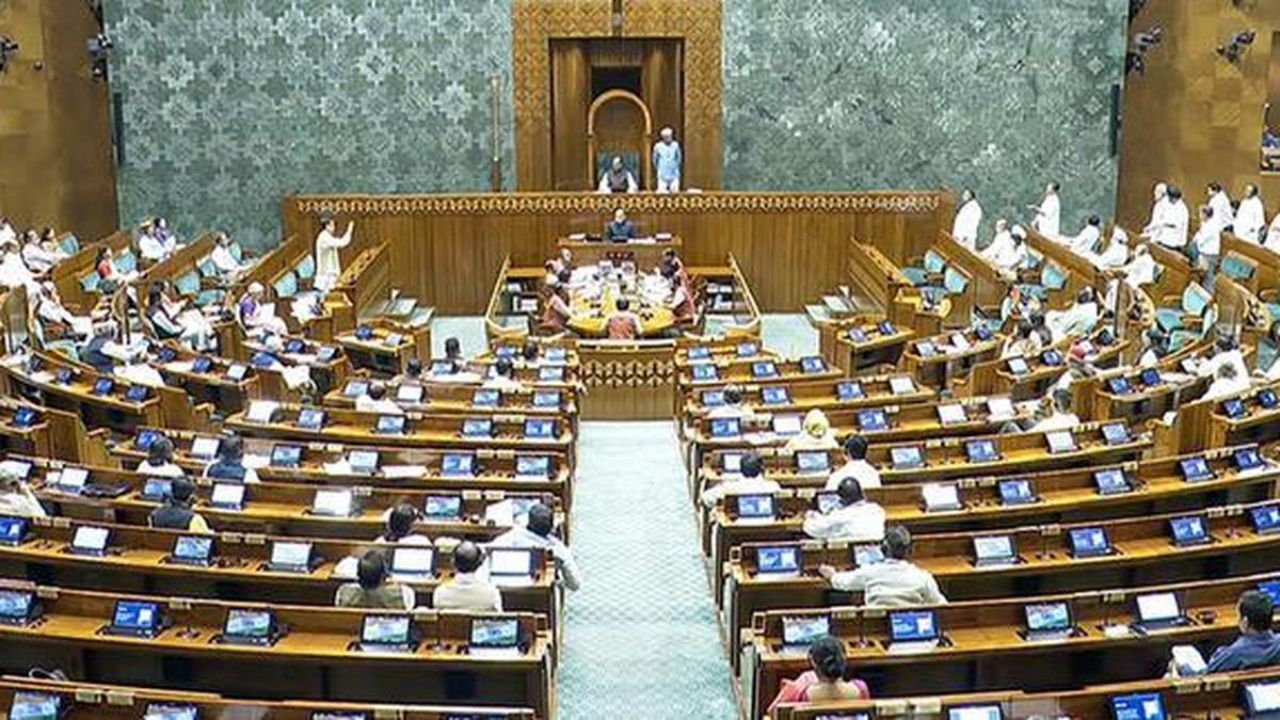
The budget session will reconvene on April 16.
New Delhi: The budget session of the Parliament was adjourned on Thursday for a two-week recess and will reconvene on April 16. The government chose not to end the session sine die, indicating that crucial legislative business is still pending.
Union Parliamentary Affairs Minister Kiren Rijiju said the House would meet again for a limited period to take up important constitutional matters.
Delhi to introduce real-time Yamuna water monitoring system to tack river pollution
Rajya Sabha adjourned to meet again on 16th April at 11 am
— Dynamite News (@DynamiteNews_) April 2, 2026
The Lok Sabha approved the Central Armed Police Forces (General Administration) Bill, 2026, by voice vote after it had been cleared by the Rajya Sabha.
The Bill lays down new rules for appointments in senior ranks of CAPFs. It mandates that 50 per cent of Inspector General posts and at least 67 per cent of Additional Director General posts be filled through deputation.
All positions at the level of Special Director General and Director General will be filled exclusively through deputation, sparking debate over its impact on cadre promotions.
The Rajya Sabha also passed the Jan Vishwas (Amendment of Provisions) Bill, aimed at reducing criminal penalties across a wide range of laws.
The Bill proposes amendments to 784 provisions across 79 Central Acts governed by 23 ministries. Of these, 717 provisions are set to be decriminalised, while 67 will be modified to simplify compliance and improve ease of living.
In another key development, Parliament passed legislation recognising Amaravati as the sole and permanent capital of Andhra Pradesh.
The proposal received support from most parties in the Rajya Sabha, with the YSR Congress Party being the lone major opposition.
The next phase of the session is expected to focus on amendments to the Women's Reservation Act, 2023.
The government plans to accelerate its implementation through delimitation based on the 2011 Census. This could increase the strength of the Lok Sabha to 816 members, with 273 seats reserved for women.
With several important reforms lined up, the session’s next phase is expected to witness intense debate. The recess period will likely be used for consultations before Parliament reconvenes.

