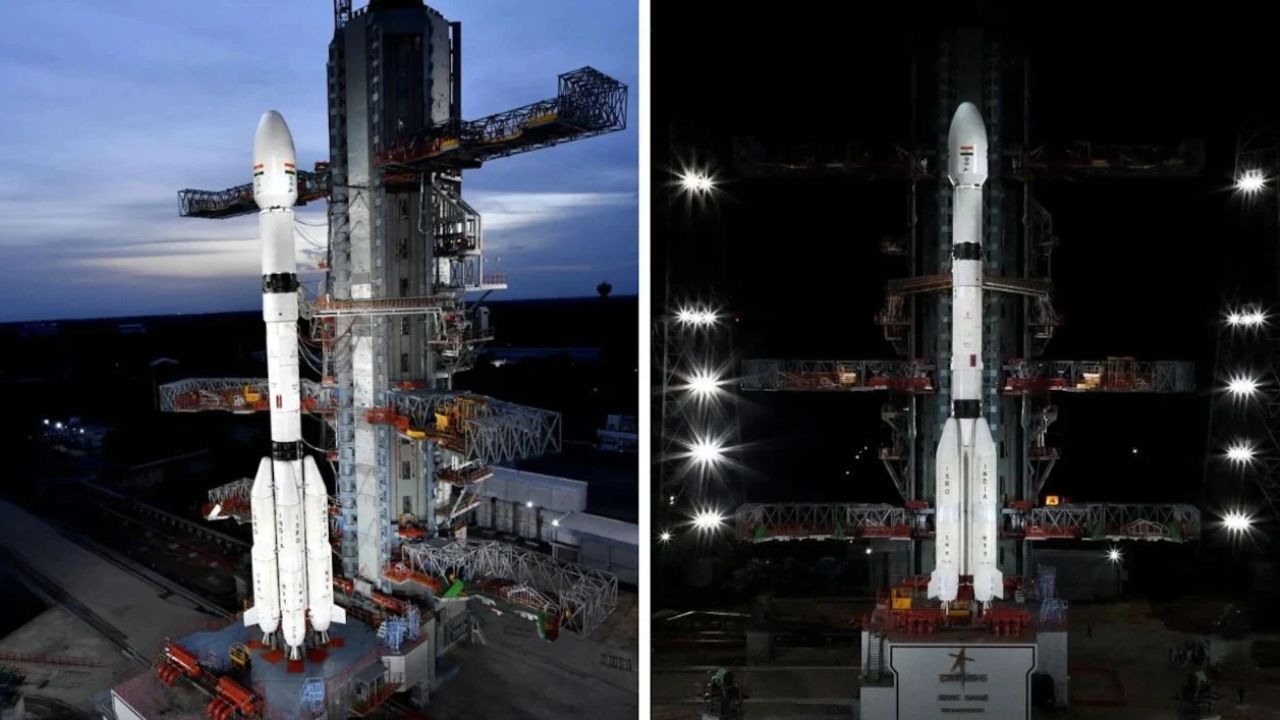
EOS-05 is India's first Earth-observation imaging satellite intended for a geosynchronous orbit (Img: ISRO)
Sriharikota: The Indian Space Research Organisation (ISRO) is set for a crucial mission in the early hours of September 4 as its Geosynchronous Satellite Launch Vehicle (GSLV-F17) prepares to launch the EOS-05 Earth observation satellite from the Satish Dhawan Space Centre.
Scheduled for liftoff at 2:55 am, the mission is being closely watched as it comes at a challenging time for India’s space agency, which has faced setbacks after recent launch failures.
The GSLV Mk II rocket, often nicknamed “Naughty Boy” because of its unpredictable early history, will carry EOS-05 into a geosynchronous orbit nearly 36,000 kilometres above Earth.
For ISRO, the GSLV-F17/EOS-05 mission is more than just another satellite launch. It is seen as an opportunity to rebuild confidence and showcase the reliability of India’s space programme.
The agency’s trusted PSLV rocket suffered consecutive setbacks in recent years, leading to increased focus on the performance of other launch vehicles. However, officials have maintained that the GSLV Mk II operates on a different technology platform and is not directly linked to PSLV failures.
EOS-05 will become India’s first Earth observation satellite designed to operate from a geosynchronous orbit. Unlike low-Earth orbit satellites that pass over locations periodically, EOS-05 will provide a continuous view of the Indian region.
With a weight of around 2,367 kg, EOS-05 will provide high-value imaging data for scientific and strategic purposes.
The GSLV earned its unusual nickname due to its history of technical challenges. In its initial 18 flights, several missions faced difficulties before the rocket matured into a dependable launch vehicle.
A major milestone in GSLV’s journey was the development of India’s indigenous cryogenic engine technology, a capability that took years of research and overcoming international technology restrictions.
The successful development of cryogenic propulsion helped India achieve greater independence in launching heavier satellites.
The EOS-05 mission also carries memories of the failed EOS-03 launch in 2021, when the GSLV-F10 mission could not complete its objective after a problem during the cryogenic stage.
Five years later, EOS-05 represents a second opportunity to demonstrate the strength of India’s advanced satellite technology.
Once placed in its designated orbit, EOS-05 will act like a permanent eye over the Indian subcontinent, offering continuous monitoring for weather patterns, natural disasters and strategic requirements.
Standing over 51 metres tall and weighing more than 420 tonnes at liftoff, the GSLV-F17 rocket will attempt to prove that ISRO’s “Naughty Boy” can still deliver when the nation is watching.
A successful launch could mark a major confidence boost for India’s space programme and signal ISRO’s return to a stronger phase after recent challenges.

