English
 English

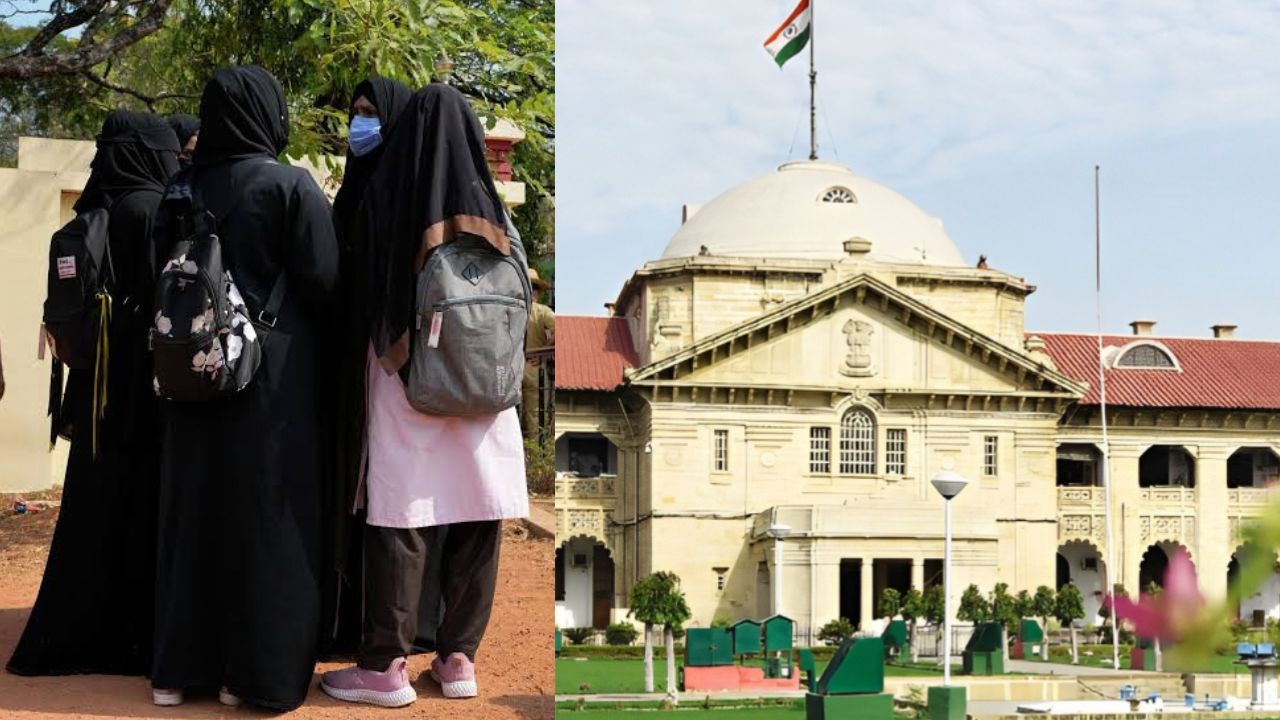
The Allahabad High Court examined the applicability of Section 69 of the Bharatiya Nyaya Sanhita in a case involving a transgender woman. (Img: Pinterest)
Lucknow: The Allahabad High Court has held that a transgender woman who has undergone sex-reassignment surgery does not fall within the statutory definition of “woman” under Section 69 of the Bharatiya Nyaya Sanhita (BNS), which criminalises sexual intercourse obtained through deceitful means or a promise of marriage made without the intention of fulfilling it, where the act does not amount to rape.
Justice Arun Kumar Singh Deshwal made the observation while granting bail to Mohd Sakir, who was accused of entering into a physical relationship with a transgender woman on the alleged false promise of marriage. The Court held that, prima facie, the ingredients of an offence under Section 69 BNS were not made out in the case.
The Court clarified that its interpretation was confined to the meaning of “woman” under Section 69 BNS.
According to the prosecution, the complainant had been in a relationship with the accused for more than one-and-a-half years after he allegedly promised to marry her. She further alleged that he had taken more than ₹5 lakh from her before subsequently refusing to marry her.
A criminal case was registered at the Izzatnagar police station in Bareilly district.
Seeking bail, the accused contended that the complainant had stated in her statements recorded under Sections 180 and 183 of the Bharatiya Nagarik Suraksha Sanhita (BNSS) that she had been assigned male at birth and had undergone genital reconstruction surgery in April 2023.
His counsel also submitted that the complainant had disclosed her transgender identity to him before entering into the relationship. Reliance was placed on a medical panel report which, according to the defence, supported the contention that Section 69 BNS was not attracted.
The State opposed the plea, arguing that a transgender woman could not be excluded from the statutory definition of a woman merely because she had been assigned male at birth and subsequently undergone surgery.
The High Court examined Section 2(35) of the BNS, which defines a woman as a “female human being of any age”, alongside Section 2(10), which addresses gender and incorporates the definition of a transgender person under the Transgender Persons (Protection of Rights) Act, 2019.
Interpreting these provisions, the Court observed that a person who remains within the statutory category of transgender under the applicable law does not become a male or female human being for the purpose of Section 69 merely by undergoing sex-reassignment surgery.
“The word ‘woman’ mentioned in section 69 of BNS includes only female human being,” the Court observed.
The Court also considered the definition of a transgender person under the 2019 Act, which recognises transgender men and women irrespective of whether they have undergone sex-reassignment surgery or other forms of gender-affirming treatment.
The High Court referred to a report of the Parliamentary Standing Committee on Home Affairs, which had recommended amending the criminal law to bring transgender women within the scope of the rape provisions under the BNS.
The Court noted that the recommendation had not been accepted by Parliament and that the statutory definition of “woman” remained unchanged.
It also referred to Section 18(d) of the Transgender Persons (Protection of Rights) Act, 2019, which provides for punishment for specified acts of harm or abuse against transgender persons, including sexual abuse.
Concluding that the alleged offence did not prima facie fall within the scope of Section 69 BNS, the High Court granted bail to the accused, subject to conditions. The ruling addresses the interpretation of the statutory definition of “woman” for the purposes of Section 69 BNS. The Court expressly confined its observation to that provision.