 English
 English
Gen Z’s savage reply to manager wins internet
New Delhi: A workplace exchange shared online has reignited debate around rigid office mandates and post-pandemic work culture, after a Gen Z employee’s calm but pointed response to an early-morning office demand went viral on social media.
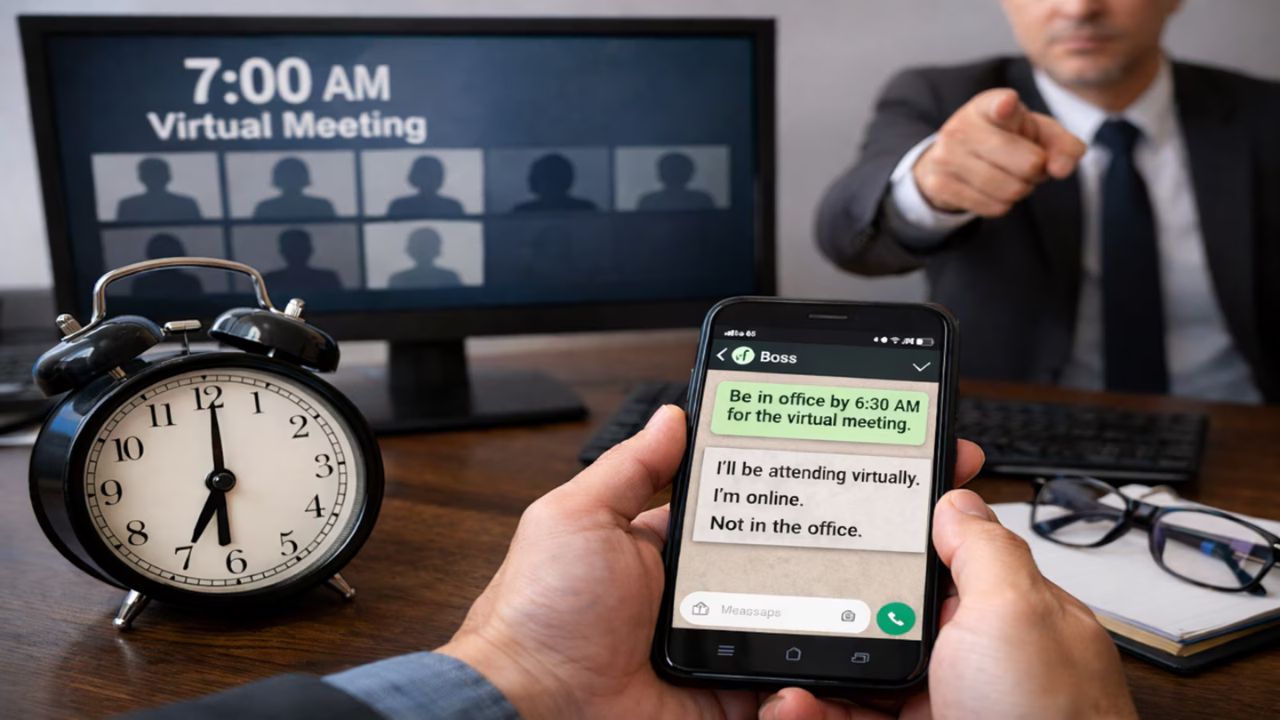
The screenshot, originally posted on X (formerly Twitter), captures a WhatsApp conversation between an employer and an employee, highlighting growing tensions between traditional workplace expectations and a generation that prioritises flexibility and clarity over hierarchy.
Viral: Slipper on Rs 1,500 Vande Bharat seat? Toddler chooses mother’s lap over reserved seat
In the exchange, the employee was instructed to be physically present in the office by 6:30 am for a “virtual meeting” scheduled at 7:00 am. The message warned that failure to comply would be considered insubordination and could lead to disciplinary action, including suspension, under company policy.
Gen Z employees. Not the heroes we deserved, but the heroes we needed. pic.twitter.com/XNewTYuATE
— Lexis (@niilexis) February 2, 2026
The tone and timing of the message quickly drew attention online, with many users questioning the rationale behind requiring physical presence for a meeting that was explicitly described as virtual.
Rather than reacting emotionally, the employee replied in a measured and professional manner. They confirmed their intent to attend the meeting on time but clarified that they would do so virtually, as the meeting format indicated.
In their response, the employee questioned the logic of enforcing location over participation, suggesting that penalising someone for not being physically present at a virtual meeting blurred the line between policy enforcement and unnecessary control.
The screenshot was shared with a caption praising Gen Z employees for standing up for themselves, quickly gaining traction across social media platforms. Many users applauded the response, calling it articulate, respectful, and reflective of modern workplace values.
Supporters argued that if employers require in-office presence, meetings should be clearly designated as physical rather than virtual. Others saw the incident as emblematic of outdated management practices clashing with evolving work norms shaped by remote and hybrid models.
‘Unavailability To Replace Pakistan’: Iceland’s Humorous X Post On T20 World Cup Goes Viral
Not all reactions were supportive. Some users pointed out that virtual meetings can still require employees to be present in office settings, especially in organisations with multiple locations or structured team environments. They argued that the employee may have interpreted the term “virtual” too literally.
Despite the mixed opinions, the incident has sparked broader discussion on transparency, trust, and flexibility in the workplace. As companies continue to redefine post-pandemic work structures, such moments underline the growing demand from younger employees for clear communication and respect for work-life balance.
The viral exchange ultimately reflects a shifting workplace dynamic one where authority is increasingly questioned, and adaptability is becoming a key expectation rather than a perk.