 English
 English
India’s foreign exchange reserves have recorded a decline for the second consecutive week. According to the RBI, a reduction in foreign currency assets is the primary reason for this drop, although a slight increase was observed in gold reserves.
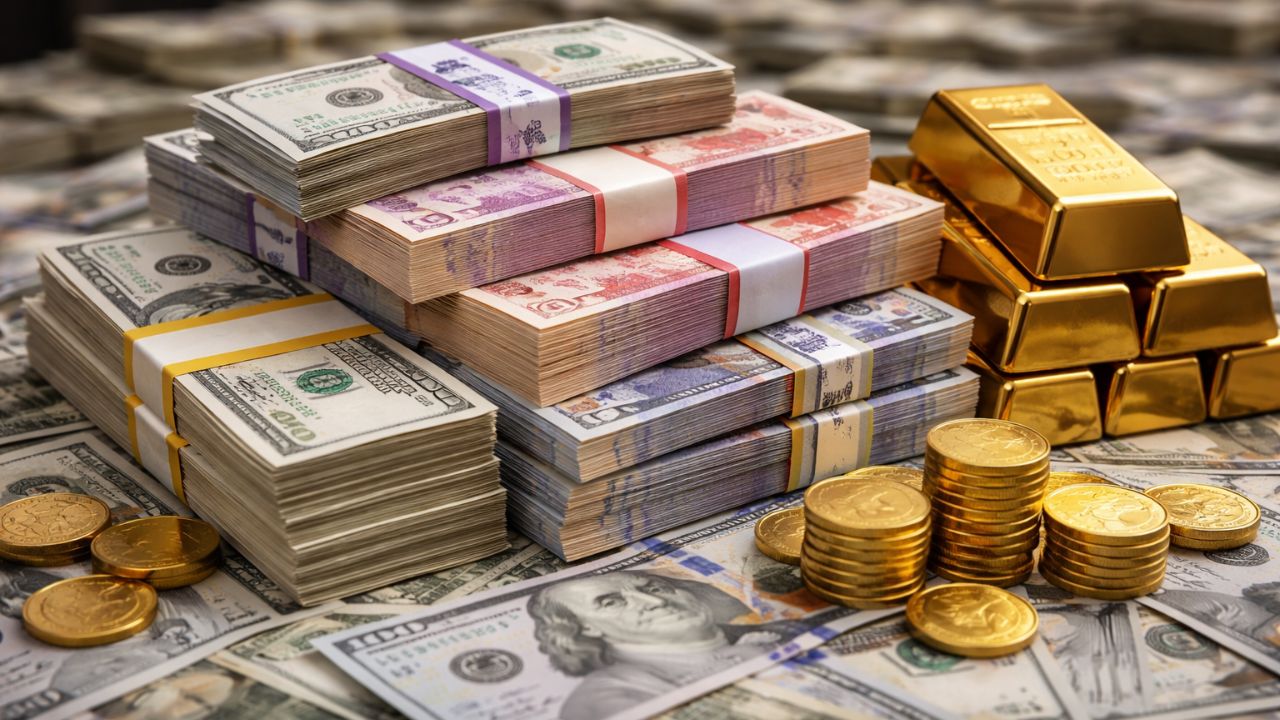
RBI Reports $7 Billion Drop in Forex Reserves (Image Source: Internet)
New Delhi: India's foreign exchange reserves (Forex reserves) have once again recorded a significant decline. According to the latest data from the Reserve Bank of India (RBI), for the week ending March 13, 2026, the country's total reserves fell by $7.052 billion to stand at $709.759 billion. A decline of $11.683 billion had also been observed in the preceding week.
Just a short while ago—specifically in February 2026—India's foreign exchange reserves had reached an all-time high of $725.727 billion. However, a downward trend has now been visible for two consecutive weeks, which could become a cause for concern among economic experts.
The largest component of the reserves consists of foreign currency assets (FCAs), and this category witnessed the most significant decline. It fell by $7.678 billion to stand at $555.568 billion.
In addition to the US dollar, these assets include other foreign currencies such as the Euro, the Pound, and the Yen; fluctuations in the value of these currencies also impact the overall reserves.
One piece of positive news is that India's gold reserves have increased. The gold reserves rose by $664 million to reach $130.681 billion. This indicates that India is increasingly relying on gold to maintain the strength of its reserves.
Special Drawing Rights (SDRs) saw a decrease of $23 million, falling to $18.697 billion.
Meanwhile, India's reserve position with the International Monetary Fund (IMF) also declined by $15 million, dropping to $4.814 billion.
There could be several reasons behind the decline in foreign exchange reserves. For instance, selling dollars to stabilize the rupee, fluctuations in the global market, and a rise in the import bill. This is particularly significant when crude oil prices rise, as India is then required to spend a larger amount of dollars.
While the direct impact may not be immediately visible to the common people, in the long run, it could influence the strength of the rupee, inflation, and trade (imports and exports). If the reserves continue to decline, economic pressure could intensify.