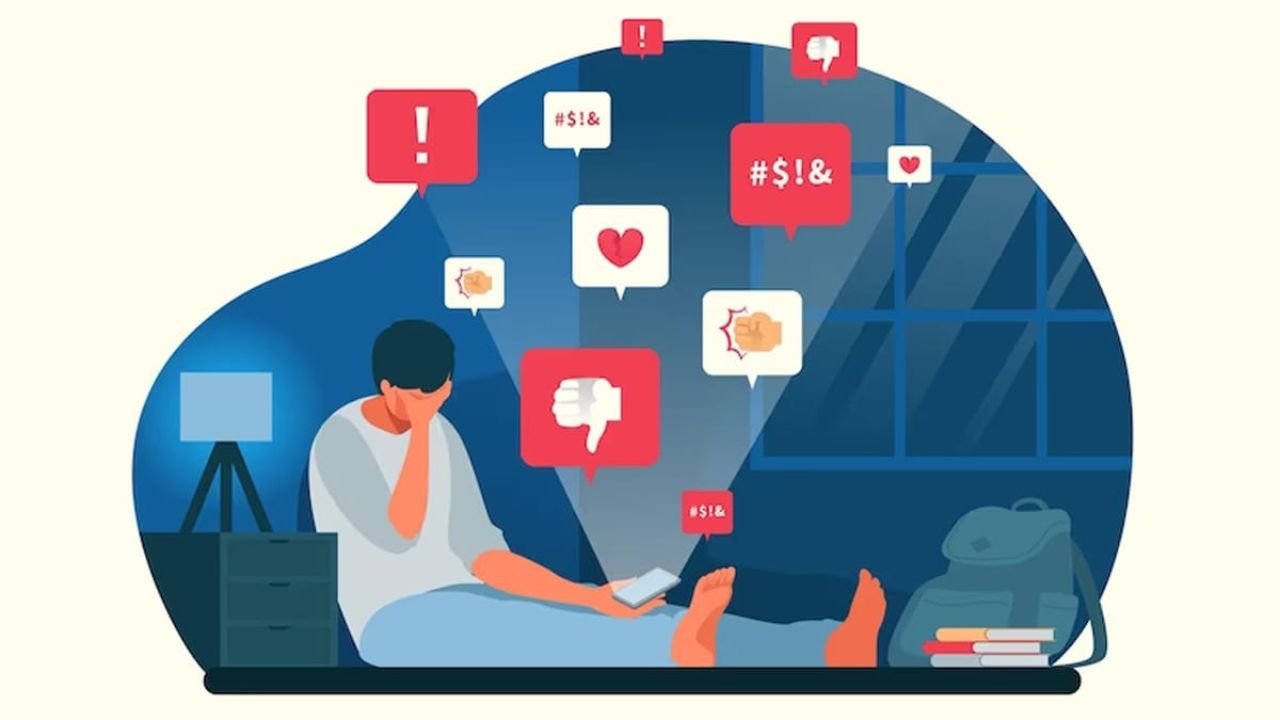
Social media is affecting teenagers' mental health (Image Source: Internet)
New Delhi: As social media becomes a daily habit for teenagers, experts are raising concerns about its impact on mental health. A growing number of studies suggest that excessive use of platforms like Instagram and Facebook may be linked to rising levels of stress, anxiety, and depression among young users, sparking an important conversation around digital wellbeing.
Studies have found that teenagers and young adults who spend the most time on platforms like Instagram and Facebook report 13% to 66% higher rates of depression compared to those who use them less. However, the experts clarify that this is a correlation, not direct proof of causation In simple terms the social media may not directly cause depression but it may be contributing to it.
One key observation is that the increase in depression has happened alongside the rapid rise in smartphone use. A major 2017 study of over 5 lakh students from classes 8 to 12 found:
1)33% increase in depressive symptoms (2010–2015)
2) 65% rise in suicide rates among teenage girls
During the same period, smartphone ownership among teens reached 92%, suggesting a possible connection. Less Real Life Connection, More Loneliness. Experts say one big change in today’s generation is that teenagers are spending less time meeting friends in person and more time interacting online. According to psychologists the online connections often feel less meaningful , which can lead to feelings of loneliness and isolation.
Seeing posts about parties, trips, and events can make teenagers feel left out. Constantly checking updates can also stop them from enjoying the present moment, increasing stress and dissatisfaction.
Social media platforms often showcase the perfect, edited, and filtered lives . This can lead to unhealthy comparisons, especially among teenage girls.
Spending too much time online also means less time for:
Many teens use social media while studying, thinking they can multitask. But research shows that multitasking can reduces concentration and performance.
This leads to:
Sleep deprivation is another major factor linked to depression.
Studies show that 60% of teens use phones before sleep, and they get 1 hour less sleep on average. Blue light from screens affects sleep and late night scrolling can increase anxiety instead of helping relaxation.
While social media isn’t proven to directly cause depression, experts say the warning signs are strong enough to take seriously. Parents should talk regularly with their children, watch for signs of depression, seek professional help if needed.
Social media is a powerful part of modern life, but its impact on mental health especially among teenagers cannot be ignored. While it offers connection and entertainment, excessive use may lead to loneliness, low self-esteem, and poor sleep, all of which contribute to depression. Experts advise a balanced approach using social media wisely while staying connected to the real world.

