 English
 English

Suicide attack shatters Friday prayers
New Delhi: Pakistan’s capital Islamabad was rocked by a devastating suicide bombing on Friday when an attacker detonated himself at a Shia mosque during congregational prayers. The blast struck the Tarlai Imambargah in the Shehzad Town area, turning a place of worship into a scene of chaos and tragedy. According to police sources, at least 31 people were killed, while 169 others sustained injuries, many of them critical.
Initial investigations suggest that the suicide bomber was intercepted at the entrance of the Imambargah by security or volunteers. Unable to enter the mosque premises, the attacker detonated the explosive device at the gate itself. The force of the explosion was immense, killing worshippers instantly and injuring scores of others standing nearby or inside the complex.
Suicide blast hits Shia mosque in Islamabad during Friday prayers; 31 Killed, over 160 injured
Soon after the blast, rescue teams, police personnel, and emergency responders rushed to the site. Ambulances ferried the injured to nearby hospitals as authorities declared a medical emergency across Islamabad. Hospitals, including the Pakistan Institute of Medical Sciences (PIMS), were placed on high alert to handle the sudden influx of casualties, while doctors and paramedics worked relentlessly to save lives.
While no militant group immediately claimed responsibility for the attack, police sources revealed that the bomber was believed to be a foreign national. Investigators suspect links to Fitna al Khwaraji, a term commonly used by Pakistani authorities to refer to Tehreek-e-Taliban Pakistan (TTP). Forensic teams are examining evidence from the blast site to confirm the nature of the explosives and the attacker’s identity.
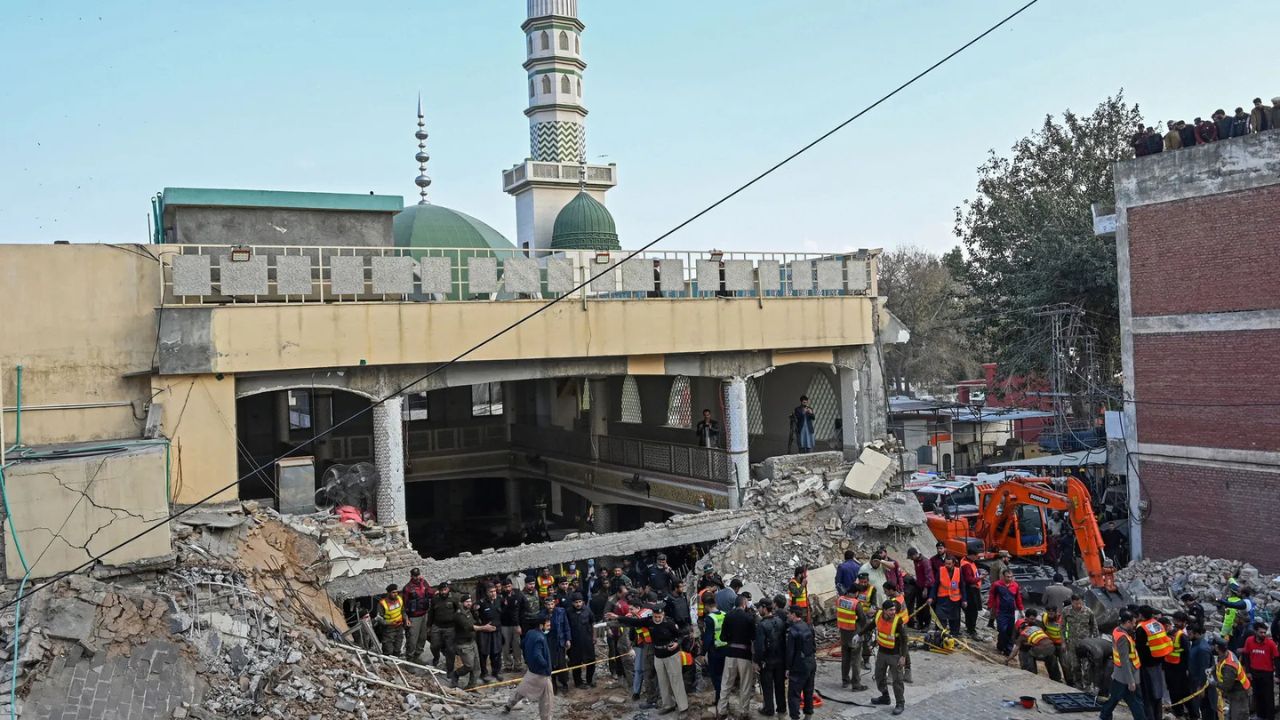
Visuals from the spot
The bombing comes at a sensitive time, as Uzbek President Shavkat Mirziyoyev was in Pakistan on a two-day state visit. Security across the capital had already been heightened, making the attack even more alarming for authorities. The incident has raised serious concerns about militant threats and internal security in the federal capital.
Pakistan’s top leadership strongly condemned the attack. President Asif Ali Zardari described the targeting of innocent civilians as a “crime against humanity.” Prime Minister Shehbaz Sharif, along with Senate Opposition Leader Allama Raja Nasir Abbas, also denounced the bombing, calling for unity against terrorism and violence.
The blast marks yet another deadly attack in Islamabad, coming less than three months after a suicide bombing outside a district and sessions court killed 12 people. Officials say the recurrence of such incidents highlights the evolving security challenges facing Pakistan, particularly with regard to protecting religious sites and crowded public spaces.