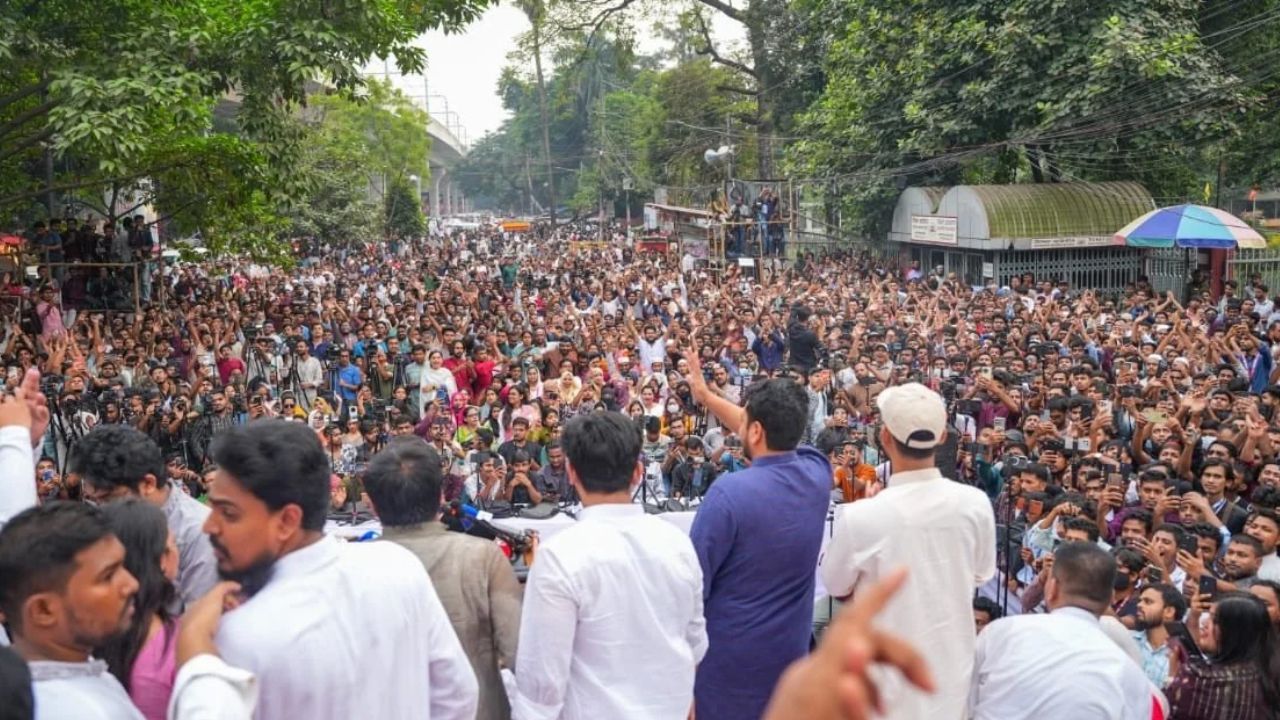
Anti-India slogans echo across Dhaka as the NCP leads protests against Bangladesh Prime Minister Tarique Rahman. (Img: X )
Dhaka: Anti-India slogans have resurfaced in Bangladesh as Prime Minister Tarique Rahman's government faces mounting criticism over inflation, fuel shortages and an ongoing power crisis. A protest organised by the National Citizen Party (NCP) in Dhaka on Friday saw demonstrators chanting, "Dilli na Dhaka, Dhaka, Dhaka", bringing India into the country's latest political confrontation.
The rally, held outside the National Museum in Dhaka, was led by NCP convenor Nahid Islam. The party demanded the resignation of Home Minister Salahuddin Ahmed and Energy Minister Iqbal Hassan Mahmood , also known as Tuku, accusing them of failing to address the country's worsening economic and energy situation.
Nahid warned that protesters could march towards Prime Minister Tarique Rahman's residence if their demands were ignored. He also accused the new administration of displaying authoritarian tendencies.
Unstoppable.
Our fight continues until all 4 demands, including the resignation of the Home Minister, are met. InshaAllah! https://t.co/vSJsUf4n46
— Nahid Islam (@NahidIslam_24) October 30, 2026
However, the gathering also featured sharp criticism of India. Nahid alleged that New Delhi was interfering in Bangladesh's internal affairs and raised concerns over reported border killings and the treatment of Muslims in India's northeastern and eastern states. He also called for a fair renegotiation of the Ganga Water Sharing Treaty.
The 30-year water-sharing agreement between India and Bangladesh is due to expire in December 2026. The treaty regulates the distribution of Ganga waters at the Farakka Barrage during the dry season.
Water-sharing arrangements remain a sensitive issue for Dhaka, where millions depend on the river system for agriculture and livelihoods.
The demonstrations come amid rising living costs, fuel shortages and frequent power cuts. Bangladesh's dependence on imported energy has left it vulnerable to international supply disruptions and higher prices.
Inflation, stagnant wages and growing poverty have further intensified public dissatisfaction. The crisis has also affected industrial production, particularly the country's garment sector.
Anti-India rhetoric gained momentum following Sheikh Hasina's removal in August 2024. Several political figures associated with the 2024 student uprising subsequently made provocative statements targeting New Delhi.
Although such rhetoric appeared to recede after Tarique Rahman's BNP government took office in February 2026, the latest rally suggests that anti-India sentiment remains a significant feature of Bangladesh's political discourse.

