English
 English

Balen Shah’s UN climate proposal after Nepal’s deadly flood disaster, seeks India-China partnership to protect the fragile Himalayan ecosystem. (Img: Pinterest)
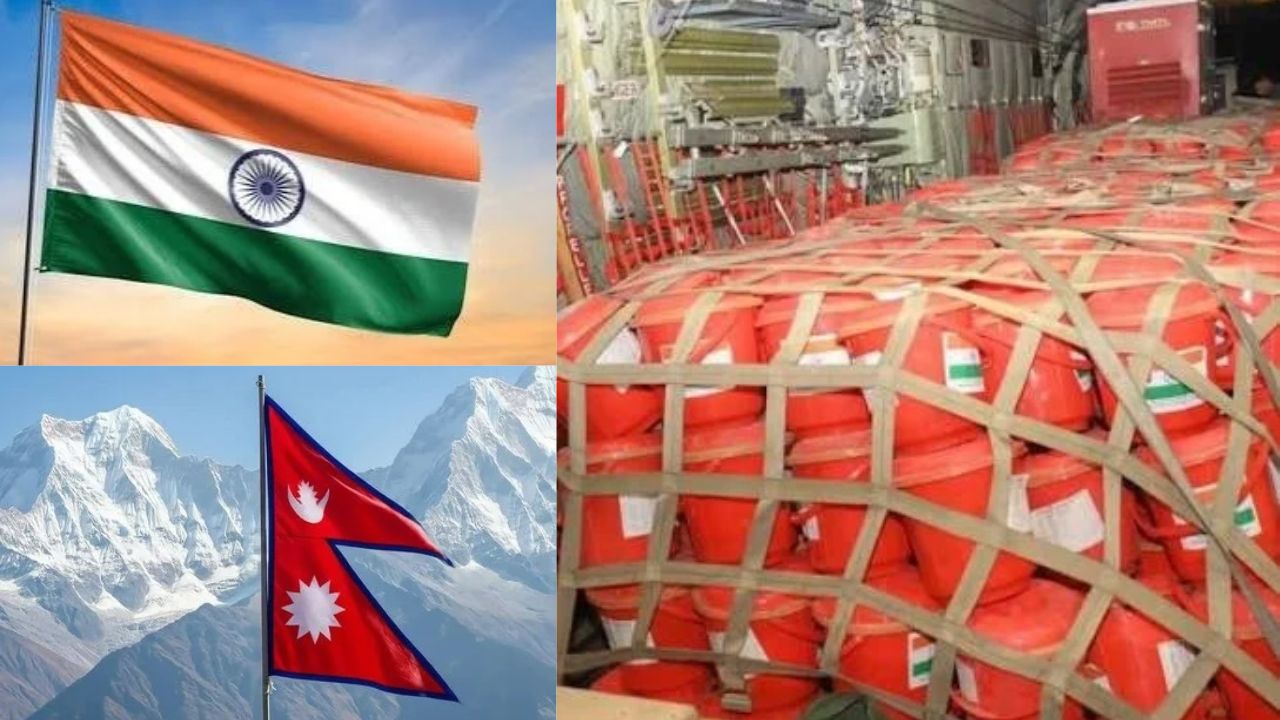
Geneva: Nepal Prime Minister Balendra Shah has proposed a new climate cooperation framework with India and China at the United Nations after a devastating Himalayan flood disaster left thousands affected. His call for a Himalayan Climate Resilience Mechanism has gained global attention as countries debate how to protect vulnerable mountain regions from rising climate threats.
The proposal was made during Shah’s first address to the United Nations General Assembly in New York, where he highlighted Nepal’s struggle with extreme weather events, melting glaciers and increasing disaster risks.
Shah suggested that Nepal, India and China should work together on satellite data sharing, glacier monitoring, early warning systems and emergency response coordination to protect communities across the Himalayan region.
The push for greater Himalayan cooperation comes after the devastating Bhotekoshi River flash floods that struck Nepal on August 26.
The disaster was triggered after a glacial rock collapse in Tibet’s Lhende Khola River caused massive flooding near the Nepal-China border. The floodwaters rushed through Nepal’s Rasuwa district, destroying settlements, roads, bridges, farms and critical infrastructure.
The disaster affected local communities as well as international travellers, including Indian pilgrims travelling towards the Kailash Mansarovar Yatra route.
Nepal’s disaster authorities reported more than 1,400 deaths, while thousands of people remained missing following the catastrophe. The floods have emerged as one of the country’s most devastating natural disasters in recent years.
The destruction also damaged important trade routes and connectivity infrastructure between Nepal and Tibet, creating major challenges for reconstruction efforts.
During his UN address, Shah highlighted Nepal’s position as a climate-vulnerable country despite contributing only a small share of global greenhouse gas emissions.
He argued that nations facing the worst consequences of climate change should receive stronger international support for recovery and adaptation.
Nepal has sought assistance through global climate finance mechanisms, including the Loss and Damage Fund, which was created to support developing countries dealing with climate-related disasters.
The Nepalese government has also raised concerns over delays and complicated procedures involved in accessing climate funds, calling for faster and more effective financial support during emergencies.
The proposed Himalayan Climate Resilience Mechanism focuses on creating a shared regional approach to climate challenges. Under the proposal, the three Himalayan nations could cooperate on advanced weather monitoring, satellite technology, glacier research, disaster forecasting and emergency response systems.
The initiative is aimed at protecting the wider Hindu Kush Himalayan region, which supports water resources, agriculture, biodiversity and livelihoods for nearly two billion people.
Shah stressed that environmental threats do not follow political borders, as melting glaciers, floods and extreme weather events can impact multiple countries simultaneously.
The proposal places the Himalayan region at the centre of global climate discussions and highlights the need for scientific cooperation beyond national boundaries.
At the global forum, Shah also highlighted Nepal’s efforts towards renewable energy and environmental protection. The Prime Minister pointed to forest conservation programmes, hydropower expansion and electric mobility initiatives as part of Nepal’s climate action strategy.
Nepal has been increasing its focus on clean energy, especially hydropower, to reduce dependence on fossil fuels and strengthen energy security. However, Kathmandu maintains that developing countries cannot handle growing climate challenges alone and require greater international support for adaptation and resilience building.
The Nepal floods have renewed concerns over the impact of climate change on mountain ecosystems. Scientists and climate experts have warned that rising temperatures are increasing risks linked to glacier melting, unstable mountain slopes, flash floods and landslides across Himalayan regions.
The Hindu Kush Himalaya region is considered highly vulnerable because changes in glaciers and river systems can affect millions of people across South Asia. The disaster has also intensified discussions around whether existing global climate funding systems are sufficient to support countries facing repeated climate emergencies.
Nepal’s proposed climate mechanism will require diplomatic discussions between Kathmandu, New Delhi and Beijing before any formal framework can be established.
Future cooperation could focus on sharing climate data, improving disaster preparedness, developing early warning technology and creating joint response strategies.
With extreme weather events becoming more frequent, Himalayan countries are expected to face increasing pressure to strengthen regional cooperation and build climate-resilient infrastructure.