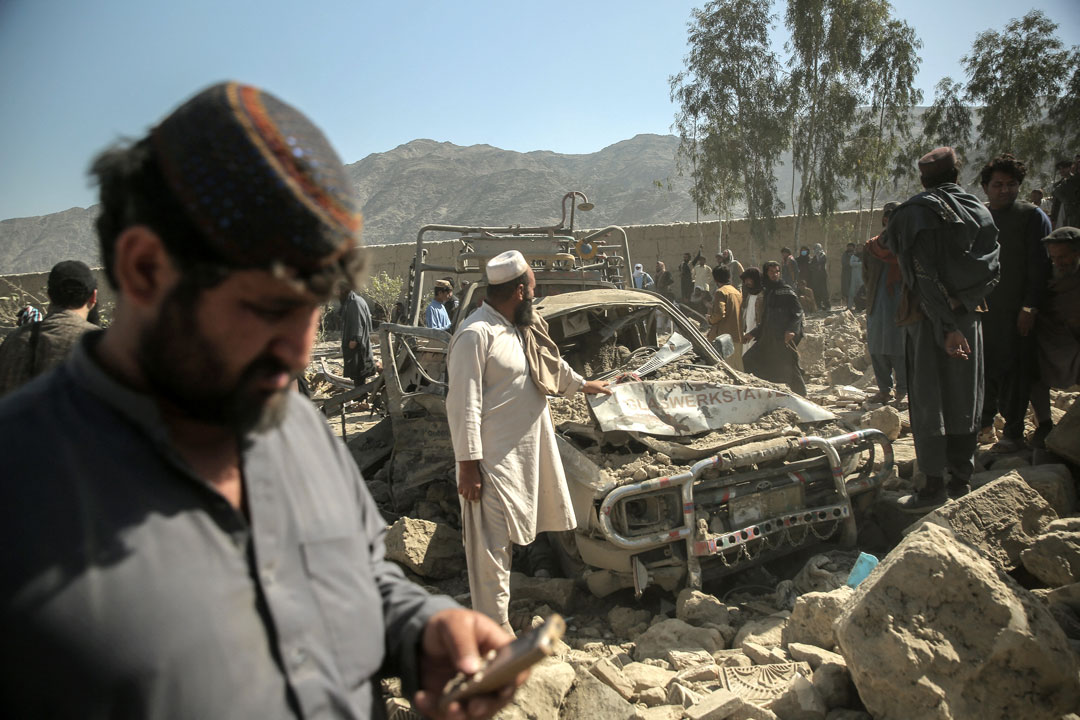
Pakistan’s security strategy in Khyber Pakhtunkhwa faces fresh scrutiny as the TTP reportedly threatens to intensify attacks. Islamabad is reviewing counterterrorism measures amid concerns over regional stability, Chinese workers’ security and long-standing local grievances. (Images: X)
New Delhi: Pakistan’s decision to impose emergency measures and introduce Governor’s rule in Khyber Pakhtunkhwa (KP) is facing growing scrutiny, with militant threats reportedly continuing despite the government’s security-focused approach. The government led by Prime Minister Shehbaz Sharif justified the move on security grounds. However, according to officials cited in the source material, attacks have continued in the province, while groups challenging the Pakistani establishment have threatened to intensify their operations.
Sharif and Pakistan Army chief Field Marshal Asim Munir have reportedly chaired a series of meetings to assess the situation and consider the next steps. The developments have raised questions about whether the latest measures can deliver lasting security in a province grappling with persistent militancy.
The Tehreek-e-Taliban Pakistan (TTP) remains a major security challenge for Islamabad, according to analysts quoted in the report. The group’s reported threats to step up attacks on security personnel have added to concerns over the effectiveness of the government’s response. The source also says militants have threatened further attacks targeting Chinese workers in the region. Such threats could deepen Pakistan’s security challenges, given the importance of Chinese personnel and investments to projects operating in the country.
The reported continuation of violence has intensified scrutiny of the decision to place the province under emergency-style control. However, the full impact of the new measures will depend on developments on the ground and the results of any forthcoming security operations.
Pakistan’s response in KP is complicated by tensions between the federal government and the province’s political leadership, as well as deteriorating relations with Afghanistan’s Taliban authorities, according to analysts cited in the source.
The report says the Pakistan Tehreek-e-Insaf (PTI) government in KP had repeatedly sought federal assistance to tackle violence. Analysts argue that political mistrust may have influenced Islamabad’s approach, amid concerns that the provincial government could claim political credit for any improvement in security.
The episode highlights the difficulties of coordinating counterterrorism efforts when federal and provincial authorities are divided by political rivalry.
Relations between Islamabad and the Afghan Taliban have also become a complicating factor in Pakistan’s security calculations, according to the source material. The border region has long faced militant activity and cross-border security disputes. With the TTP continuing to pose a challenge, strained ties between the two sides could make efforts to contain violence more difficult.
Pakistan’s challenge is therefore not limited to its domestic security response. It also involves regional diplomacy, intelligence coordination and the need to prevent militant networks from exploiting instability along the border.
Security concerns involving Chinese nationals have added another dimension to the crisis. An Indian Intelligence Bureau official cited in the report said relations between China and Pakistan had come under strain following terrorist attacks targeting Chinese workers in the region. Any escalation in threats against Chinese personnel could create additional pressure on Islamabad to strengthen security around infrastructure projects and protect foreign workers.
Pakistan’s government and military are reportedly reviewing counterterrorism operations, including steps intended to address threats in KP and improve protection for vulnerable targets. The details and implementation of any new operational plan have not been independently established in the supplied material.
The federal government and military leadership have reportedly discussed a comprehensive financial package for Khyber Pakhtunkhwa alongside plans to improve local infrastructure and resource management. The province has long seen grievances over the distribution of resources, with residents arguing that wealth generated locally does not always translate into corresponding benefits for communities in the region.
Addressing these concerns could be an important part of a broader strategy to improve stability. Security operations alone may struggle to resolve the underlying tensions if questions over economic opportunities, public services and resource allocation remain unresolved.
Pakistan’s latest response faces a central test: whether stronger security control can reduce militant violence while addressing the political and economic grievances that have contributed to instability in KP. The source’s assessment is that emergency measures may offer only temporary relief if the government fails to address the deeper causes of the crisis. Repeated security crackdowns without sustained political coordination, effective local governance and economic investment risk leaving the province vulnerable to renewed violence.
For Islamabad, the challenge now is to turn meetings and policy announcements into measurable improvements in security and public confidence. The trajectory of militant activity and the implementation of any new measures will determine whether the latest approach changes the situation or prolongs the cycle of crisis.

