English
 English

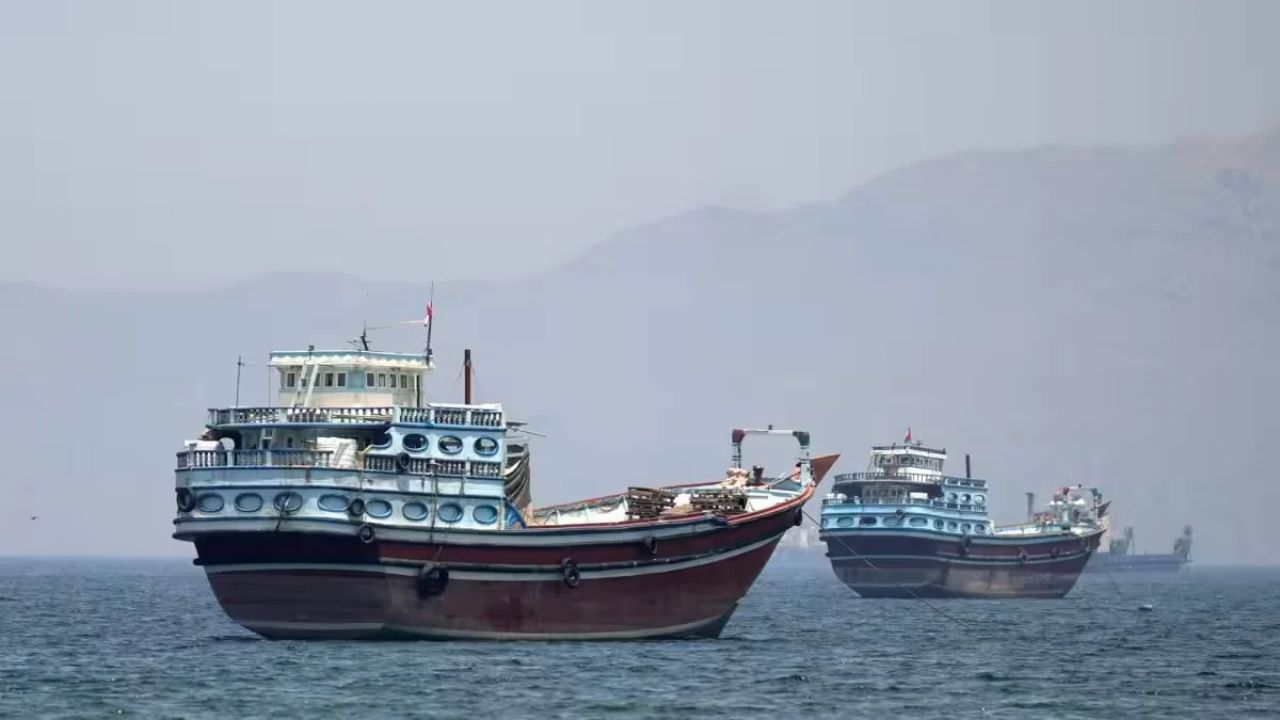
Dubai: A major maritime security alert has emerged after a commercial vessel passing through the Strait of Hormuz was struck by an unknown projectile, causing damage to its engine room and leaving one crew member injured. The incident has triggered fresh concerns over the safety of global shipping routes as tensions around Iran, the United States and the strategic waterway continue to rise.
The United Kingdom Maritime Trade Operations (UKMTO), a British maritime security agency that tracks threats to commercial vessels, confirmed that the ship was hit while travelling outbound through the Strait of Hormuz. The agency said authorities are investigating the incident to determine the nature of the projectile and identify those responsible.
The attack comes at a sensitive time when the Strait of Hormuz has become a major geopolitical flashpoint, with fears that further maritime incidents could disrupt global energy supplies and increase pressure on international oil markets.
According to UKMTO, the vessel’s Company Security Officer reported the incident after the ship was struck during transit through the strategic waterway. The impact caused damage to the engine room, one of the most critical sections of a commercial vessel responsible for propulsion and operational control. The strike also resulted in a crew casualty, although details about the injured crew member have not been released.
Following the incident, the remaining crew members received assistance from the Omani Coast Guard. Maritime authorities confirmed that no environmental damage, oil spill or pollution-related impact has been reported so far. UKMTO has advised all vessels operating in the region to maintain maximum caution, follow maritime security protocols and immediately report any suspicious activity.
The latest incident has brought renewed attention to the Strait of Hormuz, one of the world’s most important maritime trade routes. Located between Iran and Oman, the narrow waterway connects the Persian Gulf with the Gulf of Oman and serves as a key transit route for crude oil and liquefied natural gas shipments.
A large share of global energy exports passes through this corridor, making any disruption a major concern for international markets, fuel prices and supply chains. Shipping activity through the Strait of Hormuz has already declined sharply due to security concerns. Vessel movement has reportedly dropped to only a few crossings per day compared with more than 130 daily movements before the escalation of tensions.
The vessel strike comes amid continued tensions between Iran and the United States over military operations, sanctions, nuclear issues and control of regional waterways. The Strait of Hormuz has become one of the most sensitive areas in the ongoing geopolitical confrontation, with both sides facing pressure over maritime security and freedom of navigation.
Iran has taken measures affecting vessel movement through the waterway following the escalation of conflict, while the United States has continued maritime enforcement activities and pressure on Tehran. However, no country, military group or organisation has claimed responsibility for the projectile strike so far. Authorities have also not confirmed whether the incident was linked to any government, armed group or regional conflict.
The maritime incident comes after the collapse of a temporary understanding between Washington and Tehran that was aimed at reducing tensions and improving commercial movement through the Strait of Hormuz.
The framework was expected to help ease hostilities, support negotiations over Iran’s nuclear activities and restore safer maritime passage. However, disagreements between the two countries resulted in the arrangement failing, with both sides accusing each other of violating commitments.
Iran has demanded an end to restrictions, removal of foreign military presence and compensation for damages linked to the conflict. The United States has continued sanctions and maintained pressure on Tehran. The breakdown of talks has increased uncertainty over the future of maritime security in the region.
The latest attack has increased concerns among energy traders and global markets because any prolonged disruption in the Strait of Hormuz could affect oil and gas supplies worldwide. Security risks in the region can increase shipping insurance costs, delay commercial movement and create uncertainty for energy-dependent economies. Brent crude prices and other global energy indicators are being closely monitored as investors assess the possibility of further escalation. Experts warn that repeated attacks on commercial vessels could create a wider economic impact by affecting transportation networks and energy supply chains.