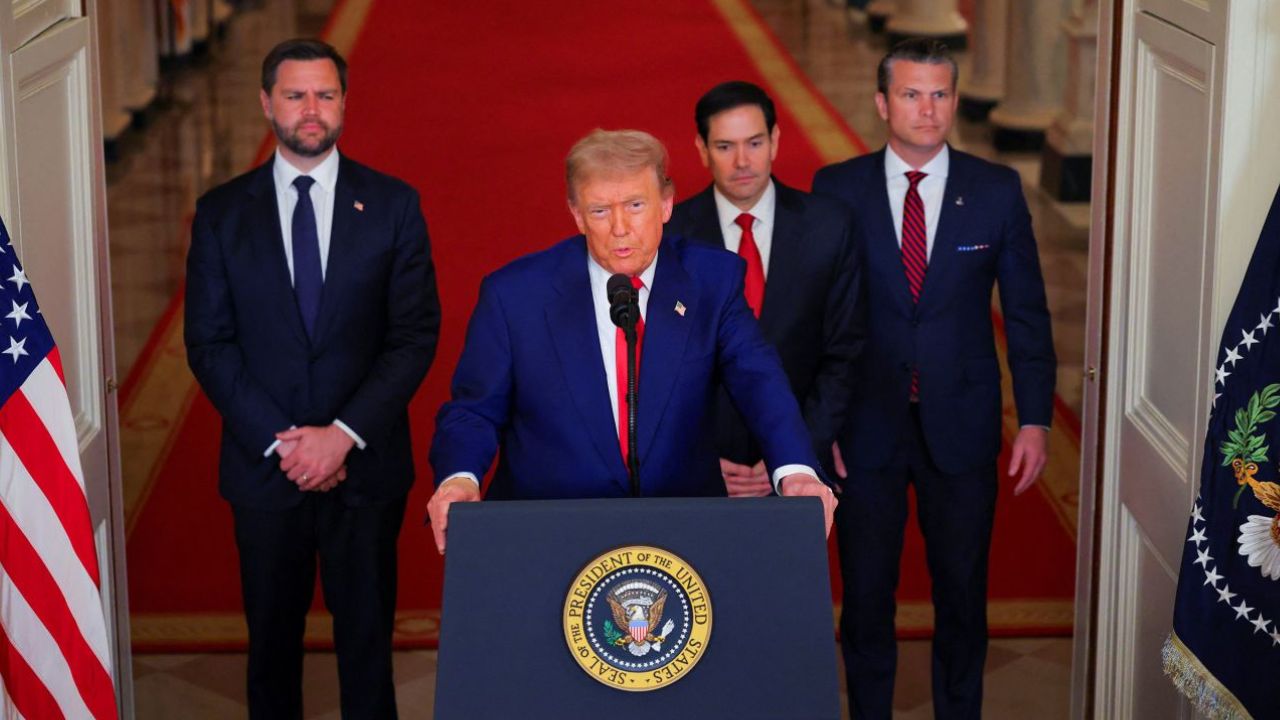
US President Donald Trump (Source: Internet)
New Delhi: The ongoing conflict in West Asia—involving Iran, the United States, and Israel—is becoming increasingly grave. New developments are emerging daily, fueling rising tensions across the entire region. In particular, Iran's activities in the Strait of Hormuz have heightened global concern.
The United States has decided to bolster its military presence in the Middle East. Three major warships—including the USS Boxer—are being deployed to the region. Additionally, a contingent of 2,200 to 2,500 Marines is being deployed alongside them.
However, Donald Trump has explicitly stated that the US will not send ground troops into the conflict zone.
Iran's Supreme Leader, Mojtaba Khamenei, addressed the nation on the occasion of Eid and the Persian New Year. He accused the United States and Israel of conspiring against Iran, asserting that the country stands fully prepared to respond to any form of attack.
He further emphasized that national unity constitutes the country's greatest strength and that its adversaries have failed to achieve their objectives.
Expressing his displeasure with NATO member nations, Donald Trump remarked that the United States is fighting this conflict alone. He further alleged that while other nations are solely concerned with oil prices, they consistently shy away from offering assistance during times of genuine crisis.
Iran suffered a significant setback following the death of Ali Mohammad Naini, a senior spokesperson for the IRGC. According to reports, this incident occurred during a joint operation conducted by the United States and Israel. His death could potentially impact Iran's military strategy.
Rising tensions and increased military activity in the Strait of Hormuz pose a looming threat to the global oil supply. Should the situation deteriorate further, the repercussions could be felt across the entire global economy.

