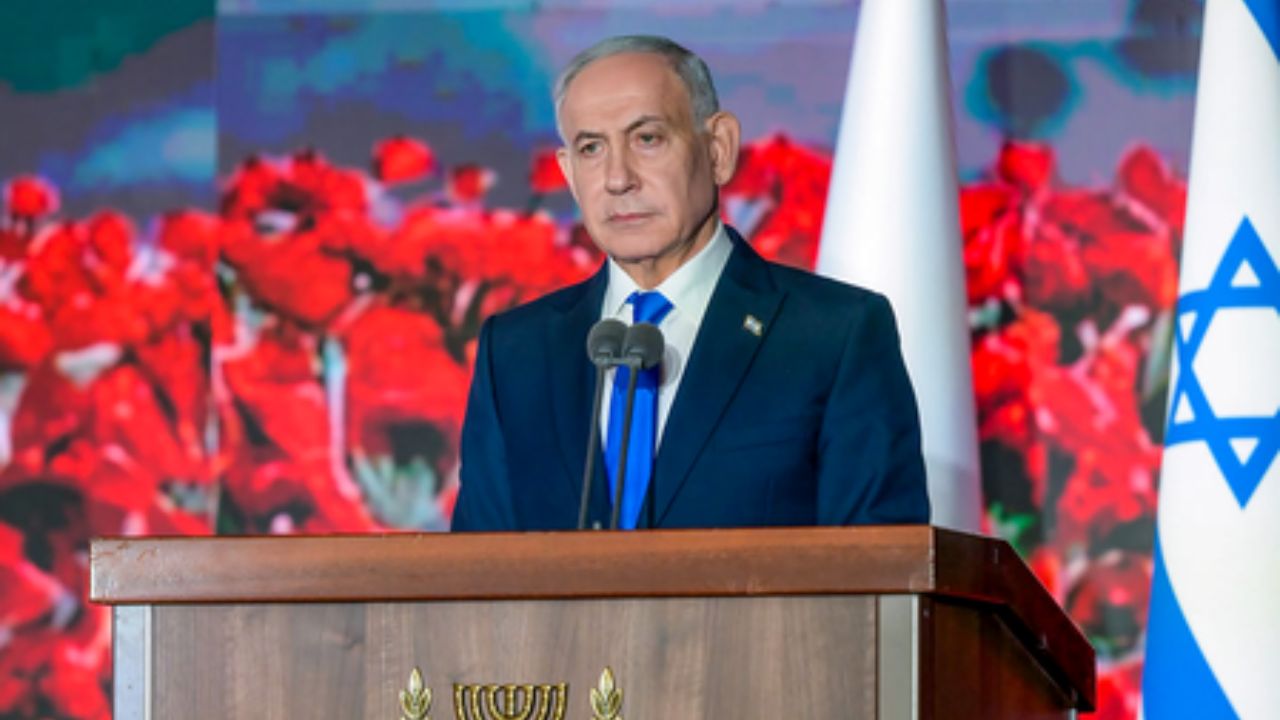
Netanyahu Remains Caretaker Prime Minister After Israel Election Deadlock (Img: IANS)
New Delhi: Israeli Prime Minister Benjamin Netanyahu has suffered a setback in the latest election, but his political future hangs in uncertainity rather than settled. Although his Likud-led bloc has emerged ahead of the opposition in the preliminary count, it has failed to secure the majority needed to form government independently.
With neither side commanding a clear majority in the 120-member Knesset, Israel faces potentially weeks of coalition negotiations. However, Netanyahu remains caretaker prime minister, while his rivals must overcome significant political differences to assemble an alternative government.
Under Israel’s parliamentary system, the outgoing government continues to function as a caretaker administration until a new government is sworn in. Netanyahu therefore remains in office while political parties negotiate and President Isaac Herzog consults political factions on the formation of the next government.
Preliminary results put Netanyahu’s Likud-led bloc and its far-right and ultra-Orthodox allies on course for 53 seats, compared with 48 for the opposition bloc led by former military chief Gadi Eisenkot. Arab-led parties were projected to secure 19 seats.
The threshold for a parliamentary majority is 61 seats. Although Netanyahu cannot govern with his existing bloc alone, his caretaker status gives him time to negotiate. However, caretaker governments face constraints on major policy decisions.
Netanyahu’s failure to win a majority does not automatically mean the opposition can form a government. Israel uses proportional representation, meaning parties must negotiate coalition agreements to secure parliamentary support.
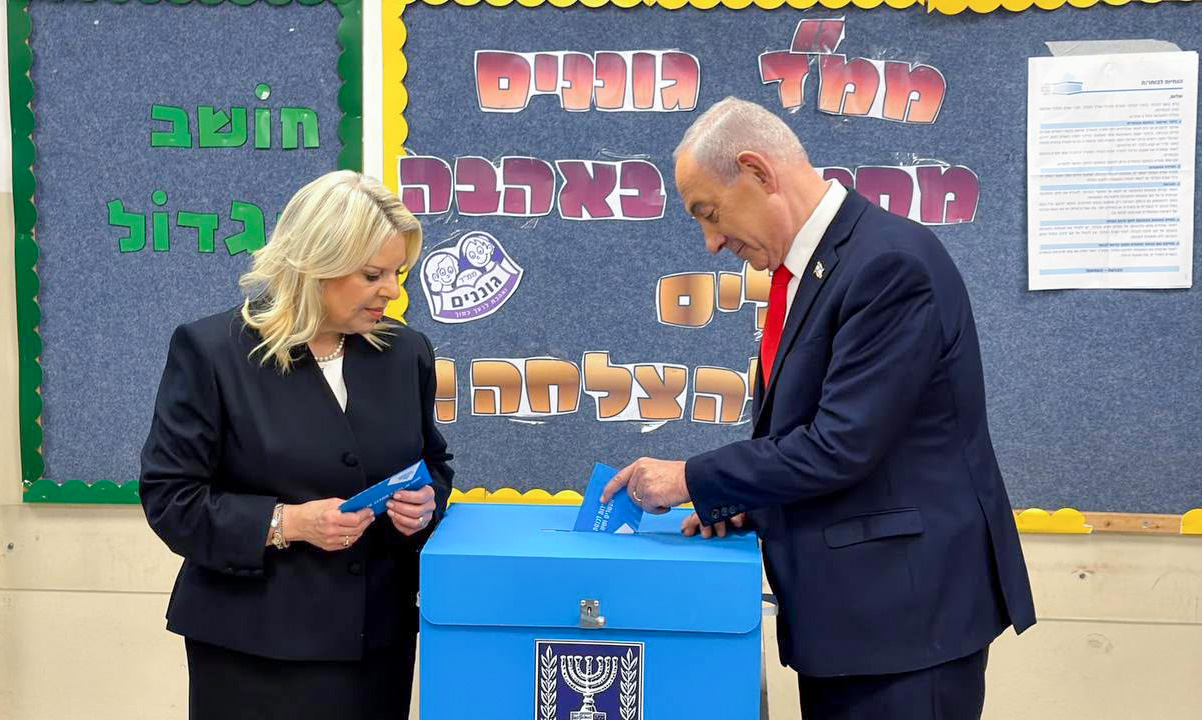
Eisenkot’s bloc could theoretically seek support from Arab-led parties to challenge Netanyahu. However, cooperation with these parties remains politically contentious, with several Jewish political parties reluctant to work with them.
The opposition could also explore a unity government involving ideologically divided parties. Netanyahu, meanwhile, may seek support from smaller parties or potential defectors. The outcome will depend on whether either camp can overcome its differences and assemble a workable majority.
Netanyahu’s political record offers another reason not to dismiss his chances. In 2021, he lost the premiership after Naftali Bennett and Yair Lapid assembled a coalition spanning several political groups, including an Arab party.
Also Read: Netanyahu vs Eisenkot: Israel’s Election Ends in Deadlock, Arab Parties Gain Ground
That government eventually collapsed amid internal disagreements, leading to another election in November 2022. Netanyahu’s Likud-led bloc won 64 seats, allowing him to return to office. He was sworn in as prime minister on December 29, 2022.
The episode demonstrated how Israel’s shifting parliamentary arithmetic can enable a leader to return after losing power. However, there is no guarantee that Netanyahu can repeat that success.
The election outcome leaves multiple scenarios open: Netanyahu could negotiate a coalition, the opposition could form a government, rival camps could consider a unity arrangement, or prolonged deadlock could trigger another election.
Herzog is expected to consult political factions after the official results are confirmed before inviting a candidate with the strongest prospects of forming a government.
Also Read: US Iran War Cost Hits $47.1 Billion; Lawmakers Seek Clarity on Military Spending
Although Likud’s lead could strengthen Netanyahu’s claim to an opportunity to govern, being the largest bloc does not guarantee success.
Netanyahu’s bloc is projected to have fewer seats than it held in the previous Knesset. Coalition negotiations could also be complicated by scrutiny of the security failures surrounding the October 7, 2023, Hamas-led attacks, the subsequent wars and disputes over exemptions from military service for ultra-Orthodox men.
These issues could make it harder for Netanyahu to satisfy potential coalition partners without creating further tensions.
For now, the hung parliament gives Netanyahu breathing room rather than a decisive victory. He remains prime minister, but his return to a full-term government depends on securing the support of at least 61 lawmakers. Until negotiations produce that majority, his political survival remains uncertain.


