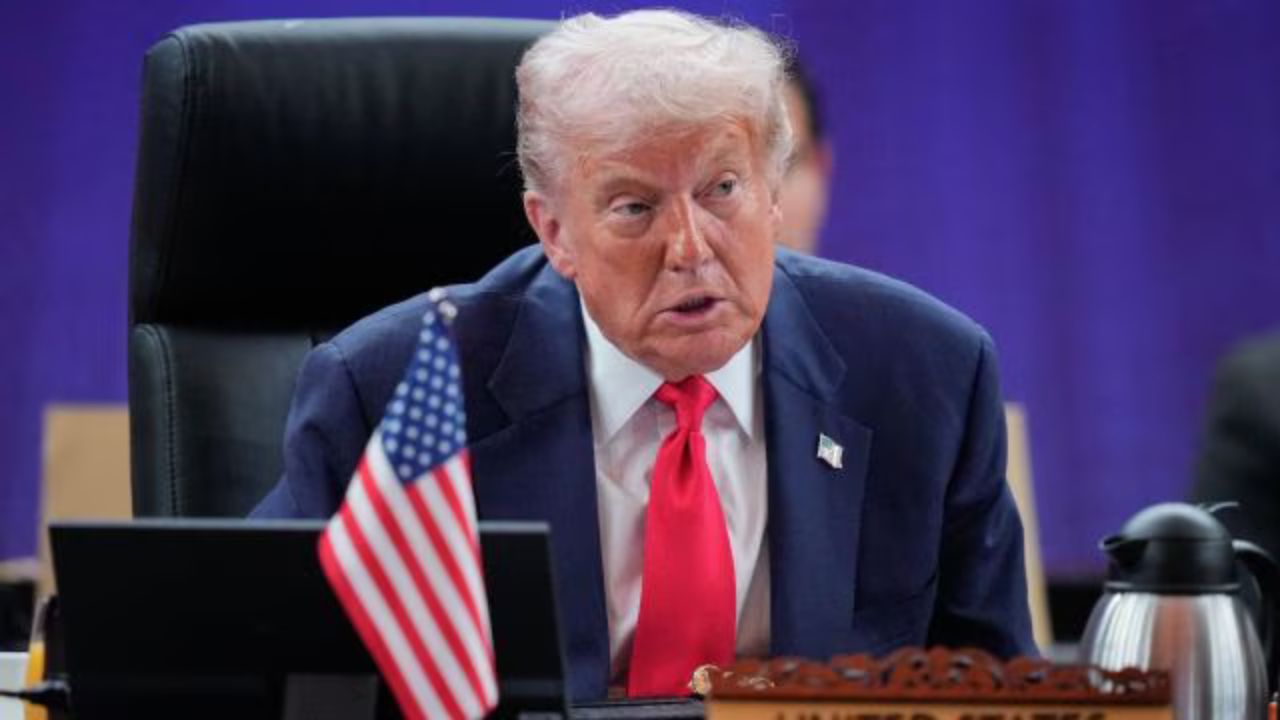
Trump: US-Saudi Nuclear Deal Only If Saudi Arabia Joins Abraham Accords
In remarks on Truth Social, President Trump on Thursday tied a planned US civil nuclear deal with Saudi Arabia to the normalization of relations between the two nations via the Abraham Accords, while emphasizing that the deal would not allow for uranium enrichment or other military nuclear programs.
“The Civil Nuclear Deal with Saudi Arabia and other Middle Eastern countries will be approved, if otherwise appropriate, subject to the terms of the deal, but is totally subject to Saudi Arabia joining the very respected and successful Abraham Accords,” Trump wrote, adding that the US has “NO PROBLEM” with civil, non-enriched, nuclear facilities.
Trump’s remarks come after the US and Saudi Arabia, the previous day, unveiled a major civil nuclear cooperation agreement that was signed by US Energy Secretary Chris Wright and Saudi Energy Minister Prince Abdulaziz bin Salman, and is subject to US congressional approval.
By linking US approval of the nuclear deal to the Abraham Accords, Trump is tying the agreement to arguably the toughest nut in Middle East diplomacy: Saudi normalization of ties with Israel. Long-time Saudi policy has been that ties cannot be normalized without a credible path to Palestinian statehood.
A 123 Agreement would pave the way for U.S. companies to erect AP1000 nuclear reactors in the kingdom, a project that could be worth tens of billions of dollars over three decades.
But Trump’s new caveat does not appear to have moved the Saudi position. The kingdom has been publicly unambiguous that it requires an unbreakable pathway to Palestinian statehood before it will formally recognize Israel — no matter how much the U.S. pushes to expand the Accords.
The White House still views Saudi Arabia as the biggest remaining normalization trophy out there under the diplomatic push that began in Trump’s first term.
Discussions about a civil nuclear deal between the United States and Saudi Arabia date back to Trump’s first term and continued into President Joe Biden’s term — but those efforts consistently stalled due to proliferation concerns.
Unlike previously discussed Biden-era proposals, this new one does not require the kingdom to sign the International Atomic Energy Agency’s Additional Protocol, which would have permitted monitors to make unannounced inspections at undeclared nuclear sites.
The Trump administration insists that the deal remains within the guidelines of the US Atomic Energy Act and contains robust safeguards. Saudi Arabia claims the agreement forms a partnership that will assist it in diversifying its energy mix and enable it to enforce the highest international safety standards.
Congress now has 90 session days to consider the agreement before it will automatically take effect. If a lawmaker introduces a resolution opposing the agreement and Congress passes it, the deal would not go into effect.
However, the agreement has already proved controversial. Several arms control experts and Democratic lawmakers believe that providing Saudi Arabia with advanced nuclear capabilities could risk nuclear proliferation and set off a regional arms race.

