English
 English

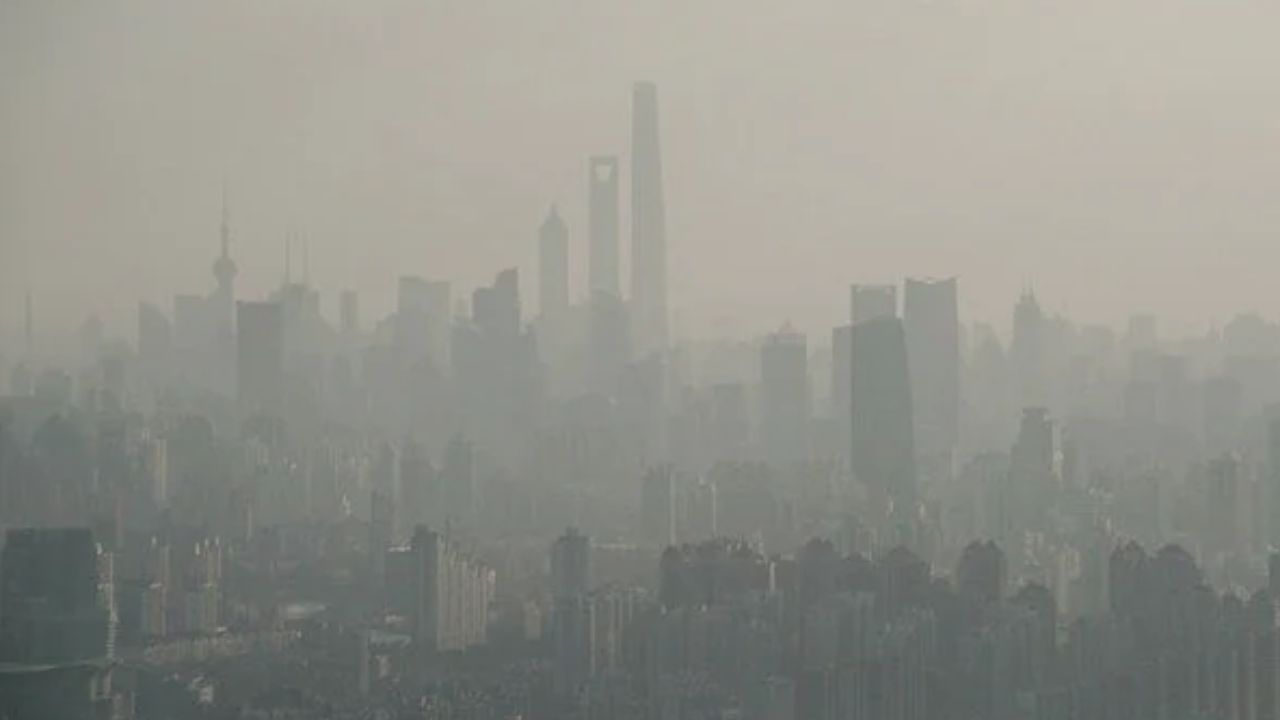
Commuters navigate a haze-covered road near Akshardham as Delhi’s AQI rises to 324 and GRAP Stage II restrictions come into force. (Img: X)
New Delhi: The national capital's air quality deteriorated sharply on Monday as the city’s Air Quality Index (AQI) reached 324 at 4 pm, entering the ‘very poor’ category for the first time this season. The reading marked the highest level recorded since February 4, when the AQI stood at 339. The Commission for Air Quality Management (CAQM) responded by invoking Stage II of the Graded Response Action Plan (GRAP) across Delhi-NCR with immediate effect.
The decision followed a review of the pollution situation and forecasts from the India Meteorological Department (IMD) and the Indian Institute of Tropical Meteorology (IITM). The CAQM warned that unfavourable meteorological conditions could keep air quality in the very poor category over the next several days. Agencies across the National Capital Region have consequently been directed to implement measures under both GRAP Stage I and Stage II to prevent further deterioration.
The AQI climbed from 60 on Friday, following rainfall that brought Delhi its cleanest October day in four years, to 117 on October 31 and 261 on November 1. It crossed the 300 mark on Monday morning, reaching 307 at around 7.05 am. Another update placed the reading at 325 by 5 pm, indicating that pollution remained elevated through the day.
GRAP Stage II is activated when the AQI falls in the 301–400 range. The measures are intended to reduce emissions from road dust, transport, commercial establishments and backup power systems before pollution reaches the severe category.
Civic agencies have been directed to increase mechanical road sweeping, undertake regular water sprinkling with dust suppressants and deploy anti-smog guns at identified locations. Authorities must also ensure the timely collection and disposal of municipal garbage and construction waste, while taking action against open waste burning.
The restrictions also seek to discourage private vehicle use. Parking charges are to be increased to encourage commuters to shift towards public transport, while traffic police teams will be deployed at congested roads and intersections to improve traffic flow and limit emissions from idling vehicles.
Enforcement agencies have been asked to intensify checks for valid Pollution Under Control (PUC) certificates and take action against visibly polluting vehicles. Rules governing older petrol and diesel vehicles will also be enforced more strictly.
Industrial units, brick kilns and power plants across Delhi-NCR will face tighter inspections to ensure compliance with prescribed pollution-control standards and the use of approved fuels. Hotels, restaurants and roadside eateries have been directed to stop using coal and firewood in tandoors and shift to electricity- or gas-based alternatives.
The CAQM has also called for uninterrupted electricity supply to reduce dependence on diesel generator sets. Their operation will remain regulated, subject to permitted emergency requirements. The measures are aimed at curbing emissions from commercial and residential backup power systems, particularly during periods of high pollution.
Public transport is a central component of the GRAP Stage II response. Authorities have been asked to increase the frequency of Delhi Metro, Regional Rapid Transit System (RRTS) services and CNG and electric buses to provide commuters with alternatives to private vehicles.
Offices have also been encouraged to arrange shared transport and carpooling facilities for employees. These steps are intended to reduce the number of vehicles on roads, ease congestion and lower transport-related emissions.
The public has been advised to use buses, metro and other shared mobility options wherever possible. Motorists have been asked to maintain their vehicles, keep PUC certificates valid and switch off engines at traffic signals. Residents have also been urged not to burn garbage, dispose of waste responsibly, limit diesel generator use and avoid firecrackers.
Pollution-related violations can be reported through the 311, Green Delhi and SAMEER mobile applications, giving residents channels to flag non-compliance and environmental concerns.
The deterioration has been widespread across the capital. Of Delhi’s 58 air quality monitoring stations reporting data on Monday, 37 recorded very poor air quality, while 17 were in the poor category and one registered moderate air quality. Three stations reported severe pollution at 4 pm.
Jahangirpuri recorded an AQI of 436, followed by Rohini at 415 and Punjabi Bagh at 413. In an earlier monitoring update, Jahangirpuri had recorded 417, highlighting the severity of pollution in parts of the city.
Fine particulate matter, particularly PM2.5, remained the dominant pollutant. These particles, measuring 2.5 micrometres or less, can penetrate deep into the respiratory system and enter the bloodstream, increasing health risks. Prolonged exposure can be especially concerning for children, older people and those with existing respiratory or cardiovascular vulnerabilities.
The CAQM has attributed the rapid deterioration to unfavourable weather conditions, which are limiting the dispersal of pollutants. Forecasts from the IMD and IITM indicate that the city could remain in the very poor category from November 3 to 5, before a marginal improvement to the poor category over the following six days.
Meteorologist Navdeep Dahiya has warned that the smog season has begun, with calm conditions and northwesterly winds allowing emissions to remain trapped closer to the surface. He has cautioned that the absence of favourable meteorological conditions over the next seven to 10 days could worsen smog across Delhi-NCR and the northern plains.
The Decision Support System (DSS) for Delhi estimated that the transport sector contributed 19.2 per cent of the capital’s pollution on Monday. Other identified sources included stubble burning at 8.4 per cent, industries at 4.2 per cent and residential activities at 4.9 per cent, while other sources accounted for 20.7 per cent.
Pollution contributions from neighbouring NCR districts also remained significant. Jhajjar accounted for 6.9 per cent, Sonipat 5.1 per cent, Gurugram 2.9 per cent, Rohtak 2.7 per cent, Ghaziabad 2.6 per cent and Baghpat 2.4 per cent. Panipat and Bhiwani contributed 2 per cent each, while Gautam Buddha Nagar accounted for 1.9 per cent.
Alongside GRAP measures, enforcement of restrictions on non-compliant vehicles entering Delhi has led to heavy congestion at several interstate borders. The restrictions, effective from November 1 and scheduled to remain in force until January 31, bar petrol and diesel vehicles registered outside Delhi that do not meet BS-VI emission standards from entering the capital.
Electric and CNG vehicles, along with BS-VI-compliant vehicles, are exempt from the restriction. Enforcement is being carried out jointly by the Delhi Environment and Transport Departments and traffic police teams at entry points including Rajokri on NH-48, the DND Flyway, Ghazipur, Singhu, Tikri and Badarpur.
Long queues have been reported at the Delhi-Gurugram, Delhi-Noida, Delhi-Ghaziabad, Delhi-Sonipat and Delhi-Najafgarh borders. On NH-48, congestion near the Sirhaul toll plaza affected both the main carriageway and service roads, while commuters also faced delays near Noida and Ghaziabad. At the Aya Nagar border, teams from the Delhi Traffic Police and Transport Department turned back vehicles that did not meet the prescribed emission standards.
The Northern Range of Delhi Traffic Police said its teams checked 7,657 vehicles between midnight on November 1 and noon on November 2, turning back 609 vehicles that did not comply with the restrictions. In an earlier enforcement update, 7,279 vehicles were checked between midnight and 8 pm on November 1, with 714 turned back and 38 impounded.
Delhi Environment Minister Manjinder Singh Sirsa said enforcement teams had checked 14,930 vehicles on November 1, issued 566 challans for PUC certificate violations and inspected 300 construction sites. The traffic police also held coordination meetings with officials from neighbouring districts and used information boards, pamphlets, print media, social media and radio to inform commuters about the restrictions.
Gurugram has also announced additional pollution-control measures as air quality deteriorates across the National Capital Region. The measures include restrictions on construction activities and a 50 per cent work-from-home requirement for offices.
The steps are intended to reduce dust emissions from construction sites and vehicular movement during the pollution season. The wider regional response reflects the challenge of controlling air pollution across an interconnected urban zone where emissions and weather conditions do not remain confined to administrative boundaries.
## Delhi High Court Refuses Interim Relief Against BS-VI Vehicle Restrictions
The vehicle-entry restrictions have also reached the courts. The Delhi High Court on Monday declined to grant interim relief against the ban on the entry of non-Delhi-registered vehicles that do not meet BS-VI emission standards. The restrictions are currently scheduled to remain in force from November 1 to January 31.
A bench comprising Acting Chief Justice Nitin Wasudeo Sambre and Justice Sanjay Sharma issued notice on a petition filed by Faridabad-based lawyer Gurmukh Dass Kohli. The matter has been listed for further hearing on November 27, along with a related case.
The petitioner has challenged the June 23 notification issued by the Department of Environment and Forests, arguing that the restrictions discriminate between vehicles on the basis of their place of registration rather than their actual emission standards. The plea has highlighted that older, pre-BS-VI vehicles registered in Delhi are allowed to operate, while comparable vehicles registered in Haryana are barred from entering the capital.
The petition has also questioned the scientific basis of the restriction, arguing that it applies irrespective of the prevailing AQI and affects the movement of residents across the integrated NCR. It has contended that less restrictive alternatives could have been considered to address vehicular pollution.
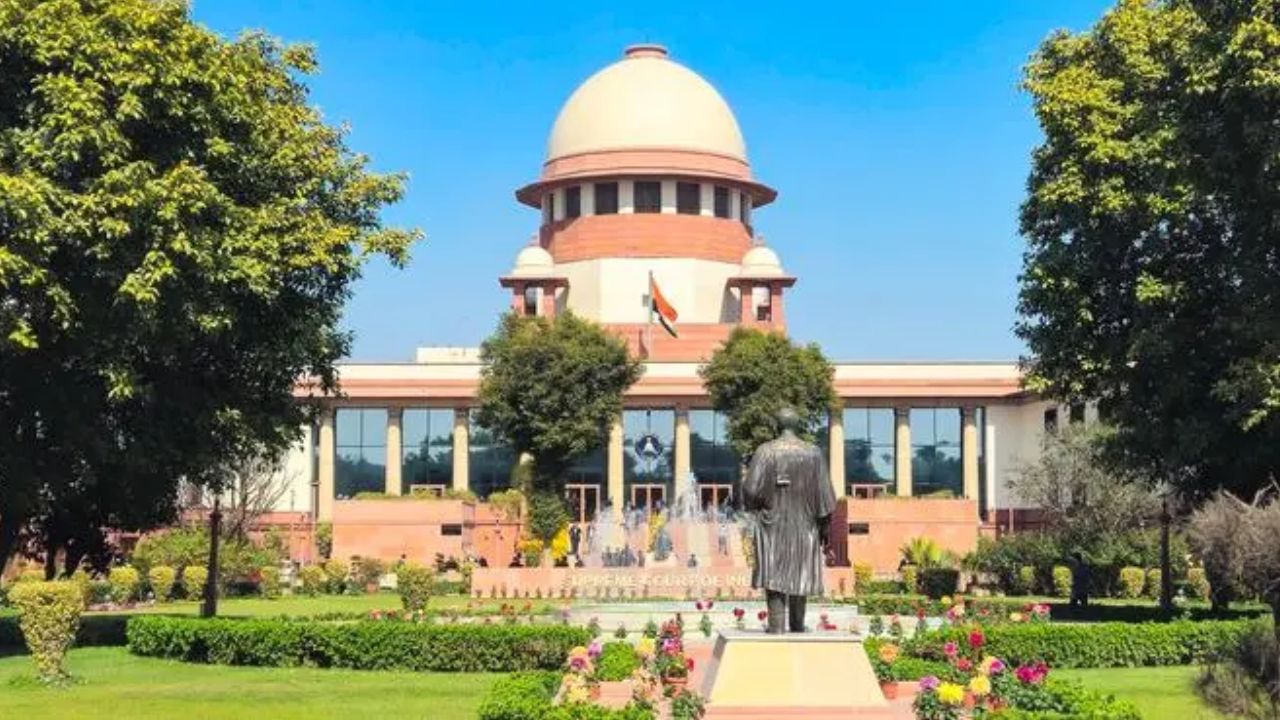
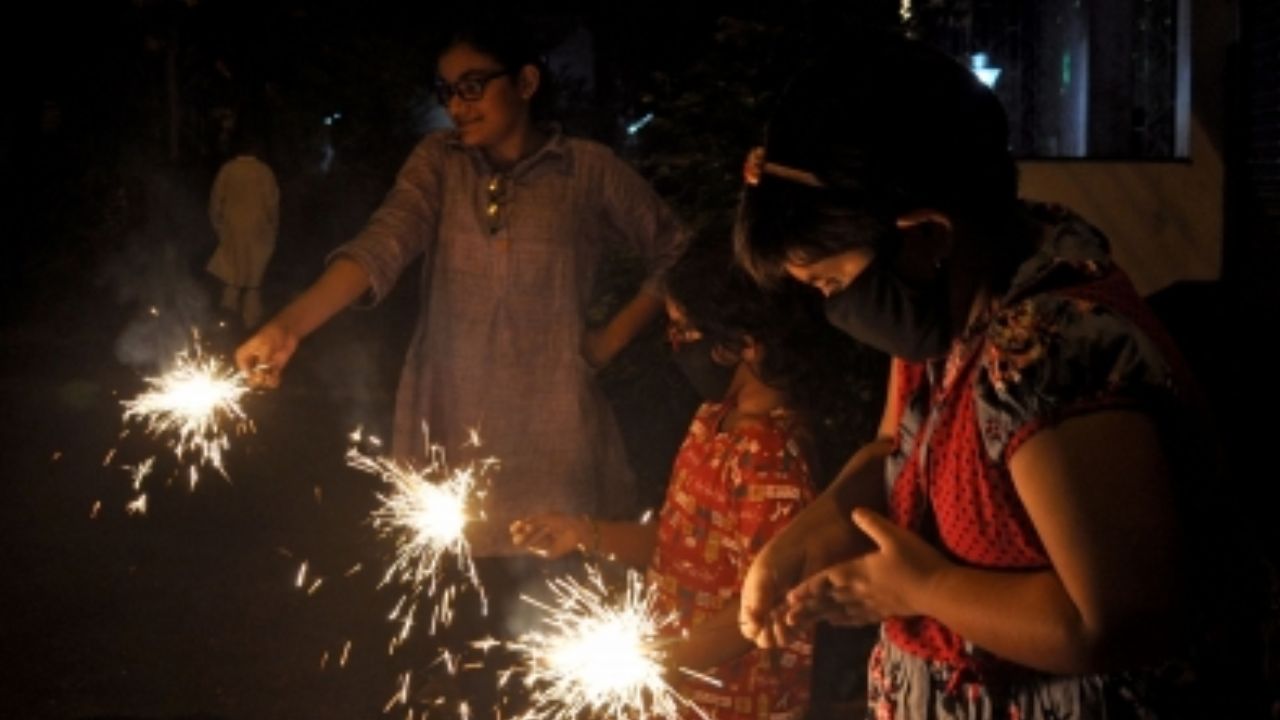
In a separate development, the Supreme Court has permitted the sale of certified green firecrackers in Delhi-NCR from November 4 to 6 and their bursting during specified hours on November 7 and 8. The permitted time slots are 6 am to 7 am and 8 pm to 10 pm. A complete ban on firecrackers will come into force again from November 9.
A bench of Justices MM Sundresh and Prasanna B Varale imposed strict conditions to prevent conventional or unauthorised firecrackers from being sold as green alternatives. Manufacturers must possess valid certification from the Council of Scientific and Industrial Research-National Environmental Engineering Research Institute (CSIR-NEERI) and licences issued by the Petroleum and Explosives Safety Organisation (PESO).
Each permitted box must carry a product-specific and batch-specific QR code to enable verification. Firecrackers containing barium, products without the required certification and series-connected crackers commonly known as ladi have been prohibited.
The court has directed authorities to identify designated locations for the sale of green crackers and prohibited online sales. Police teams have been asked to inspect markets, verify QR codes and seize illegal products. Firecracker use has also been barred within 300 metres of hospitals, healthcare centres, old-age homes, educational institutions and notified silence zones.
In its October 29 order, the Supreme Court observed that a complete prohibition could encourage the illegal sale of conventional firecrackers while preventing consumers from purchasing certified green products. The bench also flagged the lack of adequate data to establish whether the 2024 ban had achieved its intended objective, particularly in the absence of a significant improvement in AQI readings.
The court directed the Central Pollution Control Board (CPCB), in consultation with state pollution control boards, to prepare daily air quality reports for the pre-Diwali period from November 2 to 6, Diwali on November 7 and 8, and the post-Diwali period from November 9 to 30. Authorities have also been asked to monitor pollution levels, inspect non-functional air quality monitoring stations and ensure the timely clearance of festival waste. The bench warned that officials could face contempt proceedings for failing to implement its directions.
With GRAP Stage II now in force, the coming days will be crucial for assessing whether intensified dust-control measures, restrictions on polluting activities and tighter vehicle enforcement can prevent a further deterioration in air quality. The forecast of continued very poor conditions through November 5, followed by only marginal improvement, has raised concerns about the duration of the pollution episode.
The effectiveness of the response will depend on coordination between civic agencies, traffic police, pollution-control authorities, neighbouring NCR administrations and residents. The Supreme Court’s directions on green crackers and daily pollution monitoring will add another layer of scrutiny during the Diwali period.
For commuters, the immediate impact is likely to be felt through stricter vehicle checks and possible delays at Delhi’s entry points. For residents, the worsening AQI makes reducing exposure to polluted air and following official advisories increasingly important. The larger challenge remains controlling multiple sources of pollution across the region rather than relying on isolated restrictions.