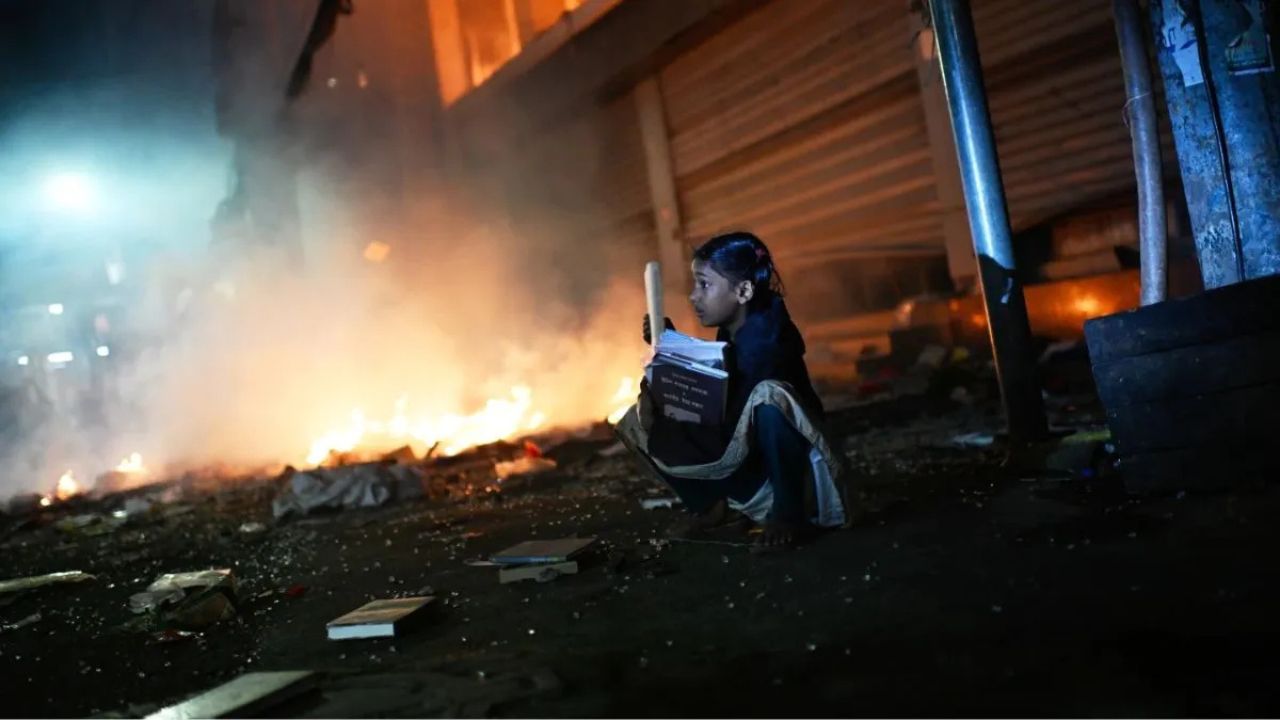
At least 25 journalists rescued after intervention by firefighters and officials.
Dhaka: Bangladesh witnessed fresh waves of protests late Thursday night after Sharif Osman Hadi, a 32-year-old youth leader, died following a head injury sustained in a shooting last week. Demonstrators targeted major newspapers, including the offices of the Daily Star and Prothom Alo, in Dhaka.
The Daily Star’s office, located in Karwan Bazar near Shahbagh intersection, was set on fire, leaving several journalists and staff trapped inside. One journalist, Zyma Islam, shared her ordeal on social media, writing, “I can’t breathe anymore. There’s too much smoke. I'm inside. You are killing me,” highlighting the peril faced by media personnel amid the unrest.
The situation at Prothom Alo, a leading Bengali-language daily near the Daily Star, was equally alarming. Reports indicate that protesters vandalised the building and set fire near the entrance, trapping employees inside. Eyewitnesses described hundreds of demonstrators surrounding the office around 11 pm, creating a tense standoff with staff and authorities.
Paramilitary forces were deployed outside both buildings but initially refrained from dispersing the crowd. Firefighters arrived to control the flames, and officials later rescued at least 25 journalists from the two offices, averting a potential disaster.
Osman Hadi to be buried next to Bangladesh national poet Kazi Nazrul Islam; Funeral date and time
The protests erupted following the death of Sharif Osman Hadi, the convener of Inquilab Mancha. He had been shot in the head last week and was transferred to Singapore for treatment, where he succumbed to his injuries on Thursday. Hadi was a vocal critic of both India and former Prime Minister Sheikh Hasina, making him a prominent figure in political and youth activism circles.
His supporters allege that the perpetrators fled to India and have demanded that the Indian High Commission in Dhaka be closed. The outrage over his death quickly escalated into violent demonstrations targeting media houses, reflecting deep-seated political and social tensions.
VIDEO | Dhaka: Visuals show the aftermath at the Prothom Alo office, which was attacked and set on fire by protesters last night amid ongoing unrest in the Bangladeshi capital.
The violence comes amid demonstrations over the death of student leader Sharif Osman Hadi, with… pic.twitter.com/NsA7vznF67
— Press Trust of India (@PTI_News) December 19, 2025
In response to Hadi’s death, Chief Adviser Muhammad Yunus declared a one-day state mourning on Saturday. He also assured the public that the government would take responsibility for Hadi’s wife and only child. In a late-night address, Yunus promised strong action against those responsible for the youth leader’s killing, emphasizing the administration’s commitment to justice.
Authorities faced criticism for the initial lack of action by security forces outside the media offices, but the swift intervention by firefighters and officials eventually secured the trapped journalists.
Bangladesh Crisis: Tensions rise as protesters target Indian mission in Chattogram
The attack on media offices underscores the volatile atmosphere in Bangladesh following Hadi’s death. The incident has not only endangered journalists but also intensified the debate on political violence, accountability, and public safety. Observers have noted that the unrest could have long-term implications for freedom of the press and the safety of media personnel during periods of political upheaval.
The rescue of the 25 journalists prevented further tragedy, but the protests signal ongoing unrest and the urgent need for effective security measures to protect both civilians and the press.

