 English
 English
Dr. P. K. Mishra, Principal Secretary to the Prime Minister, highlighted India’s commitment to dignity, human rights, inclusive growth and citizen-centred governance at the National Conference on Everyday Essentials. He outlined four key pillars shaping India’s human rights-driven development journey.
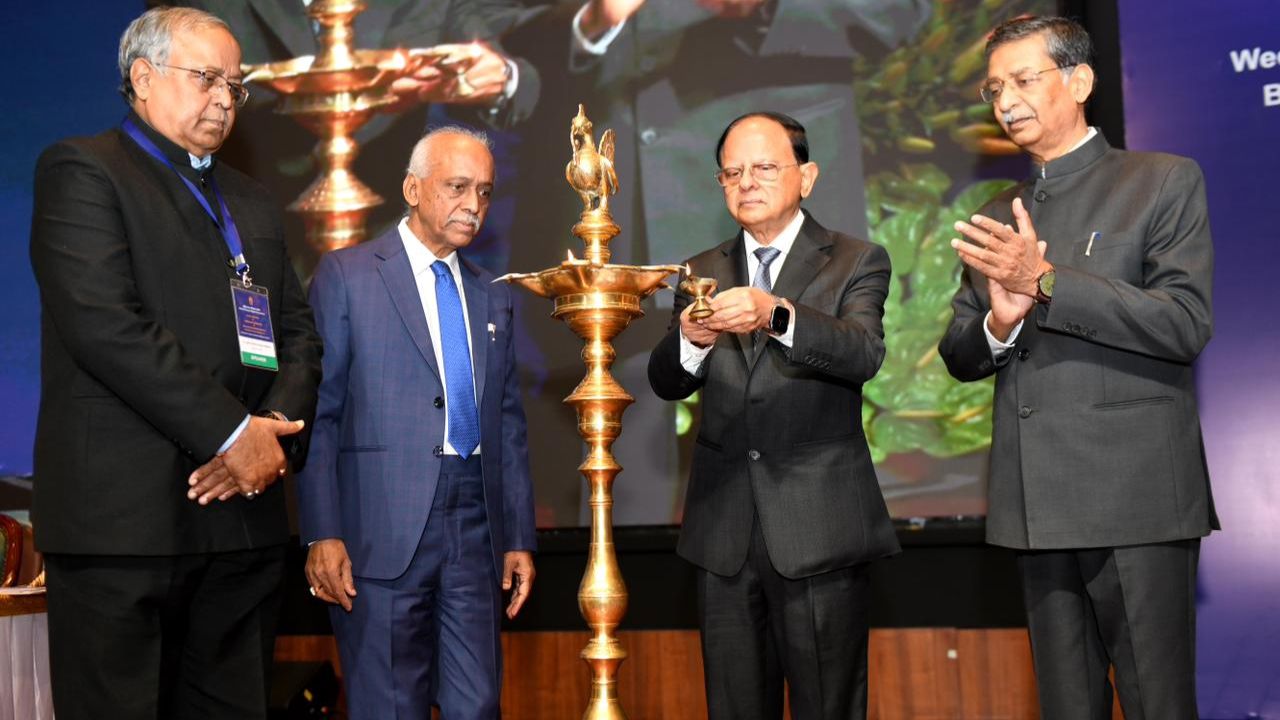
Dignitaries inaugurate the National Conference by lighting the lamp
New Delhi: In the inaugural session of the National Conference on ‘Ensuring Everyday Essentials – Public Services and Dignity for All’ held at Bharat Mandapam, New Delhi, Dr. P. K. Mishra, Principal Secretary to the Prime Minister, underscored that Human Rights Day is not just a commemoration of a historic declaration but an invitation to reflect on how dignity is experienced in daily life.
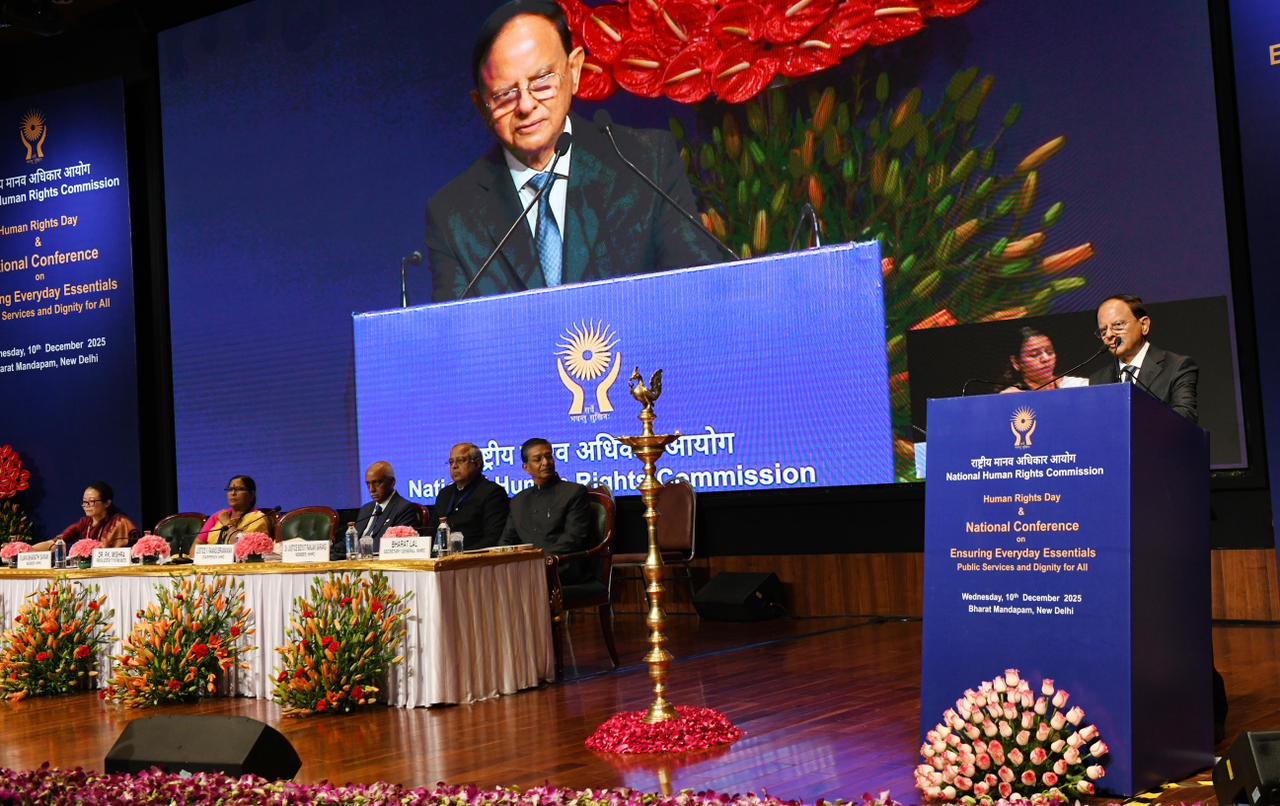
Human Rights Day conference by NHRC at Bharat Mandapam, New Delhi
He recalled Article 25(1) of the Universal Declaration of Human Rights, which assures every individual the right to adequate living standards—food, shelter, healthcare and security during vulnerable times.
Dr. Mishra highlighted India’s significant contribution to the UDHR, especially the intervention of Dr. Hansa Mehta, who ensured the declaration affirmed “all human beings are born free and equal,” strengthening global gender equality.
He noted that human rights have evolved beyond political freedoms to include digital inclusion, technology-driven systems, environment, privacy, mobility and modern vulnerabilities.
Referring to India’s philosophical foundations—dharma, nyaya, karuna, seva, and vasudhaiva kutumbakam—Dr. Mishra emphasized that dignity and duty have always guided Indian society.
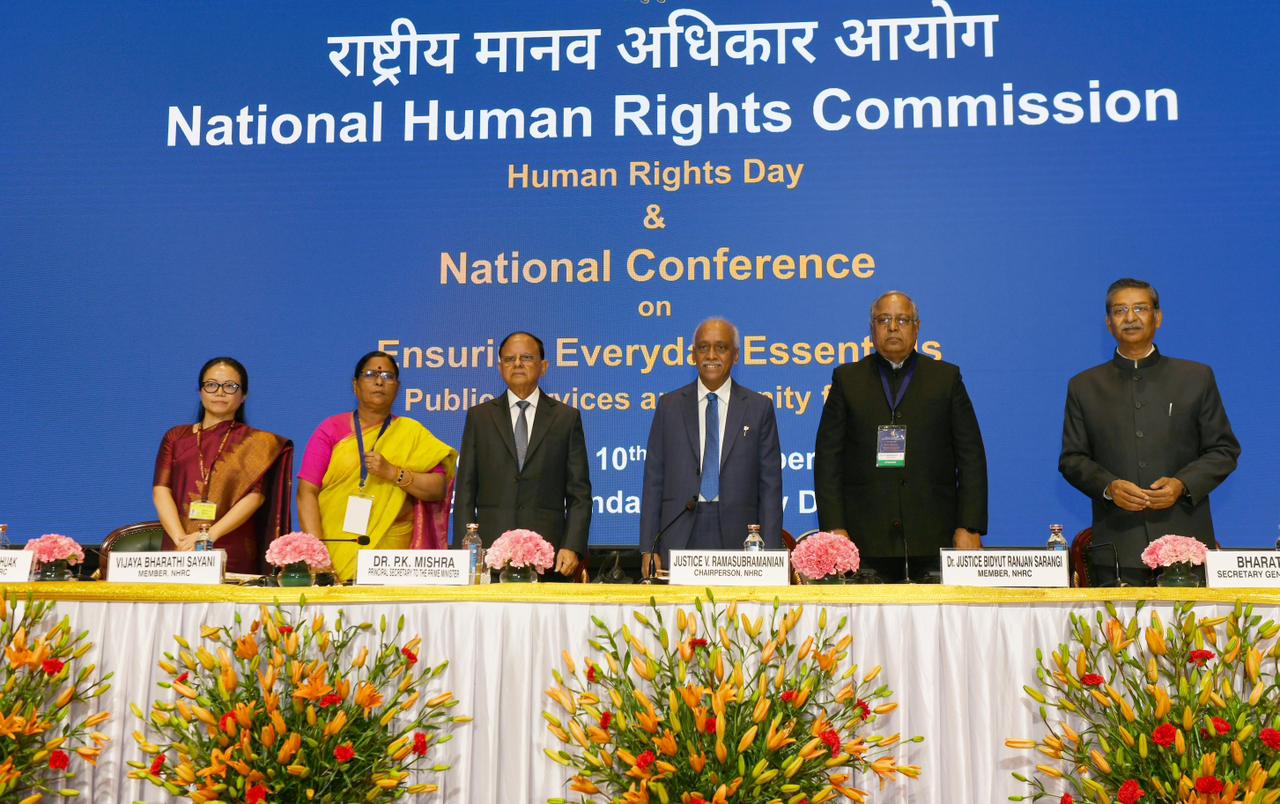
NHRC members at the National Conference on Human Rights Day
These ideals shaped constitutional values including universal adult franchise, fundamental rights and directives prioritizing welfare-oriented governance.
Reflecting on the period before 2014, he noted India’s rights-based legislations like RTE, MGNREGA and NFSA. However, rights lose meaning without effective delivery.
Post-2014, the government shifted to a saturation approach ensuring that “no eligible beneficiary is left behind.” Digital infrastructure, DBT, and initiatives like Viksit Bharat Sankalp Yatra strengthened last-mile delivery.
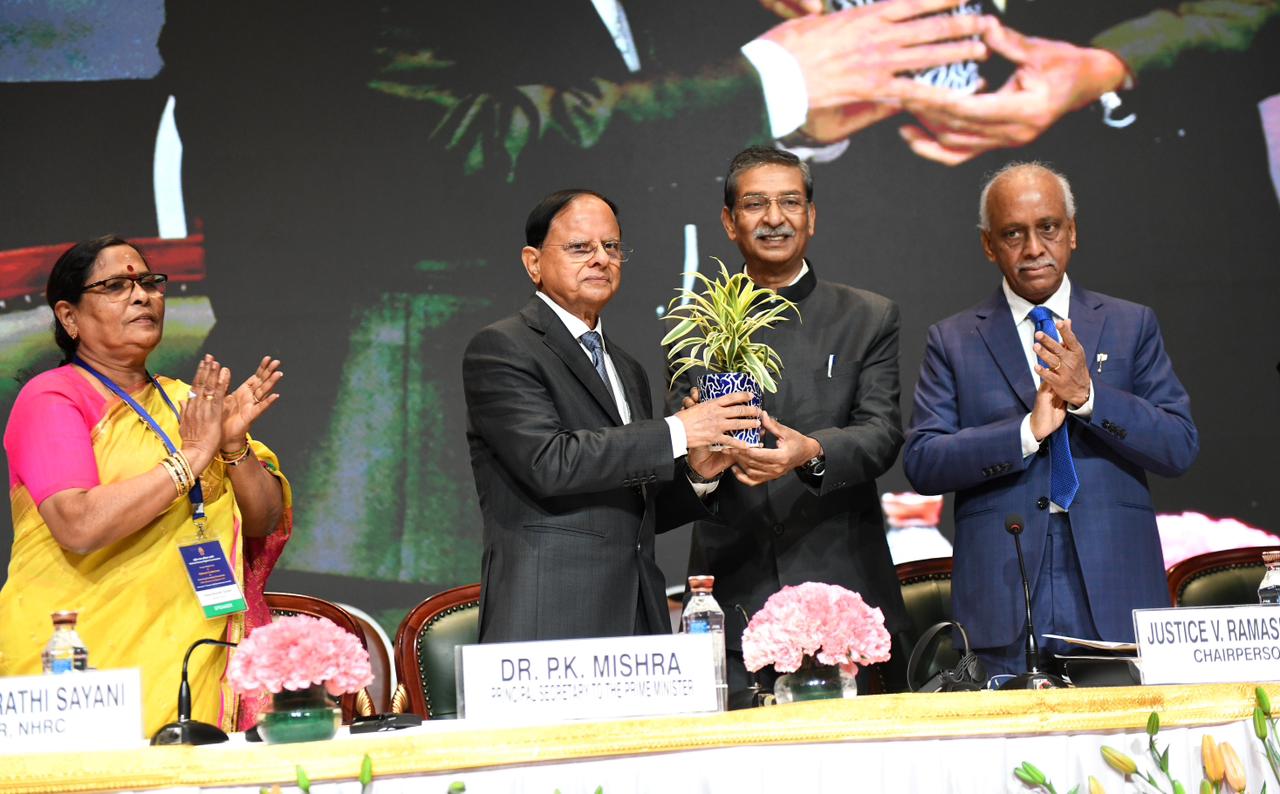
Dr. P.K. Mishra receives a memento during the National Human Rights Conference
He highlighted that 25 crore people have come out of poverty in the last decade—validated by the Household Consumption Expenditure Survey 2023–24.
Dr. Mishra detailed four pillars that anchor India’s mission for everyday dignity:
Schemes like PM Awas Yojana, Jal Jeevan Mission, Swachh Bharat Abhiyan, Saubhagya and Ujjwala Yojana have transformed households through housing, sanitation, water, electricity and clean fuel.
PMGKAY ensured food security for 80 crore people during COVID-19, while Ayushman Bharat–PMJAY provided health cover to 42 crore citizens. Insurance schemes, pension reforms, labour codes and mental health laws strengthened protection for vulnerable citizens.
The JAM Trinity revolutionised financial inclusion, with over 56 crore Jan Dhan accounts. Schemes like Mudra, SVANidhi and SHG-led empowerment, along with women-focused initiatives and legislative reservations, boosted economic participation.
New criminal laws, fast-track courts, POCSO Act, Rights of Persons with Disabilities Act and PM-JANMAN strengthened legal protections. India’s humanitarian outreach, including Vaccine Maitri, reflected its commitment to universal human rights.
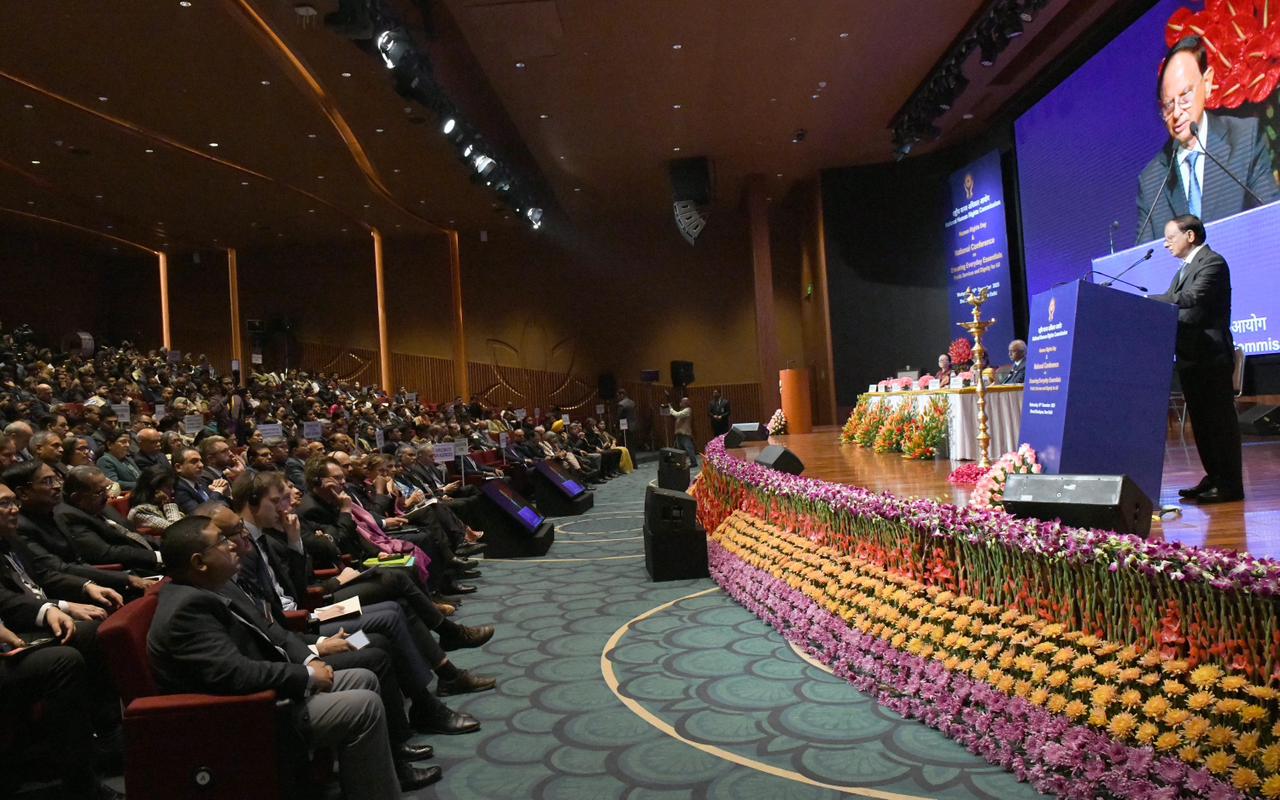
A packed hall at NHRC’s Human Rights Day conference in New Delhi.
Dr. Mishra stressed the need for responsible use of technology, data protection, algorithmic fairness, environmental justice, AI accountability and safeguarding gig workers’ rights. He affirmed that good governance itself is a fundamental right—defined by efficiency, transparency and timely service delivery.
India’s election to the UN Human Rights Council reflects global faith in its democratic and inclusive model.
Dr. Mishra envisioned a modern, inclusive India with vibrant villages, sustainable cities and public services that treat every individual with dignity.