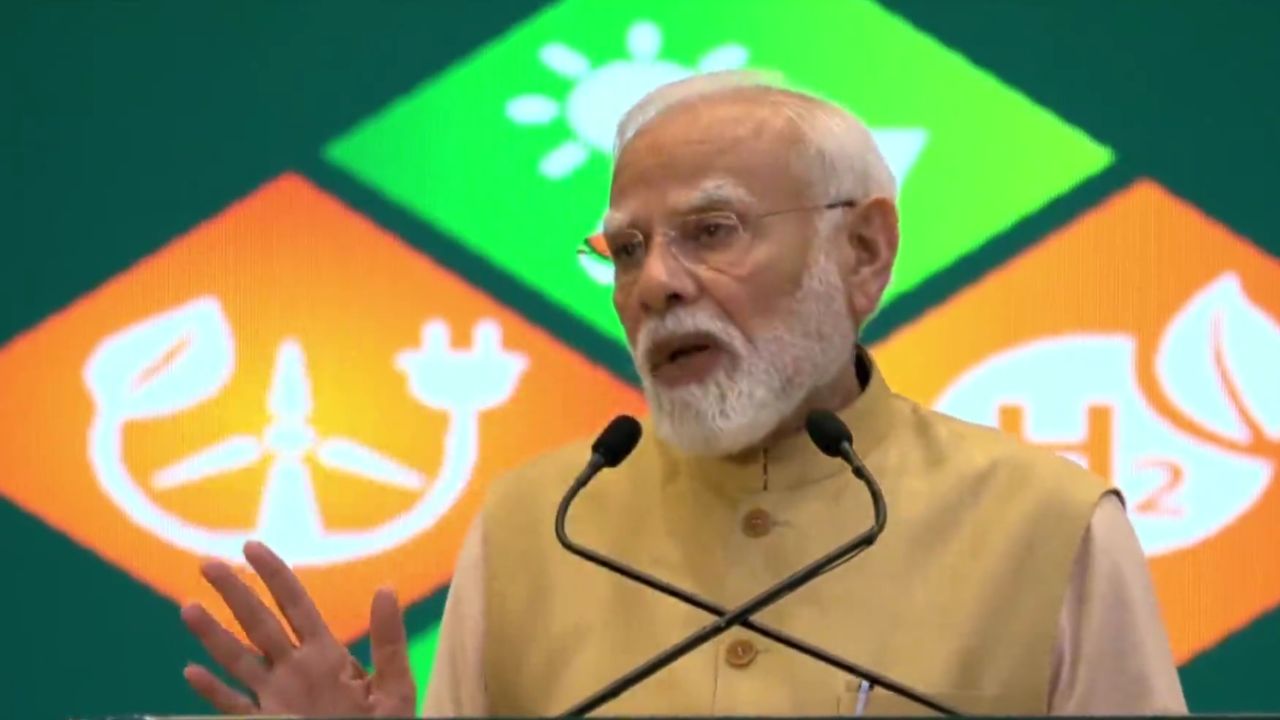
Modi urges clean energy transition to strengthen economic security. (Img: X)
New Delhi: Prime Minister Narendra Modi on Monday said clean energy would be central to future energy security, warning that excessive dependence on fossil fuels could continue to destabilise the global economy.
Addressing the Bharat Renewable Energy Summit and Expo (BRESE) 2026 at Bharat Mandapam in New Delhi, Modi said global crises, including the Covid-19 pandemic and the conflict in West Asia, had exposed the close link between energy security and economic stability. He credited India's investments and initiatives over the past decade with helping the country avoid major economic disruptions.
“This global crisis has given a clear message to every country that energy security is directly connected to economic security. And we all know that the future of energy security lies in clean energy,” Modi said.
“If we continue to rely heavily on fossil fuels, then the global economy will continue to be disrupted. Because the stockpile of fossil fuels is limited in some regions, but the potential of renewable energy is unlimited. And every region, every country can take advantage of it,” he added.
Highlighting India's progress, the Prime Minister said the country had achieved its Paris Agreement commitment of sourcing 50% of its installed power capacity from non-fossil fuel sources in 2025, five years ahead of the 2030 deadline.
Non-fossil sources now account for more than half of India's nearly 300 GW installed power capacity. The government is targeting 500 GW of non-fossil capacity by 2030, with plans to add another 500 GW over the following 10 to 11 years.
Modi highlighted the progress of the PM Surya Ghar Muft Bijli Yojana, launched in February 2024 to cover one crore households. More than 65 lakh homes have been connected under the scheme, with beneficiaries recording a 76% reduction in electricity bills, he said.
Under the PM-KUSUM scheme, solar installations are benefiting more than 30 lakh farmers, generating estimated annual savings of Rs 1 lakh per farmer. Solar systems installed on over 44,000 government buildings are also saving around Rs 700 crore annually.
The Prime Minister said India's clean energy ambitions extended beyond solar, wind, hydropower and nuclear energy, with green hydrogen emerging as another priority.
“Our clean energy ecosystem is not limited to hydro, solar, wind and nuclear. India is moving ahead on a mission to make a big leap in the field of green hydrogen. Under the National Green Hydrogen Mission, the goal is to produce 50 lakh tonnes of green hydrogen by the end of this decade,” he said.
Modi also pointed to the expansion of India's electricity grid and green energy corridors, backed by a recent government investment decision of Rs 2 lakh crore.
He said domestic solar module manufacturing capacity had risen from 2 GW a decade ago to more than 200 GW, while solar cell production capacity had reached 40 GW.
The renewable energy sector has attracted investments exceeding Rs 15 lakh crore, or USD 164 billion, over the past decade, Modi said. Since the 2024 ReInvest summit, investments of around Rs 6 lakh crore have come into the sector, he added.
“Over the past decade, the renewable energy sector has seen over Rs 15 lakh crore, or USD 164 billion, in investment. Since the ReInvest summit of the year 2024, in just two years, we have seen investments of around Rs 6 lakh crore, or over USD 63 billion. And estimates suggest that by the end of this decade, there will be over Rs 20 lakh crore, or about USD 220 billion, in investment opportunities in this sector,” he said.
The summit coincided with the ninth Assembly of the International Solar Alliance and the fourth International Green Hydrogen Conference.

