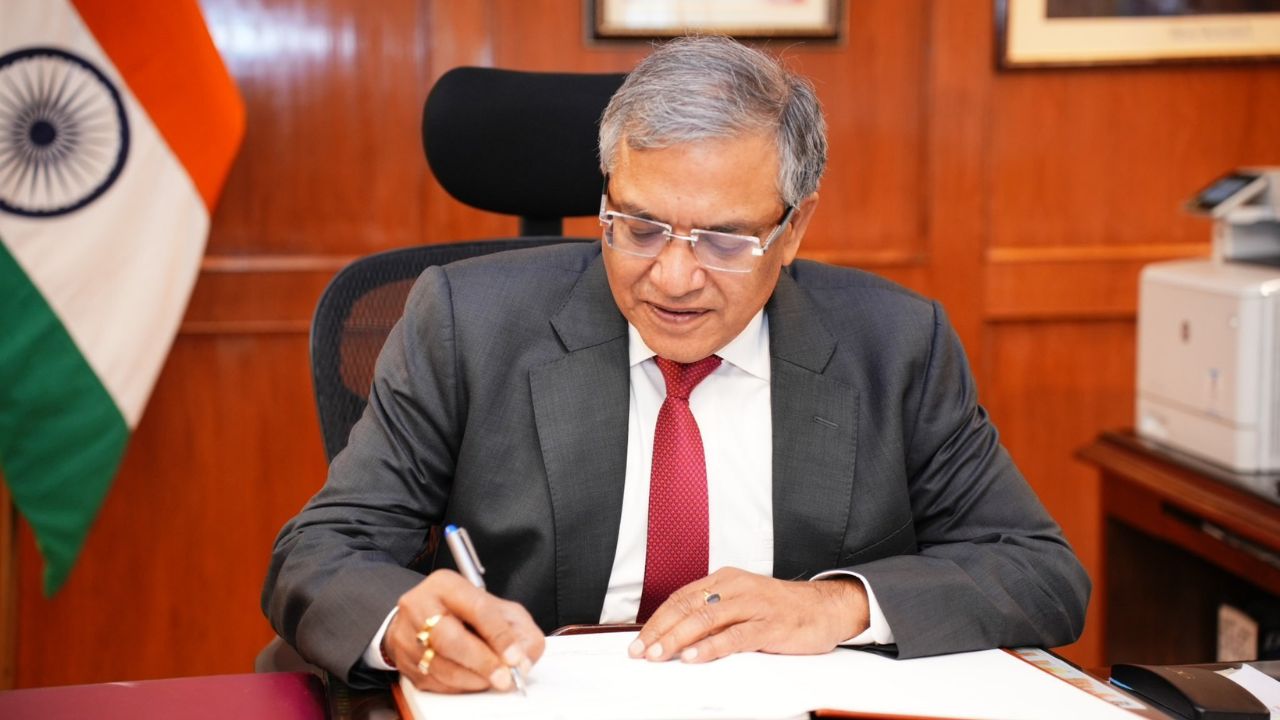
Bengal BJP backs Gyanesh Kumar amid nationwide protests (Img: X)
Kolkata: West Bengal BJP president Samik Bhattacharya came out in support of Chief Election Commissioner Gyanesh Kumar amid a nationwide Congress-led campaign seeking his resignation. BJP state president said Kumar deserves "at the very least, the Padma Bhushan" for overseeing elections and changes to electoral rolls in West Bengal.
He also targeted Congress leader Rahul Gandhi, claiming that even members of his own party do not take his statements seriously.
"The fact is, even the Congress party itself doesn't heed Rahul Gandhi's words; they don't take him seriously... Gyanesh Kumar deserves, at the very least, the Padma Bhushan," Bhattacharya said while speaking to reporters.
Praising the conduct of elections in West Bengal, Bhattacharya said voters were able to cast their votes without fear or intimidation during the West Bengal Assembly polls.
"The people of West Bengal are delighted that, after so long, intimidation was kept at bay. There were no incidents of murder, and people were actually allowed to cast their votes. Furthermore, in a border state like this, Gyanesh Kumar took the initiative to remove the names of Bangladeshi infiltrators from the voter lists," he added.
He said the Election Commission's measures had received broad public support in the state.
"The people of West Bengal have rarely witnessed an election like this. Therefore, the general public of West Bengal fully supports Gyanesh Kumar..." he said.
BJP leader's remarks came as Congress intensified protests against the Election Commission over its functioning and the ongoing Special Intensive Revision (SIR) of electoral rolls.
In Delhi, Indian Youth Congress workers marched from Raisina Road to Jantar Mantar, raising slogans against Kumar and demanding his resignation.
The protests spread to several states. In Patna, police used water cannons to disperse Congress workers demonstrating against the CEC. Similar scenes were reported in Chandigarh, where some protesters climbed onto police vans after police used water cannons.
Congress workers also held demonstrations in Jammu and Kashmir, Assam, Uttarakhand, West Bengal, Uttar Pradesh, Himachal Pradesh and Manipur.
In Shimla, Congress leaders and workers protested outside the State Election Commission office over issues concerning the Election Commission. Protesters also blackened the official board outside the office.
In Manipur, Congress workers led by PCC president Okram Ibobi Singh and Congress Legislature Party leader Keisham Meghachandra Singh marched towards the chief electoral office at Lamphelpat. Protesters demanded Kumar's arrest and prosecution and burnt an effigy of the CEC.
The demonstration later turned tense, with protesters scuffling with police. Security personnel used tear gas shells to disperse the demonstrators.
In Jammu, heavy police deployment was reported outside the Election Commission office, while Congress MLAs in Srinagar protested inside the Legislative Assembly, carrying banners demanding Kumar's resignation. Demonstrations were also held in Lucknow, Guwahati and Kolkata.
The nationwide campaign has centred on Congress' objections to the functioning of the Election Commission and its handling of the SIR exercise.
The political confrontation intensified following an Indian Express report that election commissioners Sukhbir Singh Sandhu and Vivek Joshi had raised objections at least 14 times over 10 months regarding decisions and procedures related to electoral rolls and access to election databases.
The Election Commission has rejected the allegations, maintaining that decisions concerning the SIR were taken unanimously and that written notes, observations and differing views were part of its internal deliberations.

