English
 English
A major shake-up in India’s higher education is coming. A new Bill promises autonomy, strict penalties, global standards, and a fresh regulatory system. What will the Viksit Bharat Shiksha Adhishthan mean for universities and students?
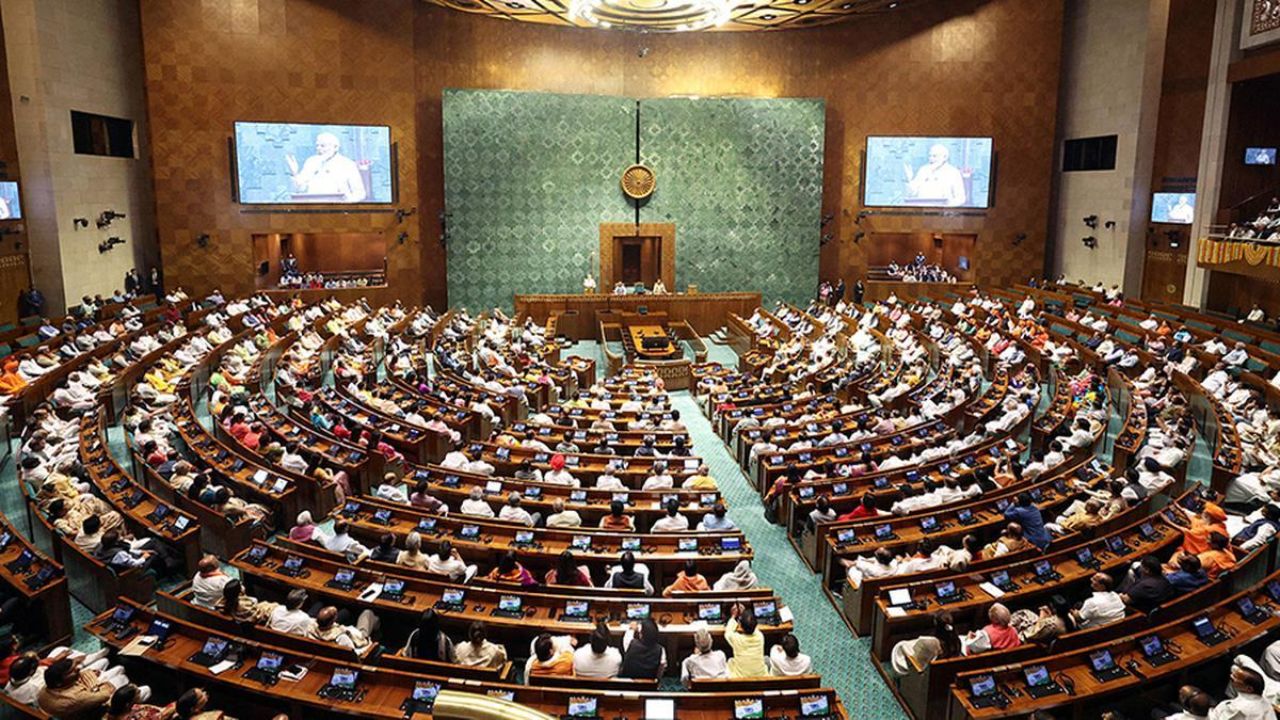
Centre set to table Viksit Bharat Shiksha Adhishthan Bill in Parliament
New Delhi: The Union government is set to introduce the Viksit Bharat Shiksha Adhishthan Bill, 2025 in the ongoing Winter Session of Parliament, proposing a sweeping overhaul of India’s higher education regulatory framework.
The Bill seeks to establish a new national commission to enable universities and colleges to function as autonomous, self-governing institutions while ensuring accountability through transparent accreditation and quality benchmarks.
According to the draft Bill, the proposed commission will function through three specialised bodies a Regulatory Council, an Accreditation Council, and a Standards Council. The central commission will comprise 12 members, including the heads of the three councils, the Union higher education secretary, two senior academicians from state institutions, five eminent experts, and a member secretary.
Parliament Attack Anniversary 2001: PM Modi leads the Nation in paying tribute to fallen heroes
Appointments to the commission will be made exclusively by the Centre through a three-member search committee. The Bill also includes a provision granting legal protection to commission officials for actions taken in good faith under the Act.
The legislation introduces strict penalties for institutions that violate its provisions. Educational institutions may face fines ranging from ₹10 lakh to ₹30 lakh for initial violations. Repeat offenders could be fined up to ₹75 lakh or even face suspension, signalling a tougher stance on compliance and governance.
The commission will be tasked with providing strategic direction for transforming India’s higher education system into a globally competitive, multidisciplinary ecosystem. This includes developing large research-oriented universities, promoting India as an international education destination, and facilitating the integration of Bharatiya knowledge systems, languages, and arts into academic curricula.
The Regulatory Council, a 14-member body, will focus on ensuring that all higher education institutions achieve graded accreditation leading to full autonomy. It will also frame policies to prevent commercialisation and mandate public disclosure of institutional finances, infrastructure, academic outcomes, and accreditation details.
Parliament Session: LoP Rahul Gandhi demands urgent debate on rising Air Pollution in the House
The Accreditation Council, also with 14 members, will design an outcome-based accreditation framework. It will oversee accrediting agencies, assess institutional performance, and regulate accreditation for physical, online, and distance learning programmes.
The Standards Council, named Viksit Bharat Shiksha Manak Parishad, will define academic standards, learning outcomes, credit transfer norms, and qualification frameworks. It will also establish minimum requirements for setting up institutions and promote innovation, internationalisation, and Indianisation of education.
The proposed law will apply to all universities, colleges, institutions of national importance, technical institutes, and open and distance learning providers across India, marking a significant shift in higher education governance.