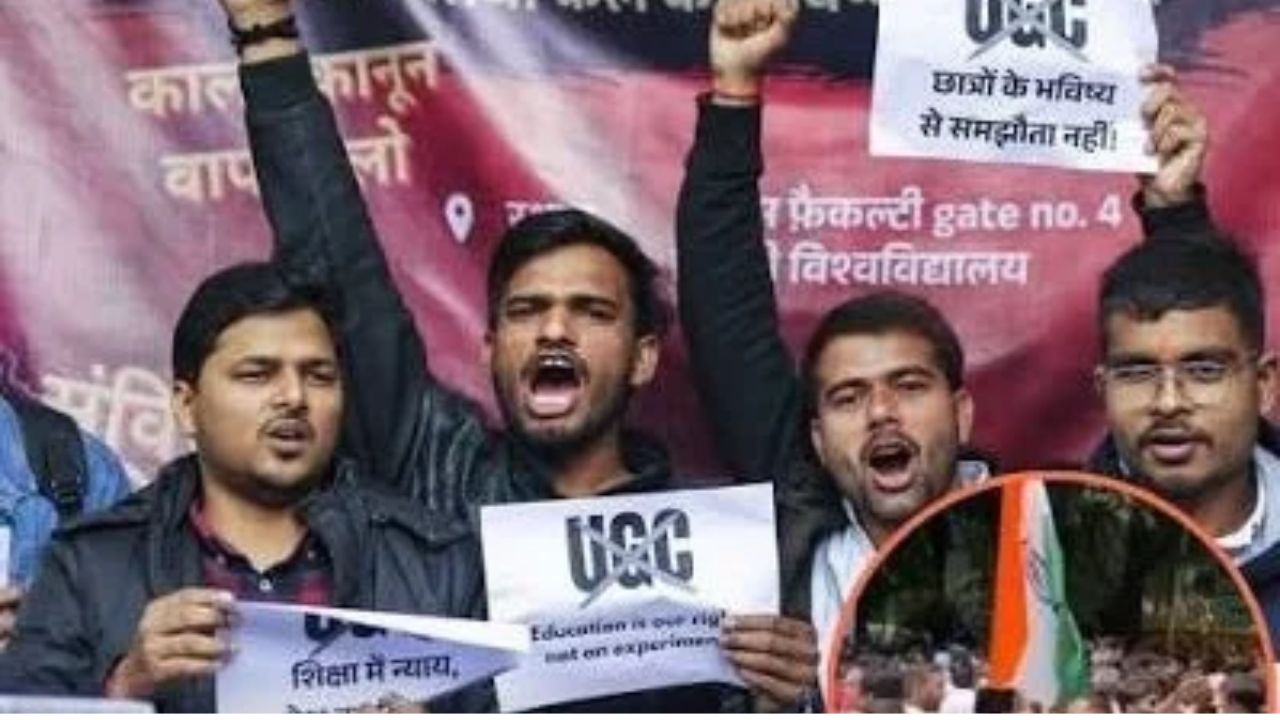
Reservation Hatao Andolan protesters remain at Delhi’s Jantar Mantar, demanding reservation reforms and UGC rule rollback despite police-approved Ramlila Maidan venue.
New Delhi: The Reservation Hatao Andolan turned into a major protest in Delhi as a large number of demonstrators gathered at Jantar Mantar demanding changes in the reservation system and rollback of UGC-related rules. The movement gained nationwide attention after protesters refused to shift to the Delhi Police-approved venue at Ramlila Maidan, triggering a fresh debate over reservation, education policies, merit and social justice.
The protest, driven largely by social media mobilisation, has emerged as one of the most discussed public demonstrations in recent times, with supporters questioning caste-based quotas while opponents highlighting the importance of affirmative action for disadvantaged communities.
The Reservation Hatao Andolan witnessed a major face-off in the national capital after protesters continued their demonstration at Jantar Mantar despite Delhi Police allowing a limited gathering at Ramlila Maidan.
The Delhi Police had issued a no-objection certificate for a peaceful protest at Ramlila Maidan, allowing up to 500 people to participate until 4 pm. The permission was granted after authorities reviewed security arrangements and possible law-and-order concerns.
However, organisers refused to move from Jantar Mantar, claiming that permission had originally been requested for the iconic protest site nearly a month earlier. They alleged that changing the venue at the last moment would reduce public participation and limit their ability to raise their demands. As the number of protesters increased, security personnel were deployed in large numbers around the area to maintain peace and monitor the situation.
The venue dispute became the biggest controversy surrounding the demonstration after Delhi Police clarified that no official approval had been granted for a protest at Jantar Mantar.
Police officials stated that permission was only issued for Ramlila Maidan under specific conditions. Organisers were instructed to maintain discipline, avoid processions and follow security guidelines issued by authorities.
Officials also warned that the permission could be cancelled if the conditions were violated. Despite the police advisory, protesters remained at Jantar Mantar and continued raising slogans and highlighting their demands.
The Reservation Hatao Andolan is a social media-driven campaign that has gained popularity among supporters demanding changes in India’s reservation framework. The movement argues that admissions in educational institutions and recruitment for government jobs should primarily focus on merit, talent and equal opportunity rather than caste-based reservation.
Organisers have proposed that government benefits and welfare schemes should be linked to factors such as economic condition, disability, orphan status and families of martyrs, irrespective of caste or religion.
The campaign has also called for removing caste-related information from government forms, employment applications and educational procedures under its proposed “One Nation, One Identity” approach.
Along with reservation reforms, protesters at Jantar Mantar also raised objections against certain UGC rules and demanded their withdrawal. The issue has added another layer to the wider discussion around higher education reforms, student opportunities and equality in academic institutions. Supporters of the protest argue that educational admissions and employment opportunities should be based on merit and competition.
However, supporters of the existing reservation system maintain that affirmative action remains necessary to address historical discrimination, social inequality and lack of representation among marginalised communities. The latest protest has once again brought India’s reservation debate into the national spotlight.
The rapid expansion of the Reservation Hatao Andolan has been powered by online platforms, especially social media campaigns. Organisers have used digital outreach, videos and online discussions to mobilise supporters across different regions.
The campaign has attracted significant attention online, with a large follower base helping it become one of the most visible anti-reservation movements on digital platforms. Young participants have actively engaged in discussions related to government jobs, competitive exams, education opportunities and the future of reservation policies.
During the demonstration, several participants recited Hanuman Chalisa as part of the gathering. Organisers maintained that the protest was peaceful and aimed at highlighting their demands through democratic means. Delhi Police personnel remained present at the site to manage the crowd and ensure that public order was maintained.
The Reservation Hatao Andolan has revived one of India’s most sensitive social and political debates: the role of caste-based reservation in education and government employment.
Supporters opposing caste-based quotas argue that economic status should be the primary factor for government support and welfare schemes. They believe opportunities should be decided through merit-based systems to ensure equal competition.
On the other hand, supporters of reservation policies argue that caste-based affirmative action remains important because social inequalities and unequal access to education continue to exist. The latest protest has highlighted the challenge of balancing merit, representation and social justice in India.
The protest has gained attention because it connects with major concerns among young Indians, including unemployment, competitive examinations and access to quality education. Government jobs remain highly competitive, and reservation policies continue to influence opportunities for millions of students and job aspirants.
The growing participation in the movement shows that reservation remains a deeply emotional and politically significant issue among different sections of society.
The Reservation Hatao Andolan has become more than just a protest over policies. It has turned into a larger discussion about governance, education reforms, employment opportunities and social equality.
The demonstration also highlights the growing influence of online movements in shaping public debates and bringing people together for common causes. Authorities are closely monitoring developments as they balance the right to peaceful protest with maintaining security in the national capital.
The Reservation Hatao Andolan has emerged as a major digital-age protest, putting India’s reservation debate, education system and questions around merit versus affirmative action back at the centre of national discussion.

