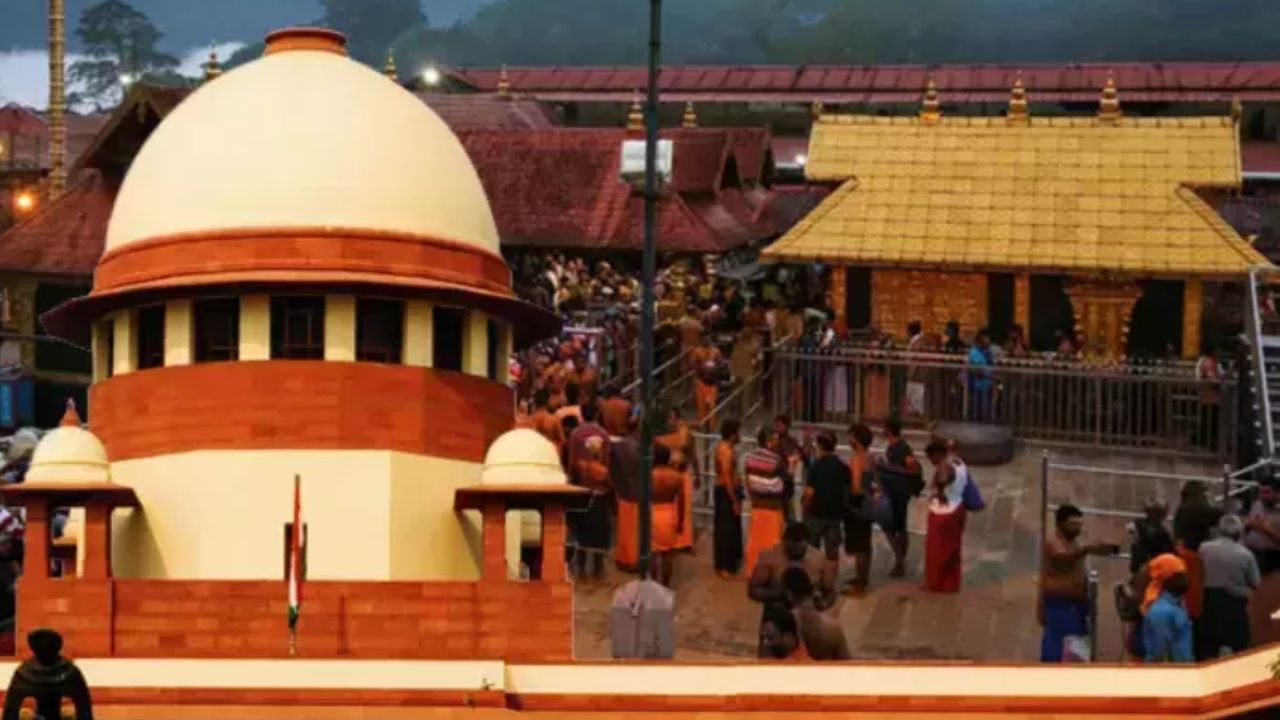
Sabarimala Verdict Based on ‘Men Superior’ Assumption (Image: Internet)
New Delhi: The Centre on Thursday backed restrictions on the entry of women of menstruating age into Sabarimala temple, telling the Supreme Court that the 2018 judgment lifting the ban was based on a flawed understanding of religious practices.
Appearing before a nine-judge Constitution bench, Solicitor General Tushar Mehta argued that the earlier ruling interpreted the issue primarily through a gender lens, overlooking the spiritual and customary context of the temple dedicated to Lord Ayyappa.
Woman can’t be treated as ‘untouchable’ for 3 days: Justice Nagarathna in Sabarimala case
The matter is currently being heard by a Constitution bench led by Chief Justice Surya Kant. The bench is reviewing a series of petitions that go beyond Sabarimala, addressing the larger question of how constitutional guarantees of equality interact with religious freedoms across faiths.
The proceedings stem from a 2019 referral by a five-judge bench headed by former Chief Justice Ranjan Gogoi, which flagged the need for a wider interpretation of similar practices in different religions.
The Centre argued that not all religious customs can be judged solely on the basis of gender equality. Mehta told the court that several practices across religions impose restrictions or obligations on men as well, and such traditions must be viewed in their own context.
He cited examples like rituals at Kottankulangara Sree Devi Temple, where men dress as women during a festival, to highlight the diversity and complexity of religious customs in India.
“It is not about male-centric or female-centric beliefs,” Mehta submitted, adding that the Sabarimala practice is rooted in faith rather than discrimination.
Additional Solicitor General K M Nataraj argued that the court should consider “public morality” instead of relying solely on “constitutional morality,” which had guided the 2018 verdict.
Supreme Court says 9-judge bench to hear Sabarimala review from April 7
This argument signals a shift in how the government wants courts to assess sensitive religious issues.
In 2018, the Supreme Court, by a 4:1 majority, struck down the ban on women aged 10 to 50 entering Sabarimala, holding it unconstitutional and violative of equality principles.
The current hearings are expected to clarify how far courts can intervene in religious practices and where the balance lies between individual rights and community beliefs.

