English
 English

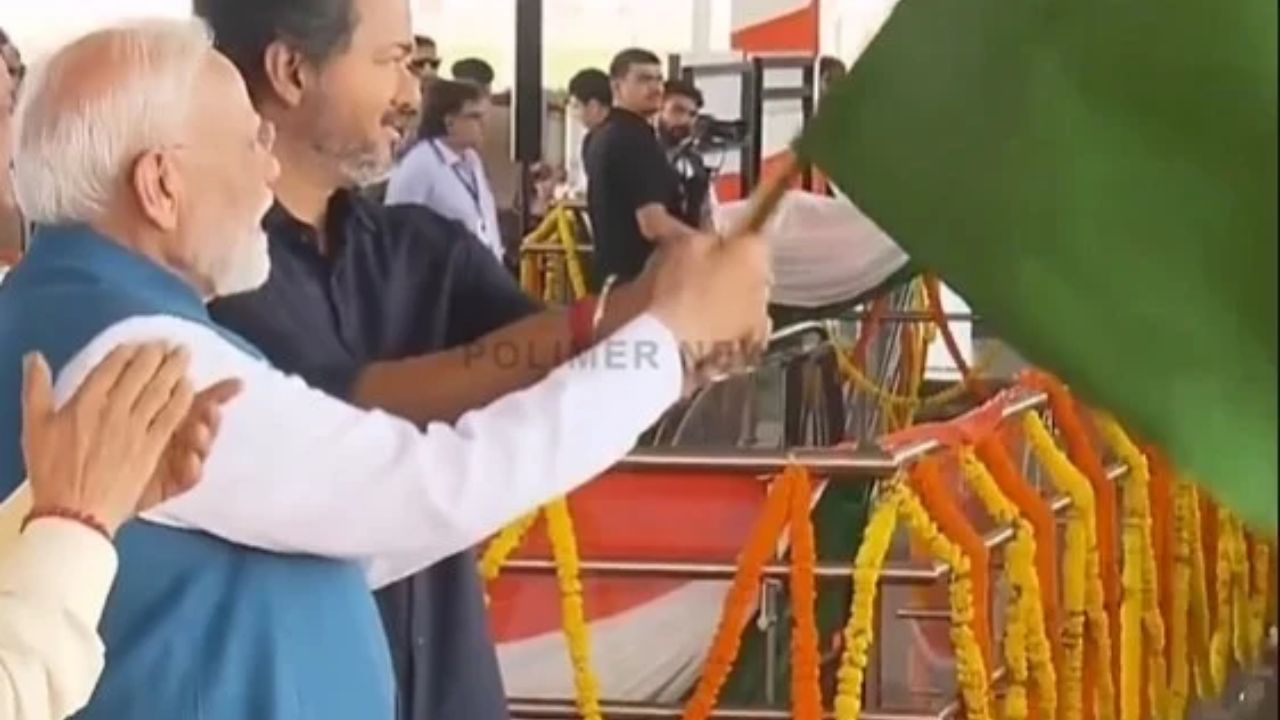
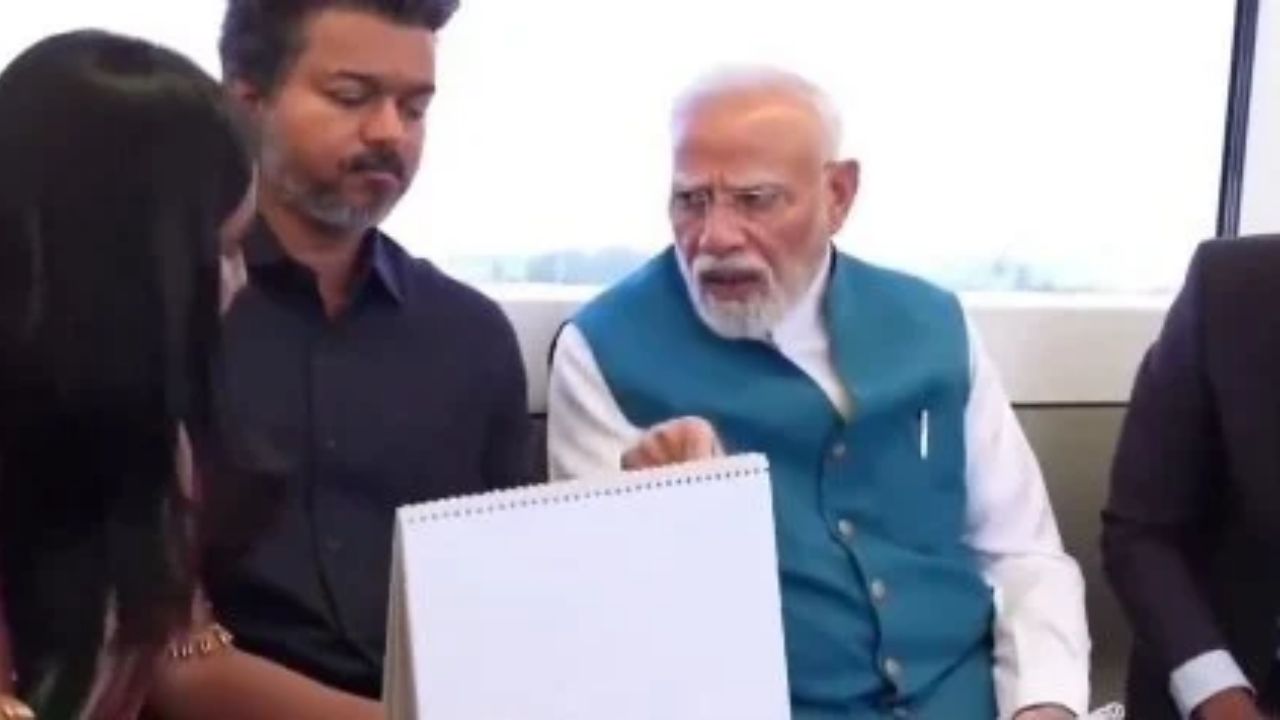
PM Narendra Modi inaugurates the Poonamallee–Vadapalani stretch of Chennai Metro Phase II during his Tamil Nadu visit. (Img: X)
Chennai: Prime Minister Narendra Modi on Sunday underscored the importance of state-led development in building a prosperous India, asserting that the progress of individual states is indispensable to the advancement of the nation as a whole. During his one-day visit to Chennai, Modi inaugurated a key stretch of Chennai Metro Phase II and launched development initiatives worth more than Rs 13,000 crore, spanning transport infrastructure, railways, ports, petroleum facilities and scientific research.
Reaffirming his commitment to Tamil Nadu’s growth, the Prime Minister also expressed his readiness to work with Chief Minister C. Joseph Vijay to expand economic opportunities, strengthen industrial capacity and advance the vision of a developed India by 2047.
The announcements place infrastructure modernisation, domestic manufacturing, scientific innovation and employment generation at the heart of the development agenda for Tamil Nadu.
A major highlight of the visit was the inauguration of the Poonamallee–Vadapalani stretch of Chennai Metro Phase II. Extending approximately 15 kilometres and comprising 11 elevated stations, the stretch has been developed at an estimated cost of Rs 4,900 crore as part of Corridor 4.
The new section is expected to improve connectivity across important parts of Chennai, make daily commuting more convenient and strengthen access to commercial and residential areas. Plans for last-mile bus connectivity are also intended to help passengers complete their journeys more efficiently.
The project forms part of the wider expansion of metro rail networks across India. Modi noted that the country’s metro network has grown substantially since 2014, expanding from operations in five cities with approximately 250 kilometres of track to a network spanning 25 cities and more than 1,100 kilometres.
The expansion, he said, reflects the growing importance of modern public transport as Indian cities urbanise and economic activity intensifies.
Beyond urban transport, the development package encompasses highway improvements, railway infrastructure, port modernisation, petroleum projects and scientific research. Highway projects account for approximately Rs 3,700 crore, while railway initiatives worth more than Rs 750 crore include the Karaikal–Peralam rail line, three rail overbridges in and around Coimbatore, and station redevelopment under the Amrit Bharat Station Scheme.
The initiatives are expected to strengthen transport links, improve the movement of passengers and freight, and support economic activity across the state.
Port-related improvements at Chennai Port, Kamarajar Port and V.O. Chidambaranar Port are also part of the broader infrastructure agenda. Separately, Modi outlined an investment of approximately Rs 17,000 crore for developing V.O. Chidambaranar Port into a world-class mega container and green energy hub capable of accommodating ultra-large vessels. This investment is distinct from the Rs 13,000-crore development package.
The Prime Minister also highlighted the advanced lubricant base oil project at Chennai Petroleum Corporation Limited’s Manali refinery. The project is expected to strengthen domestic production capabilities, reduce dependence on imports and create opportunities for employment and industrial development.
Addressing India’s economic ambitions, Modi emphasised the importance of domestic manufacturing, the Make in India initiative and the Vocal for Local campaign. He cited the expansion of India’s electronics industry, noting that electronics exports have increased elevenfold since 2014, while defence exports have risen fiftyfold. He also highlighted India’s position as the world’s second-largest mobile phone manufacturer and the strong performance of engineering exports.
According to the Prime Minister, the expansion of domestic production has helped create employment opportunities across manufacturing and associated industries. He stressed that strengthening indigenous capabilities would remain essential to building a resilient economy and reducing reliance on overseas supply chains.
Tamil Nadu’s industrial base, skilled workforce and manufacturing ecosystem are well placed to contribute to these national objectives.
Modi also highlighted the importance of fisheries and the coastal economy, pointing to government schemes such as the Pradhan Mantri Matsya Sampada Yojana. Initiatives in Tamil Nadu include improvements to fishing harbours and fish-landing centres, stronger cold-chain facilities, transport support and measures to modernise Chennai Fishing Harbour.
The proposed development of a Seaweed Park is intended to encourage value addition and expand opportunities in the marine economy. The Prime Minister also referred to access to Kisan Credit Cards for fishermen, aimed at improving access to institutional credit.
Strengthening storage, transport and processing infrastructure can help reduce post-harvest losses, improve market access and enhance the earning potential of fishing communities. Modi further noted the growth in seafood exports, underlining the sector’s role in employment and export-oriented economic activity.
Scientific research featured prominently during the visit with the dedicated Sudha Gopalakrishnan Brain Centre at IIT Madras. The centre is developing detailed three-dimensional brain atlases at cellular resolution, drawing on data from more than 100 human brains representing different stages of life, from the foetal period to old age.
The Prime Minister also highlighted the C-STROKE atlas, which contains more than 1,000 annotated microscopic sections of brains affected by ischaemic stroke. Such research resources can help scientists study brain structure and disease in greater detail and support advances in neurological research.
The initiative reflects the wider significance of investment in research institutions and advanced scientific infrastructure, particularly in fields with substantial implications for healthcare and medical knowledge.
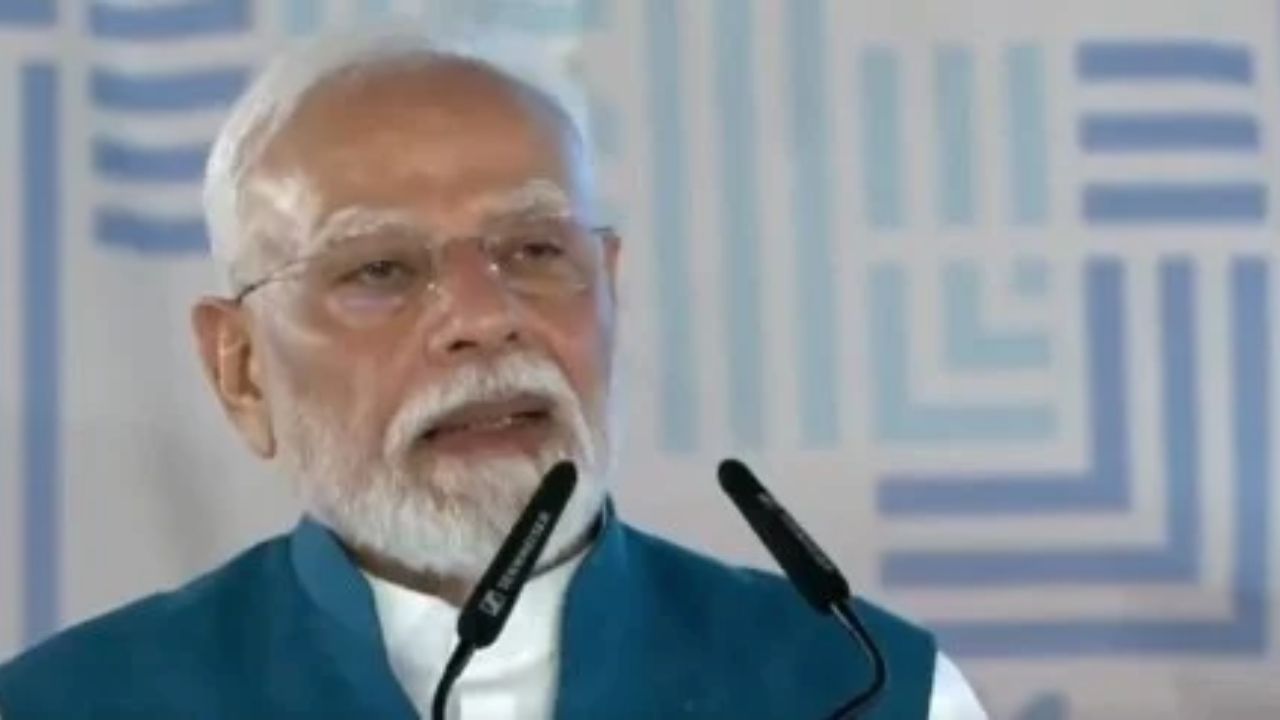
The Prime Minister’s engagement with Chief Minister C. Joseph Vijay added a political dimension to the development announcements. Modi reiterated the importance of cooperative federalism, maintaining that national progress depends on the growth and prosperity of individual states.
He also referred to Tamil Nadu’s political legacy, recalling leaders including M. Karunanidhi, J. Jayalalithaa, O. Panneerselvam, Edappadi K. Palaniswami and M. K. Stalin. His message centred on the need to work across political differences to advance development objectives.
For Tamil Nadu, the partnership will be judged in part by how effectively the announced projects translate into better connectivity, stronger industrial capacity, new jobs and improved economic opportunities for residents.
Looking towards 2047, Modi reiterated his ambition to make India one of the world’s three largest economies, establish the country as a major manufacturing hub and strengthen self-reliance. He also referred to aspirations ranging from hosting the Olympic Games to seeing an Indian set foot on the Moon.
The Prime Minister highlighted the expansion of higher education, noting that the number of higher education institutions had risen from approximately 750 in 2014 to more than 1,300. He also pointed to India’s sporting ambitions, including the 2030 Commonwealth Games and the aspiration to host the 2036 Olympics.
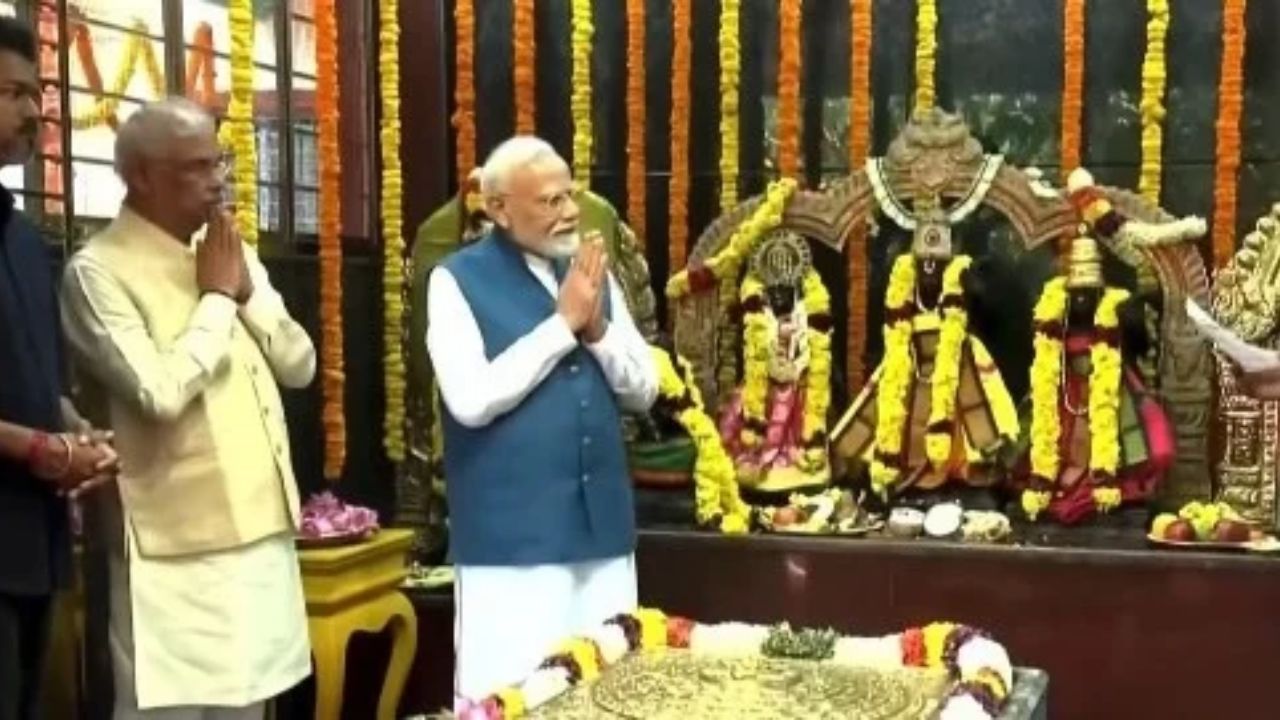
During the visit, Modi offered prayers at the Jalakandeshwarar Temple and extended greetings on Navratri. He spoke about Tamil culture, the legacy of Thiruvalluvar and the enduring relevance of the Thirukkural. He also recalled presenting Russian President Vladimir Putin with a Russian translation of the classical Tamil text.
The Prime Minister’s Chennai programme concluded with his participation in the golden jubilee celebrations of Jaigopal Garodia Hindu Vidyalaya Matriculation Higher Secondary School at the Chennai Trade Centre in Nandambakkam.
Taken together, the announcements underscore the government’s emphasis on infrastructure-led growth, industrial competitiveness and scientific advancement. Modi’s central message was that a stronger Tamil Nadu would contribute directly to a stronger India—and that the journey towards a developed nation by 2047 must be built on the progress of its states.