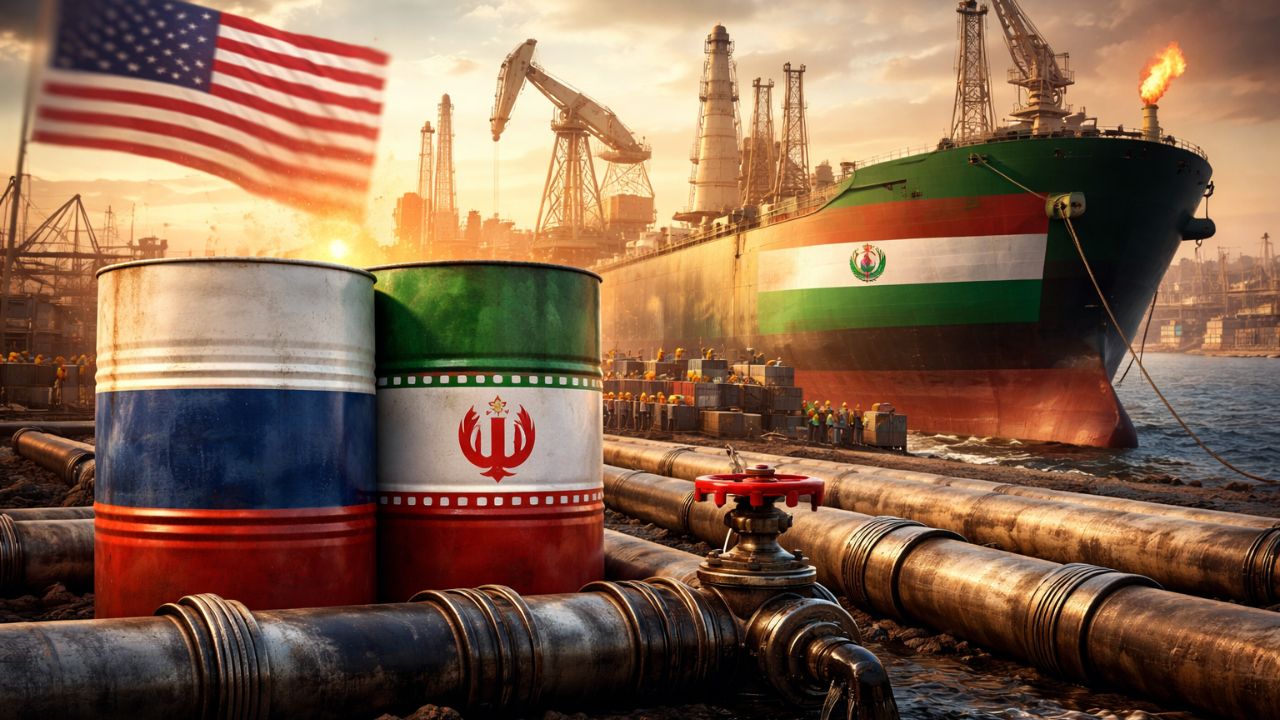
India Oil Imports Under Stress (Image Source: Dynamite News)
New Delhi: The United States has ended the temporary sanctions waivers previously granted for oil from Russia and Iran. This means that permission to purchase oil that is already "on-water" (in transit at sea) will no longer be extended. This decision will directly impact the oil trade associated with Russia and Iran.
Global oil supplies had been disrupted due to ongoing tensions in the Middle East and potential bottlenecks in the Strait of Hormuz. In light of this situation, the U.S. sought to achieve the following objectives by granting temporary waivers:
Following the expiration of the waivers:
However, Russian oil is not under a complete ban—sanctions apply only to specific companies.
India is a key player in this entire scenario because the following are true:
In March, India purchased approximately 2 million barrels of Russian oil per day, accounting for nearly 44% of its total imports.
During the waiver period, India rapidly increased its purchases of Russian oil because
Following the expiration of the waivers, India will need to make certain adjustments:
This decision will impact not only India but the entire global market. The Middle East is already unstable. Pressure on supply chains persists. Oil prices may remain elevated in the future.
Simply put, this decision by the U.S. has introduced fresh uncertainty into the oil market. For India, this presents both a challenge and an opportunity to recalibrate its strategy. It now remains to be seen how India balances its energy requirements.

