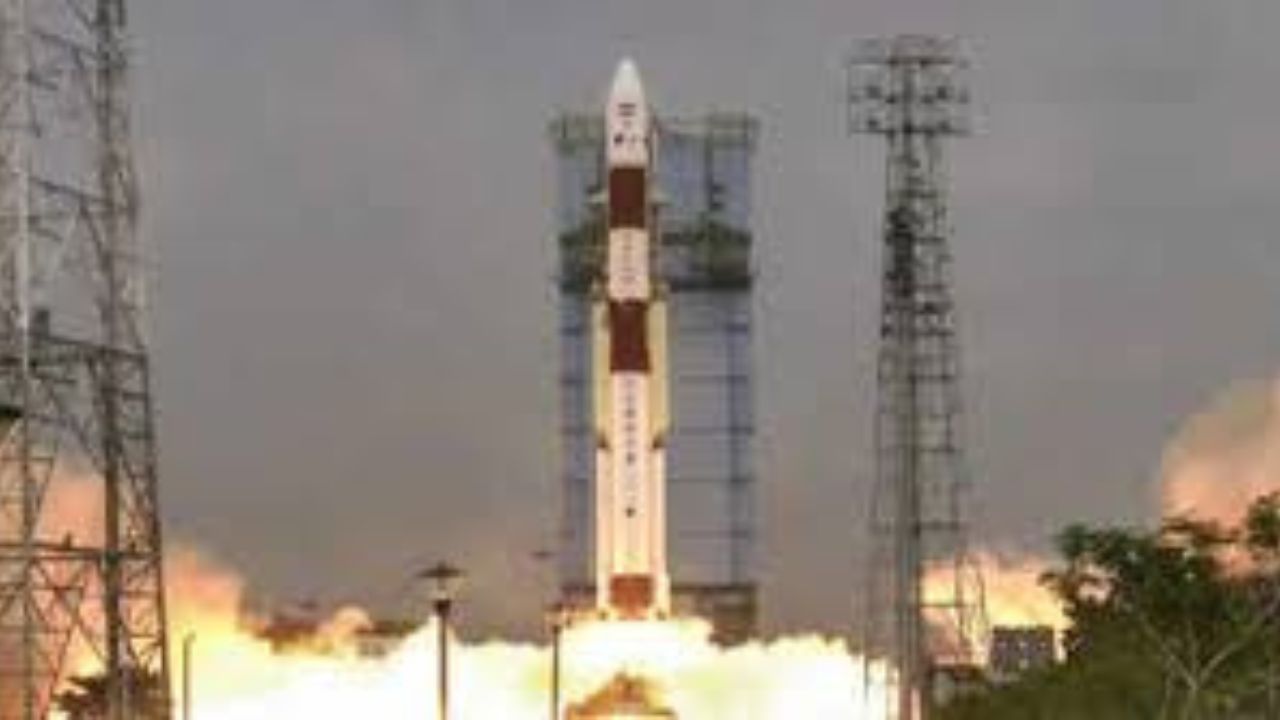
ISRO’s PSLV-C62 setback
New Delhi: The year 2026 brought bad news for the space sector. On Monday, January 12, the first space mission of the year suffered a major setback.
The PSLV-C62 rocket, launched by the Indian Space Research Organisation (ISRO), failed due to a major technical malfunction. Earlier, in May 2025, the PSLV-C61 had also faced a similar failure.
Now the question is, why are India's space missions failing one after another? Let's understand the whole story regarding the technical problem.
Malfunction at the last moment
The PSLV launched smoothly from Sriharikota at 10:18 AM. The following events then occurred:
The rocket had a smooth and successful launch from Sriharikota at 10:18 AM.
Exactly 8 minutes after the launch, a performance anomaly occurred in the third stage of the rocket.
Due to this malfunction, the rocket deviated from its intended path (designated orbit).
What did ISRO Chairman V. Narayanan say?
In an update after the flight, ISRO Chairman V. Narayanan said, "There was a technical anomaly in the mission. The initial flight stages were fine, but in the third stage (PS3), a sudden drop in chamber pressure prevented the necessary thrust from being generated.
We observed a significant deviation from the planned flight path. As a result, the satellites could not be placed into orbit."
The Failure Analysis Committee will now examine all the telemetry data and also investigate the flexible nozzle under similar load conditions to determine the root cause. Anvesha and 15 Other Satellites Lost in Space.
ISRO Chairman V. Narayanan said, "The main payload, DRDO's strategic surveillance satellite Anvesha, and 15 other satellites are now feared lost, marking the second consecutive failure for the PSLV's third stage."
Telemetry screens began showing signals of deviation from the planned trajectory. The rocket suddenly started rolling, spinning on its axis like a top, as if it had lost its balance.
In the dangerous vacuum of space, even a slight malfunction at a speed of 8,000 kilometers per hour is enough to send the mission out of control. Instead of delivering its cargo into orbit, the vehicle deviated from its intended path.
Second Consecutive Mission Failure
A similar incident occurred with the PSLV-C61 mission before PSLV-C62. PSLV-C61 was launched in May of last year. After a smooth launch, PSLV-C61 also deviated from its path at the third stage.
ISRO's statement at the time said that an anomaly was observed in the rocket's third stage. This led to a continuous drop in chamber pressure, which reduced thrust, and the satellite failed to reach its intended orbit.

