English
 English

Given these facts, the court said, there was no urgent need to intervene.(Img: X)
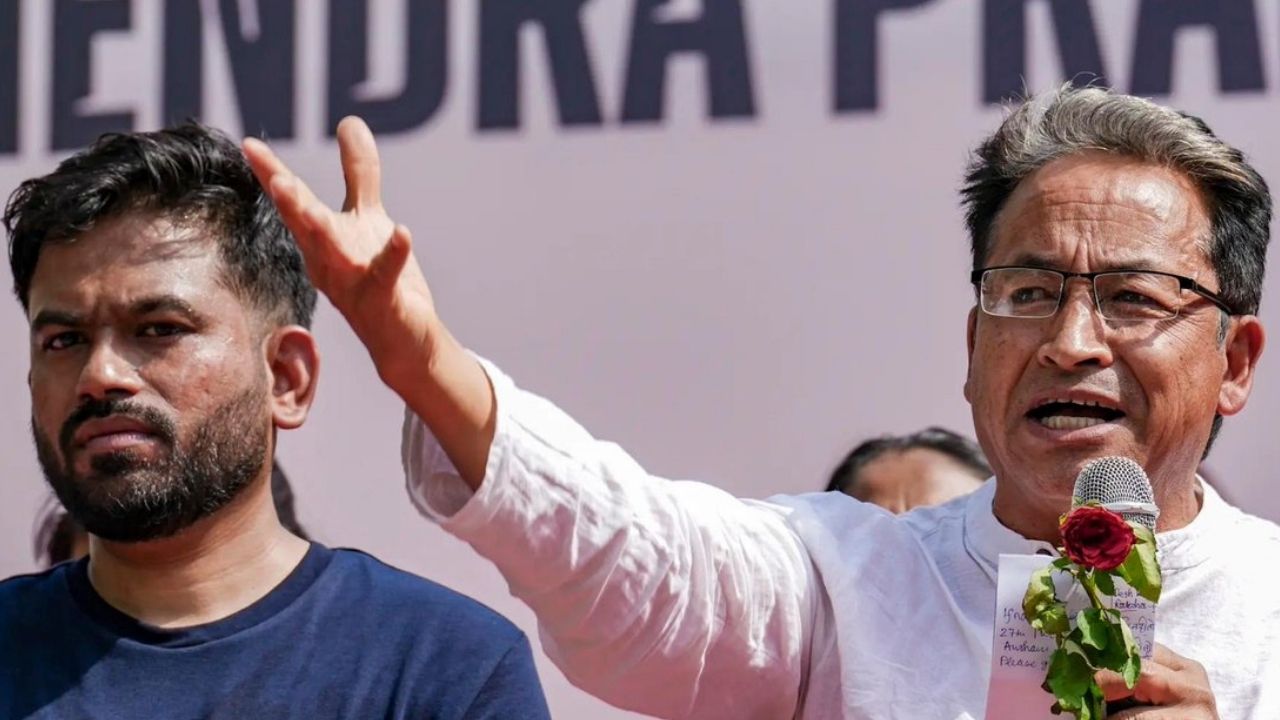
In a big setback to CJP, on Sunday, Delhi High Court has rejected an interim order to shift education reformer and climate activist Sonam Wangchuk out of Safdarjung Hospital and into a private facility. The government was noted to have made no arbitrary decision to hospitalise Wangchuk, and doctors were "monitoring his condition, closely".
The order was after Wangchuk's wife, Gitanjali J. Angmo, filed a petition with the court that requested his transfer to a private hospital, citing the lack of transparency over his treatment and worsening health.
Justice Mini Pushkarna, however, said no interim directions could be issued, and directed the authorities to file a fresh health status report within three days. The case is now scheduled to be heard on July 24.
The High Court said there was no evidence that the government had made an arbitrary decision to send Wangchuk to Safdarjung Hospital.
Justice Pushkarna said Wangchuk was confidently under scrutiny, and had complied voluntarily with taking oral electrolytes and other supplements. Since the treatment was voluntary, the court remarked that Wangchuk's right to bodily autonomy was not violated.
The court said the government was also justified in intervening, since Wangchuk was not voluntarily hospitalised and had to be hospitalised because he was undergoing a long hunger strike.
In reaffirming that "every life matters", the court said.
Dismissing the argument that Wangchuk was being isolated, the High Court said he was not being detained.
In its order, the court had noted that Wangchuk's wife, brother and brother-in-law had been with him all day and had unrestricted access to him. A separate room had been provided for family members by the authorities who had been making arrangements to keep them close to him.
Given these facts, the court said, there was no urgent need to intervene.
In her application, Gitanjali J. Angmo said she had lost faith in the medical care Wangchuk was receiving at Safdarjung Hospital and wanted him transferred to a family-selected private hospital before his health deteriorated further.
Senior advocate Kapil Sibal, appearing on behalf of Angmo, said that Wangchuk's personal doctors and lawyers were not getting enough access to him and that Wangchuk's brother was unaware of what medicines were being prescribed.
The plea also sought unrestricted access for his legal team and doctors who had been monitoring him throughout his hunger strike. It further requested that no medical procedure be carried out without Wangchuk's informed consent or, if he became incapable of consenting, without his wife's approval.
Representing the Centre, Additional Solicitor General Chetan Sharma told the court that Wangchuk's health had deteriorated significantly after nearly three weeks of fasting.
He explained that prolonged fasting could lead to ketosis and dangerous complications such as hypokalemia, a condition caused by low potassium levels that can trigger medical emergencies.
Centre also informed the court that its action was guided by an earlier High Court direction requiring authorities to continuously monitor Wangchuk's health and intervene if medically necessary.
Doctors from Safdarjung Hospital told the court they had been closely monitoring Wangchuk, who had accepted oral fluids, potassium supplements and sugar-free ORS, while declining intravenous fluids.
Gitanjali J. Angmo is a social entrepreneur, educationist and wife of Sonam Wangchuk. She is the co-founder, founding CEO and dean of the Himalayan Institute of Alternatives, Ladakh (HIAL). The institute is involved in sustainable education and mountain development.
Angmo was born into a Punjabi family in Balasore, Odisha. She earned her graduation in Physics from Fakir Mohan University and her MBA from Xavier Institute of Management, Bhubaneswar.
She spent almost 15 years in the corporate sector, mainly in Denmark before returning to India to embark on a social entrepreneurship journey. She is the founder of a number of organisations like Pushan, Shanghai Power Projects Ltd and Helios Books. She has curated sustainable technology at HIAL including the development of potent solar-heated infrastructure for the Himalayan region.
With the denial of interim relief from the High Court, Wangchuk will continue to stay at Safdarjung Hospital under medical supervision till the next hearing on 24 July when the report of the latest medical status will be sitting before the court.