 English
 English
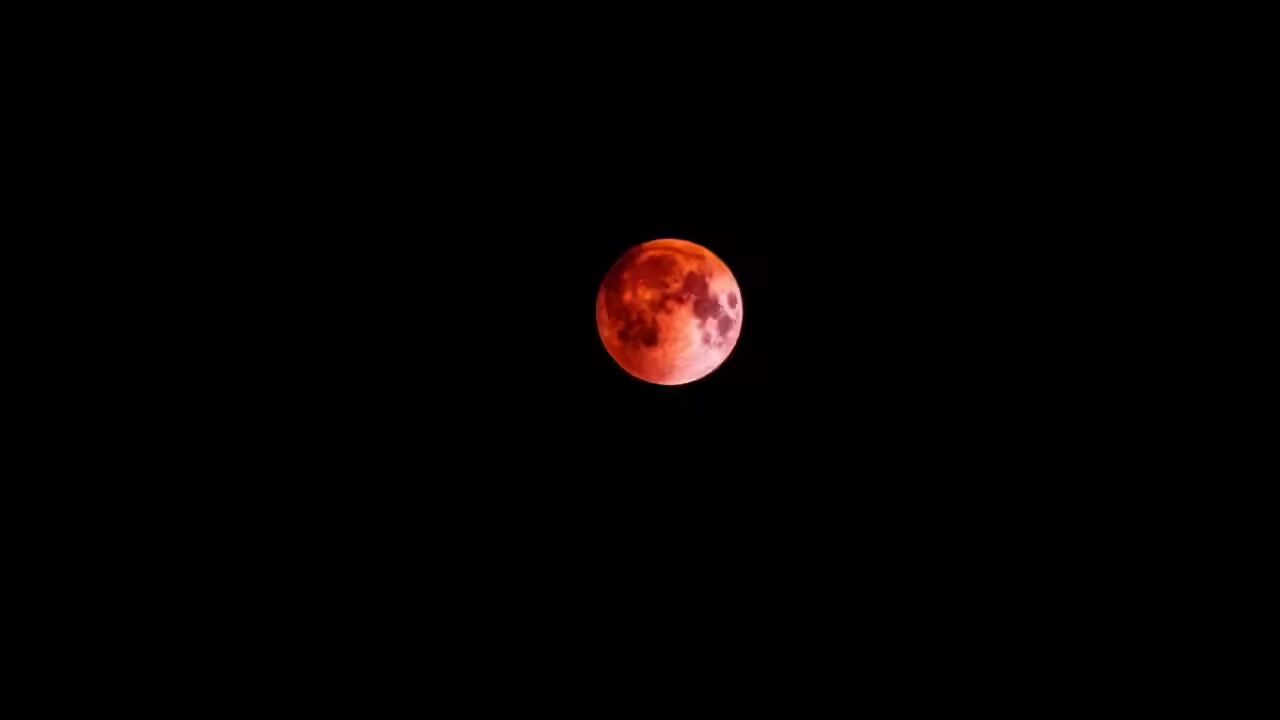
The first total lunar eclipse of 2026 will occur on March 3, creating a stunning Blood Moon visible across parts of India. The eclipse will last from 3:20 PM to 6:47 PM, with only its final phase visible after moonrise in Indian cities. Sutak Kaal will begin in the morning, making it religiously significant.
Blood Moon to Dazzle India on March 3
New Delhi: The first total lunar eclipse of the year will occur on 3 March. This astronomical event will be visible in India for a limited time. The moon will appear red on this day, known as a "blood moon." This sight will be very special for astronomy enthusiasts, as such a sight will not be seen again until 2029. In India, this eclipse will be visible as a gratisudaya (ocean-to-earth eclipse), meaning the final phase of the eclipse will be visible at the time of moonrise.
The total lunar eclipse will last from 3:20 pm to 6:47 pm. However, the moon will rise in India at around 6:26 pm, so only the last part of the eclipse will be visible here. The maximum eclipse will be between 6:33 pm and 6:40 pm. The duration of the eclipse will vary depending on the moonrise time in different cities.
Chandra Grahan 2025: Total Lunar Eclipse in India; Know important rules and Sutak period
In Delhi, the eclipse will be visible for approximately 25 minutes starting at 6:22 pm. In Lucknow, the eclipse will be visible for 45 minutes from 6:02 PM, and in Kolkata for about 1 hour and 15 minutes from 5:43 PM. In Bhopal and Chennai, the eclipse will be visible for about 25-26 minutes from 6:21 PM. In Patna, it will be visible for 51 minutes from 5:55 PM, in Bengaluru for 14 minutes from 6:32 PM, and in Hyderabad for 20 minutes from 6:26 PM. In cities in the Northeast, it will be visible for longer periods- 1 hour and 19 minutes in Shillong, 1 hour and 28 minutes in Imphal, and 1 hour and 27 minutes in Itanagar.
When the Earth comes between the Sun and the Moon, its shadow falls on the Moon. During this time, the Earth's atmosphere scatters more blue light, and the red-orange rays reach the Moon. This is why the Moon appears red.
Since this lunar eclipse will be visible in India, the Sutak period will be valid. The Sutak period will begin at 6:23 am on March 3rd. During this period, temple doors are closed, and auspicious activities are prohibited. It is advised to avoid marriages, house warming ceremonies, or starting new projects.
Chandra Grahan 2025: Know time of Lunar Eclipse, Sutak Kaal and its effects
According to religious belief, chanting mantras dedicated to Lord Vishnu or Shiva during the eclipse is considered auspicious. Chanting 'Om Namo Bhagwate Vasudevaya' or the Mahamrityunjaya mantra is considered beneficial. After the eclipse ends, bathing, sprinkling Ganga water, and giving charity are considered auspicious.