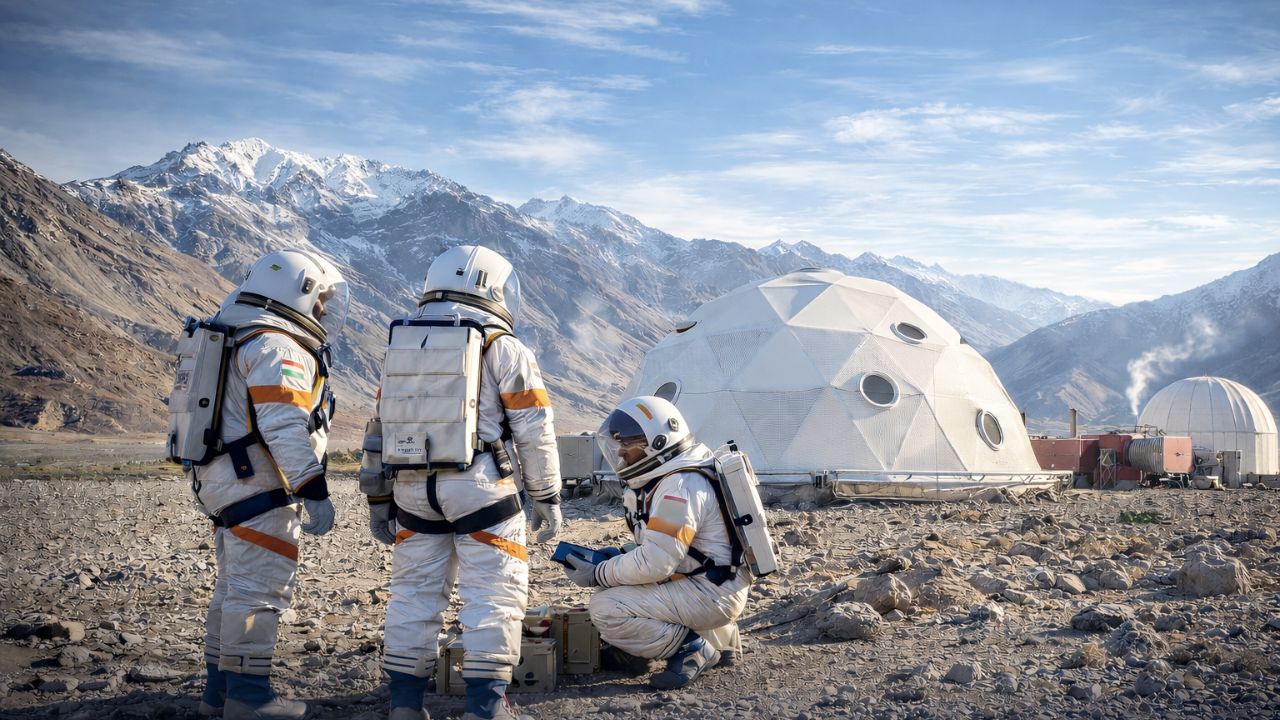
ISRO Turns Ladakh Into Space Lab (Image Source: Internet)
New Delhi: The Indian Space Research Organisation (ISRO) has launched a special mission named ‘Mission MITRA.’ Its full name is Mapping of Interoperable Traits and Response Assessment. The objective of this mission is to understand the behavior, cognitive processes, and operational capabilities of astronauts (Gaganyatris) and the ground support team, reports Dynamite News correspondent.
This mission is being conducted in Leh, at an altitude of approximately 3,500 meters. The environment in Ladakh is considered to be highly analogous to that of space because there is a scarcity of oxygen (hypoxia), temperatures remain extremely low, conditions of isolation prevail. This mission will investigate how humans think and function under such extreme circumstances.
During this mission, scientists will attempt to determine:
This study will continue until April 9, and the data gathered from it will be utilized in future space missions.
This mission is directly linked to India’s ambitious Gaganyaan program. Since the Gaganyaan mission involves sending humans into space, it is absolutely essential to understand:
This mission has been jointly designed by ISRO and the Institute of Aerospace Medicine. Meanwhile, Protoplanet—a Bengaluru-based startup—is responsible for managing the facilities and logistics of the mission.
This is an "analog mission," meaning that space-like conditions have been simulated here on Earth. This will further enhance the preparation of astronauts. This data will be crucial for future long-duration space missions (such as those to the Moon or Mars).
Mission MITRA marks a significant step forward for India's space program. It will assist scientists in understanding how humans function under challenging and isolated conditions. This mission will lay a strong foundation for the success of Gaganyaan and future major space expeditions.

