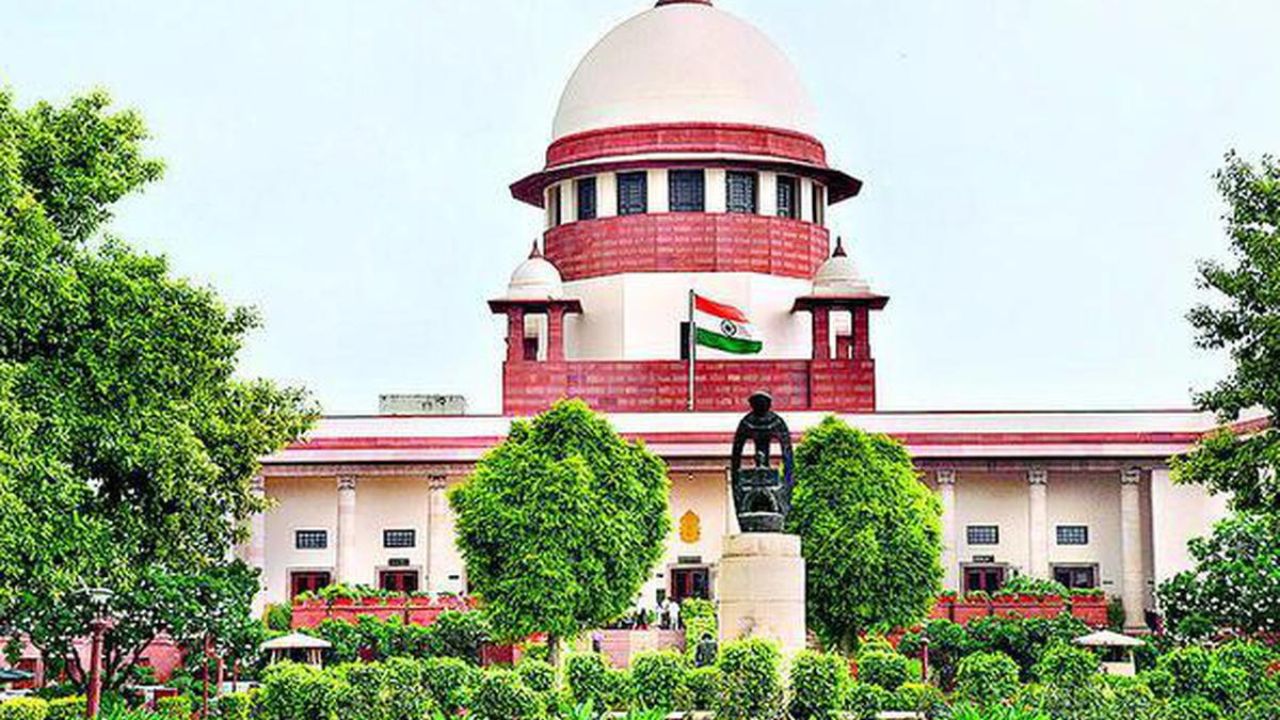
Supreme Court of India
New Delhi: The Supreme Court Collegium has recommended the appointment of new Chief Justices for the High Courts of Calcutta, Bombay, Patna, and Punjab and Haryana.
The Collegium, headed by Chief Justice of India (CJI) Justice Surya Kant and comprising Justices Vikram Nath, BV Nagarathna, MM Sundresh and PS Narasimha as its members, made the recommendation during its meeting held on August 6.
The Collegium recommended the name of Justice Ravindra Vithalrao Ghuge for the post of Chief Justice of the Calcutta High Court, Justice Mahesh Chandra Tripathi for the Bombay High Court, Justice V Kameswar Rao for the Patna High Court and Justice Ashwani Kumar Mishra for the Punjab and Haryana High Court.
The move comes amid a shortage of permanent Chief Justices in several High Courts across the country. Many courts have been functioning under acting Chief Justices following retirements, transfers and elevation of senior judges to the Supreme Court.
The recommendations will now be forwarded to the Central government for final approval and issuance of official appointment notifications under the constitutional procedure for the appointment of High Court Chief Justices.
Justice Ravindra Vithalrao Ghuge, who is currently serving as the acting Chief Justice of the Bombay High Court, has been recommended as the next Chief Justice of the Calcutta High Court. Justice Ghuge completed his law education from MP Law College, Aurangabad, in 1990 and enrolled as an advocate in the same year. He started his legal practice before the Bombay High Court and Industrial and Labour Courts, where he initially handled matters related to workers, trade unions and employment disputes.
During his legal career, Justice Ghuge appeared in thousands of cases involving labour disputes and industrial matters. He also represented several large industries, multinational companies and private organisations in legal proceedings. He was elevated as a judge of the Bombay High Court in 2013. Justice Ghuge was appointed acting Chief Justice of the Bombay High Court after the elevation of former Chief Justice Shree Chandrashekhar to the Supreme Court.
The Calcutta High Court is currently functioning with 41 judges against its sanctioned strength of 72 judges, creating a significant judicial vacancy.
The Supreme Court Collegium has recommended Justice Mahesh Chandra Tripathi of the Allahabad High Court as the Chief Justice of the Bombay High Court. If approved by the Centre, Justice Tripathi will become the 38th Chief Justice of the Bombay High Court and the second Chief Justice from the Allahabad High Court.
Justice Tripathi completed his law degree from Lucknow University in 1990 and enrolled as an advocate on January 11, 1992. His legal practice mainly focused on civil litigation, government matters and constitutional issues. Before becoming a judge, he served as Additional Chief Standing Counsel for the Uttar Pradesh government from October 2007. He also represented several government bodies and statutory authorities, including development authorities, municipal bodies, universities and public sector organisations.
Justice Tripathi was appointed as an additional judge of the Allahabad High Court on September 27, 2013, and became a permanent judge on April 10, 2015.
He is currently among the senior-most judges of the Allahabad High Court and has handled important judicial responsibilities at the principal bench in Prayagraj.
Delhi High Court judge Justice V Kameswar Rao has been recommended for appointment as Chief Justice of the Patna High Court.
Justice Rao completed his LLB from Delhi University in 1990 and enrolled as an advocate in March 1991. He practised before the Supreme Court of India, Delhi High Court and Central Administrative Tribunal.
He also appeared before other constitutional courts, including the Madras High Court and the Port Blair Circuit Bench of the Calcutta High Court.
Justice Rao was elevated as an additional judge of the Delhi High Court in April 2013 and became a permanent judge in March 2015. In 2024, he was transferred to the Karnataka High Court, where he served as acting Chief Justice in May 2025.
He was later repatriated to the Delhi High Court on July 21, 2025.
The Patna High Court currently has 43 judges against a sanctioned strength of 53 judges.
Justice Ashwani Kumar Mishra, who is presently serving as acting Chief Justice of the Punjab and Haryana High Court, has been recommended for appointment as the permanent Chief Justice of the court. Justice Mishra completed his graduation in Economics from Kirori Mal College and obtained his LLB degree from Delhi University's Campus Law Centre.
He enrolled as an advocate on May 8, 1993, and practised mainly in civil, constitutional and service law matters. During his legal career, he represented several government organisations and statutory bodies, including NOIDA, development authorities, IFFCO, Indian Oil Corporation and Uttar Pradesh Power Corporation.
Justice Mishra was designated as a Senior Advocate in 2013. He was appointed as an additional judge of the Allahabad High Court on February 3, 2014, and became a permanent judge on February 1, 2016. He served at the Allahabad High Court until July 2025 before being transferred to the Punjab and Haryana High Court. He became acting Chief Justice on June 1, 2026, after former Chief Justice Sheel Nagu was elevated to the Supreme Court.
The latest recommendations are significant as several High Courts across the country are currently operating without permanent Chief Justices. Out of India’s 25 High Courts, seven are presently headed by acting Chief Justices due to judicial vacancies caused by retirements, transfers and elevation of judges to the Supreme Court. The High Courts of Bombay, Calcutta, Jammu and Kashmir and Ladakh, Madhya Pradesh, Patna, Rajasthan High Courts, and Punjab and Haryana, are among the courts facing leadership vacancies.
If approved by the Central government, the latest Collegium recommendations will fill several important judicial posts and improve administrative functioning in these High Courts. The appointment process will now move to the next stage, where the Union government will examine the recommendations before issuing formal notifications for the appointment of the new Chief Justices.

