 English
 English
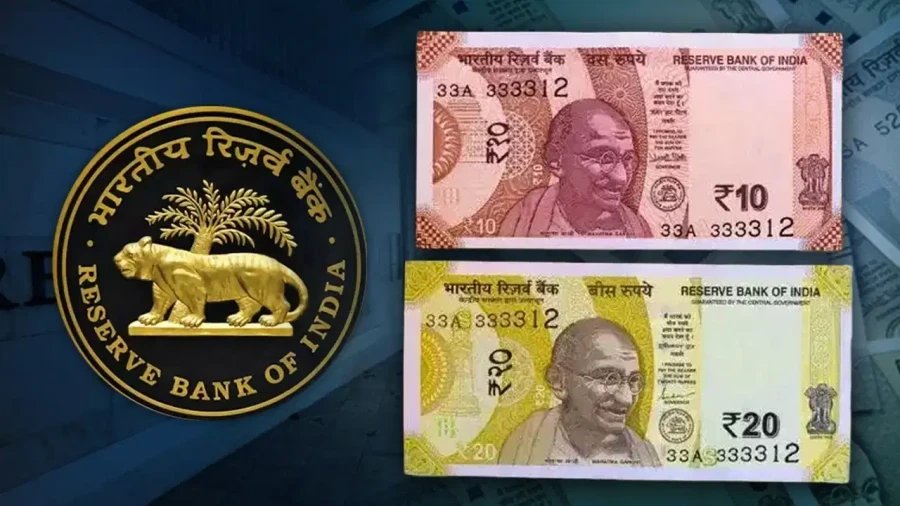
RBI Prepares Polymer Trial in Rs 10 and 20
New Delhi: India has moved a step closer to testing polymer currency notes after the Reserve Bank of India’s banknote-printing subsidiary invited global manufacturers to supply specialised plastic substrate for Indian banknotes.
Bharatiya Reserve Bank Note Mudran Private Limited (BRBNMPL) issued a Global Expression of Interest on July 17 for opacified polymer substrate sheets carrying advanced security features. The tender is linked to a proposed field trial, although the RBI has not formally confirmed which denominations will be included. Reports suggest lower-value ₹10 and ₹20 notes could be considered initially.
The proposed procurement covers an indicative 68,000 reams of Biaxially Oriented Polypropylene-based material. Each ream contains 500 sheets, and the requirement is expected to be divided between two denominations.
The substrate must support features such as transparent portrait windows, metallic numerals, magnetic security elements, shadow images and colour-shifting patterns. It should also be suitable for use at BRBNMPL and government-owned currency-printing presses.
The tender represents an exploratory step rather than an announcement that paper currency will be replaced. Any broader introduction would depend on laboratory checks, printing tests and real-world circulation trials.
Participating companies must demonstrate experience in supplying security-grade polymer material to central banks or official banknote printers. The process also includes stringent sourcing, staffing and national-security conditions.
Polymer banknotes are generally more resistant to moisture, dirt and repeated handling than conventional paper-based notes. Their longer usable life could reduce replacement and printing costs, while transparent windows and other embedded features may make counterfeiting more difficult.
Also Read: Stock Market Closing: Sensex rebounds 238 points, Nifty closes above 23,960
Australia introduced modern polymer banknotes in 1988, and the technology is now used by numerous countries. However, the RBI has yet to announce a final launch date or confirm that ₹10 and ₹20 polymer notes will enter circulation in 2027.